Detection & SOC
Finding the thing. Telemetry, rules, and the gap between the two.
44 sketches
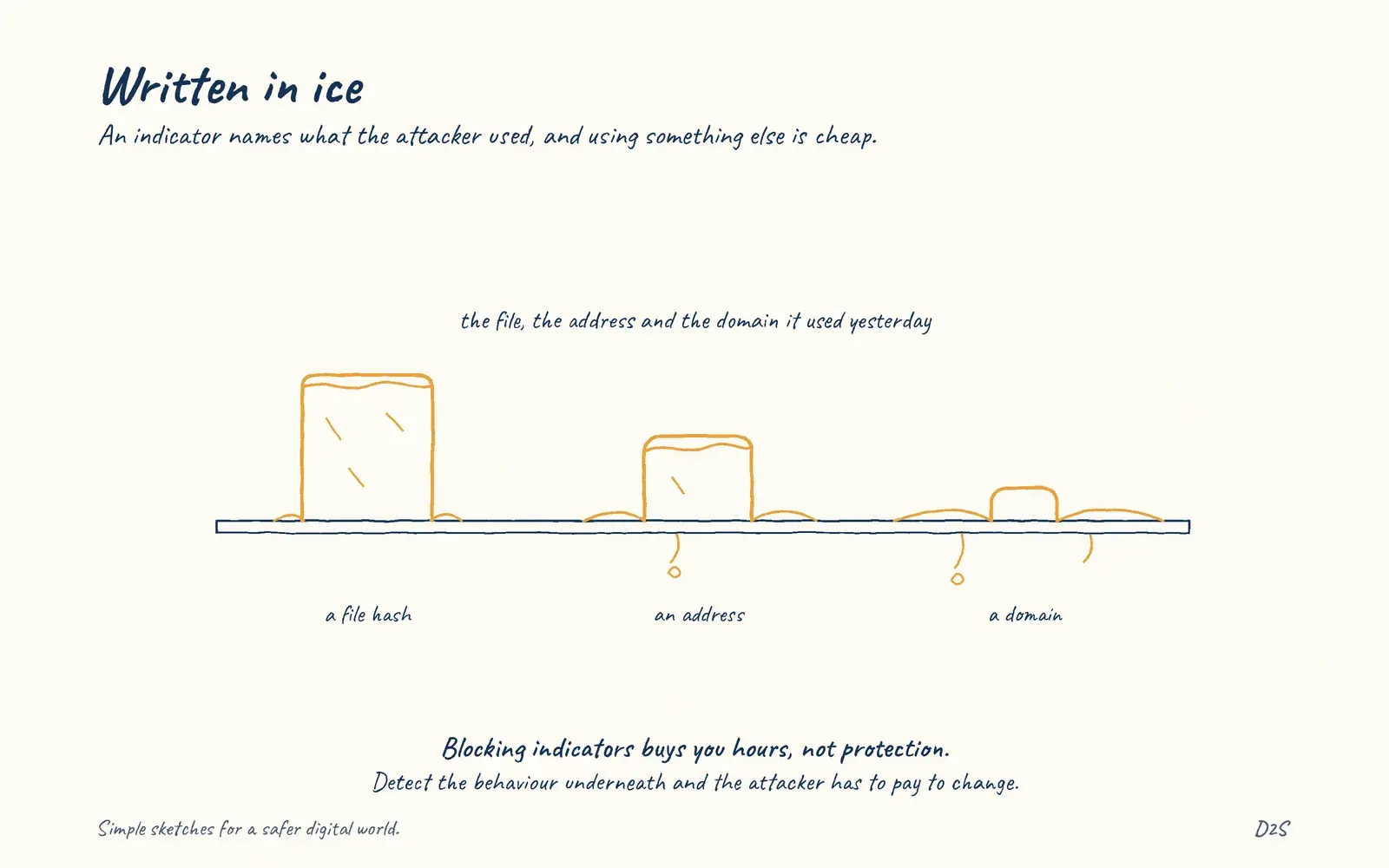 IOCsWritten in ice
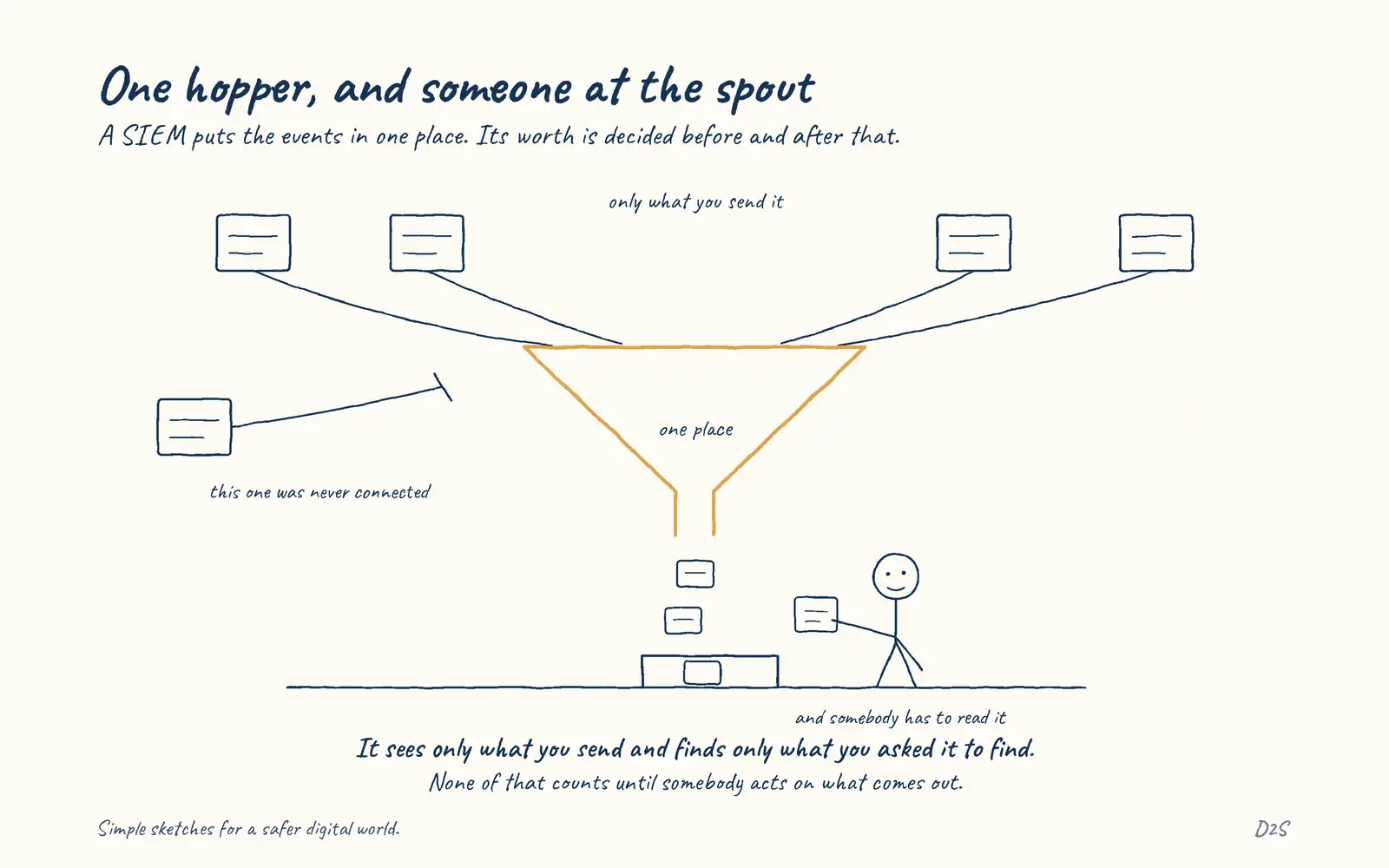 SIEMOne hopper, and someone at the spout
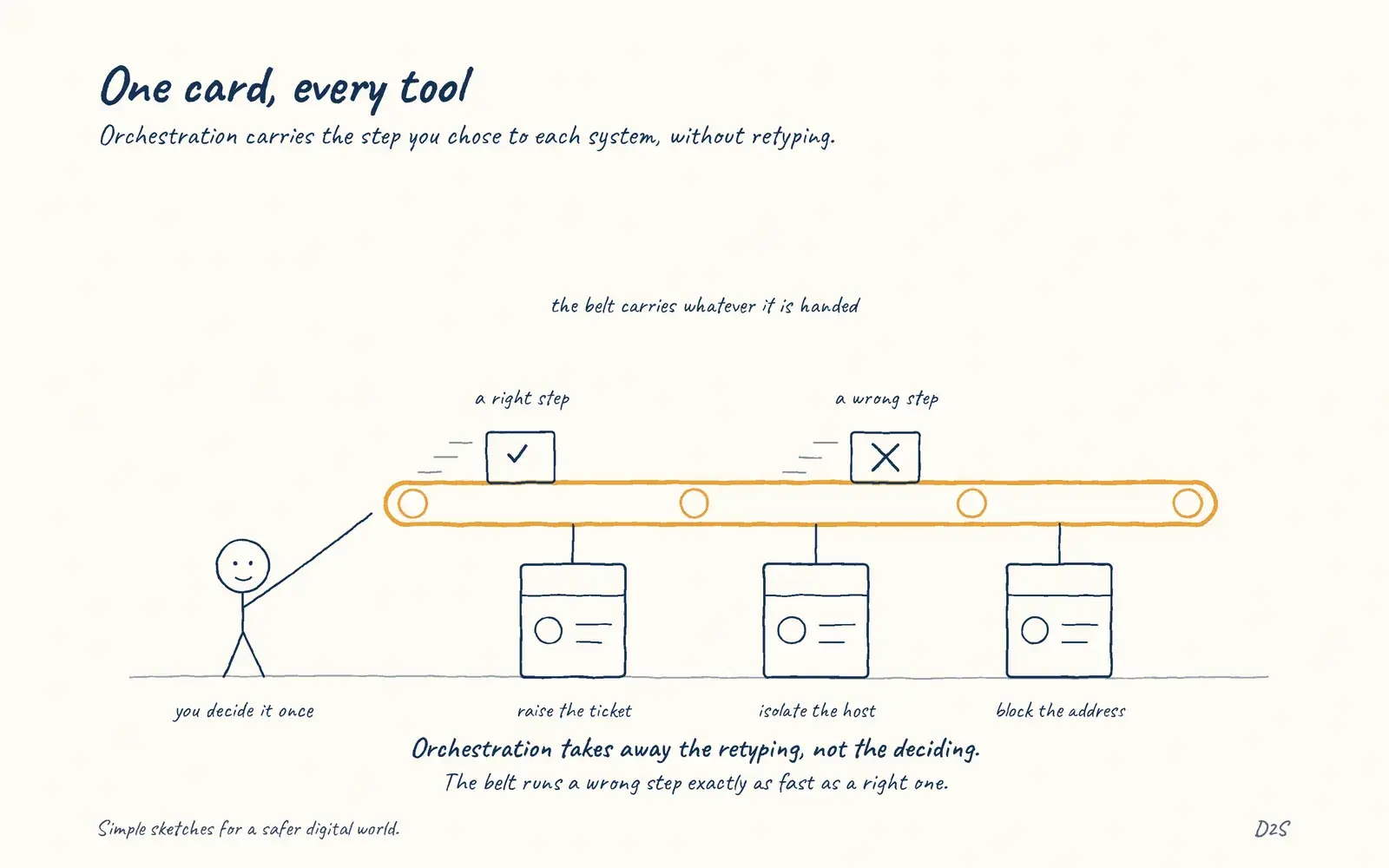 SOAROne card, every tool
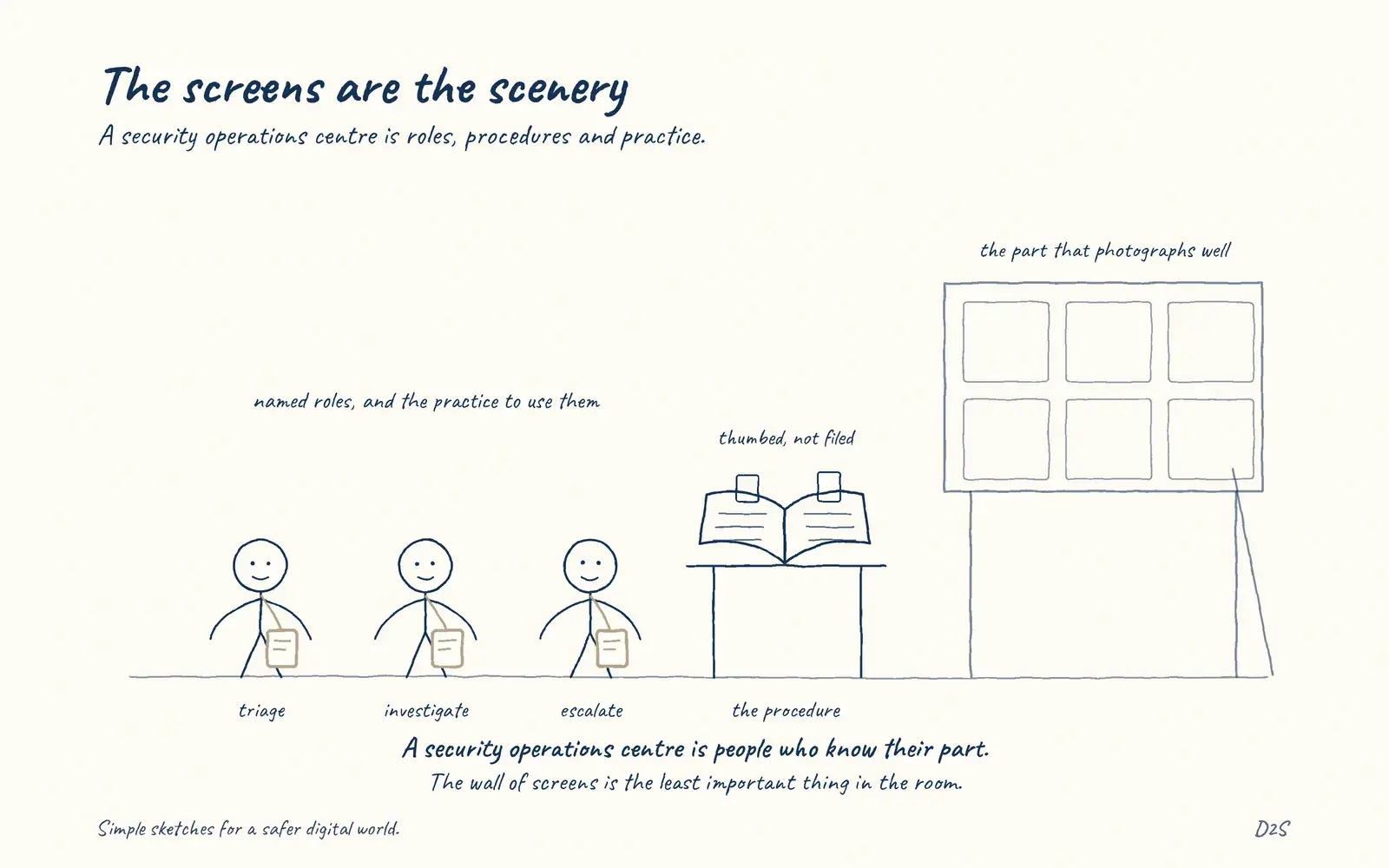 SOCThe screens are the scenery
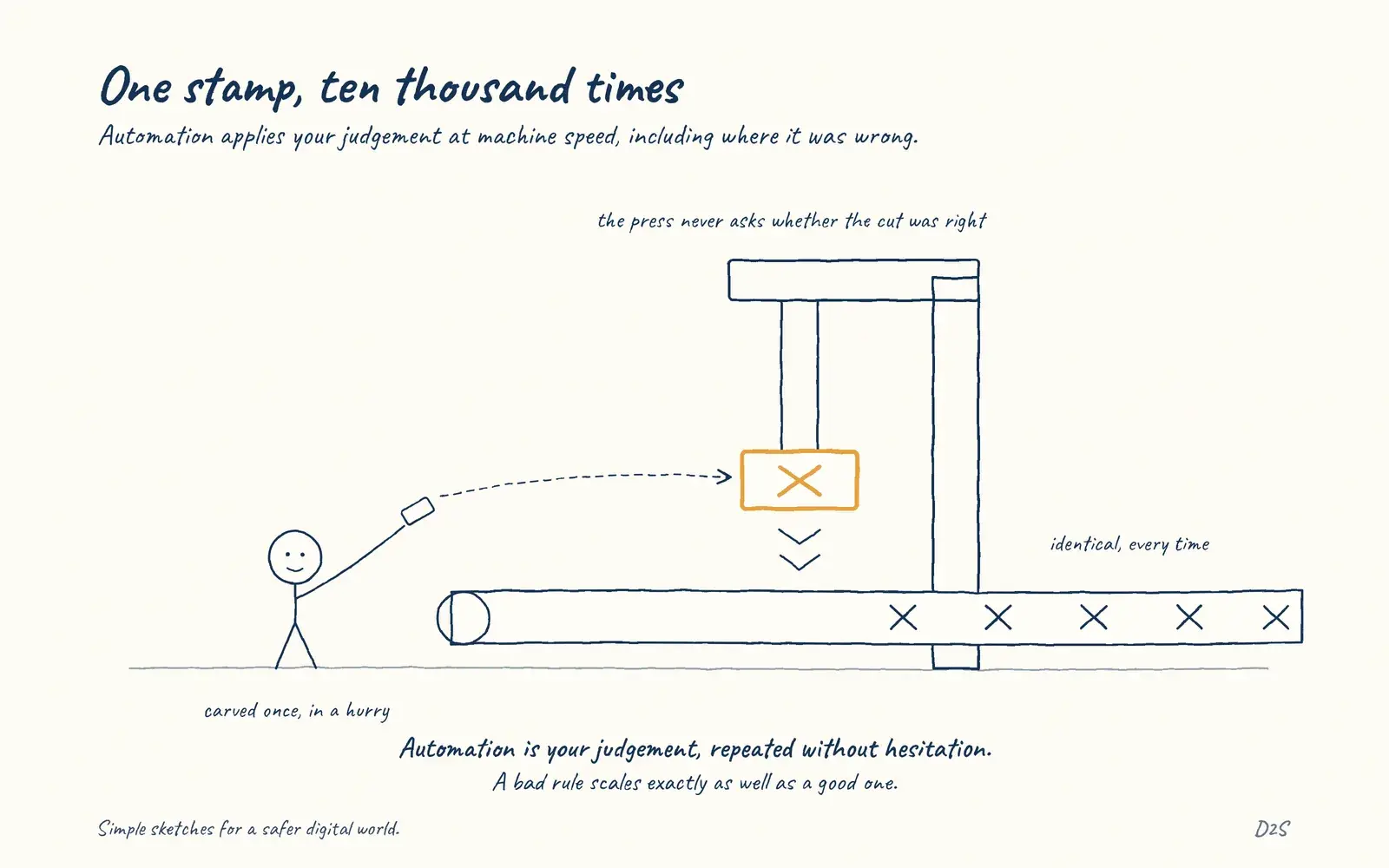 SOC automationOne stamp, ten thousand times
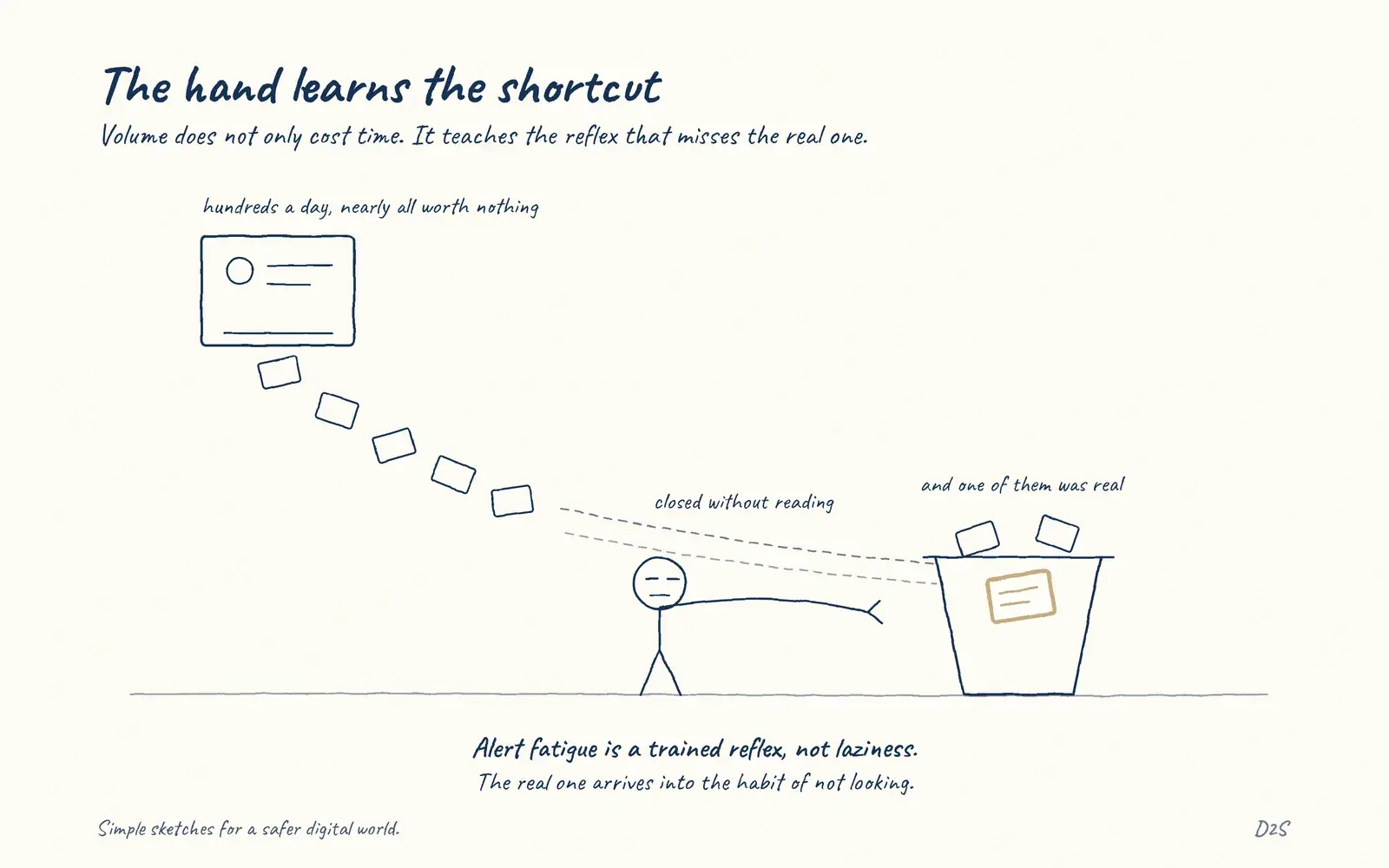 Alert fatigueThe hand learns the shortcut
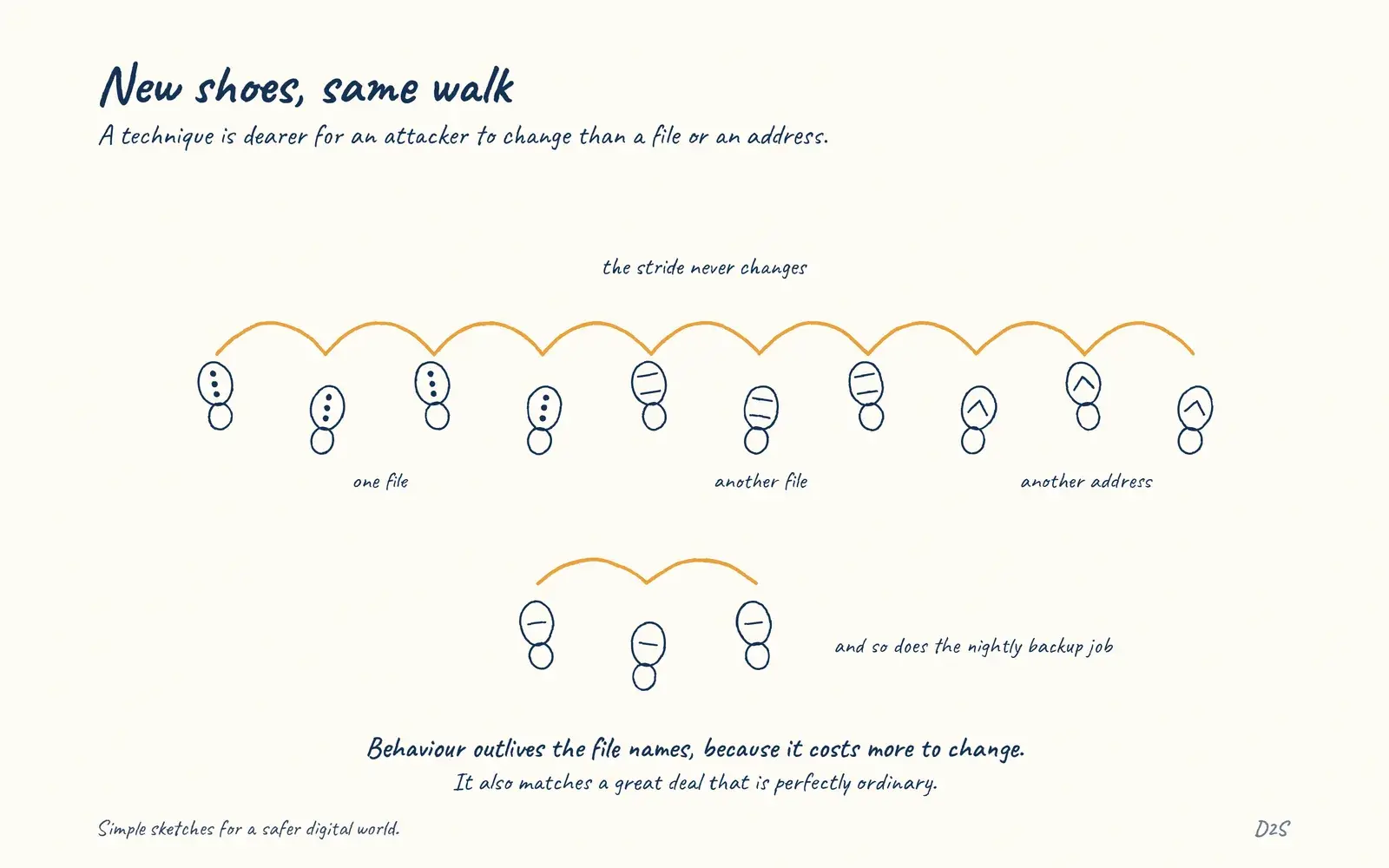 Behavioural detectionNew shoes, same walk
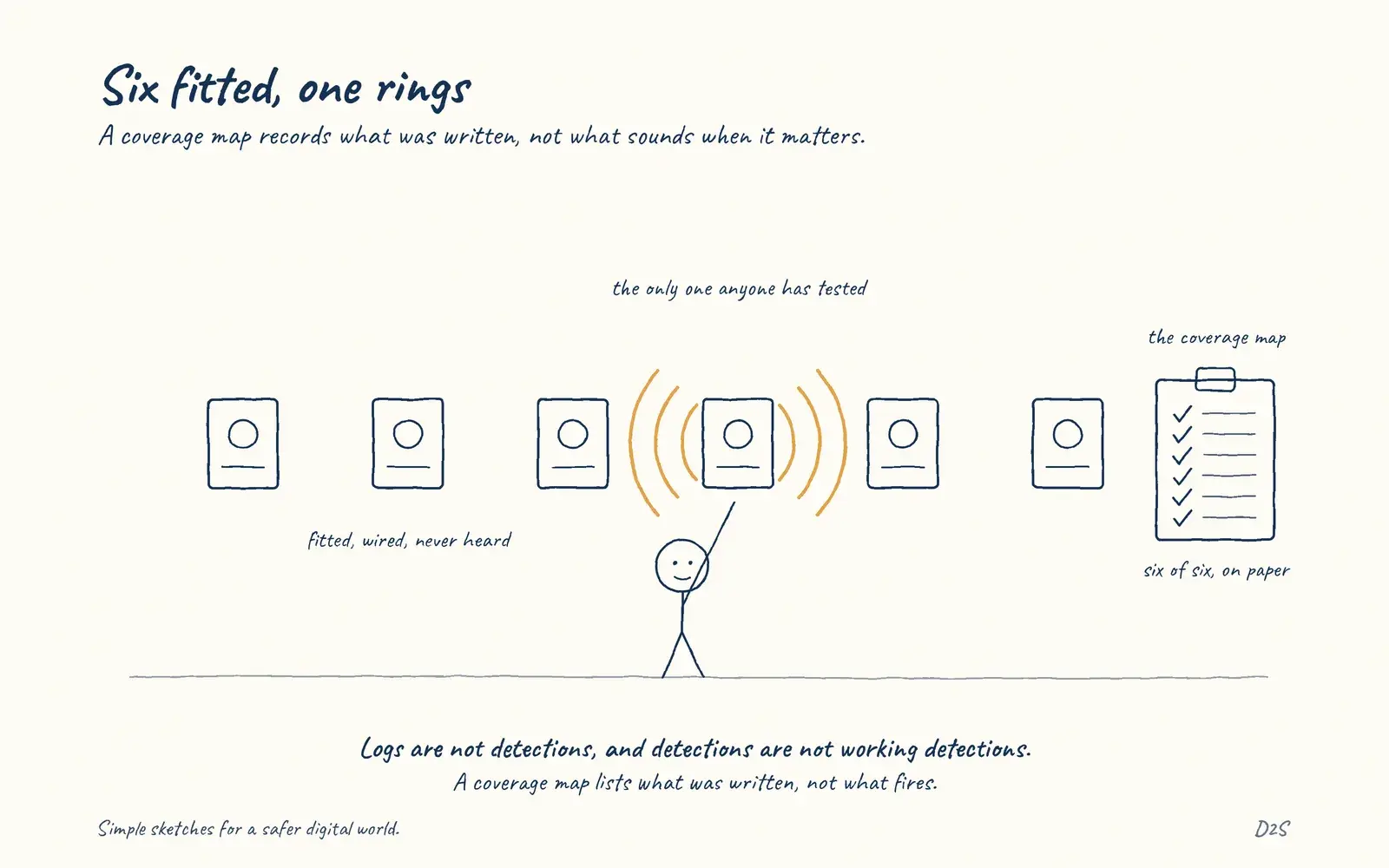 Detection coverageSix fitted, one rings
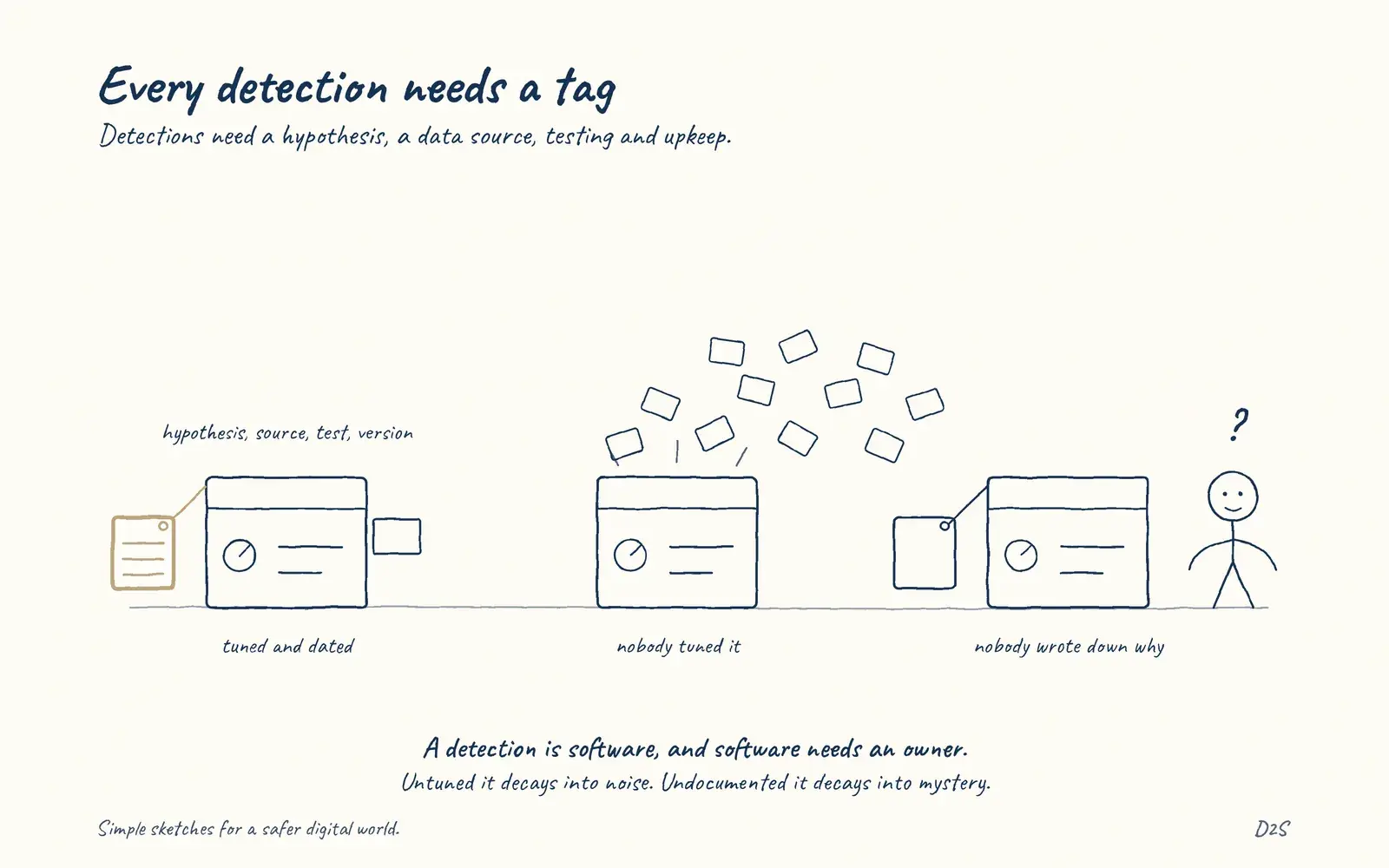 Detection engineeringEvery detection needs a tag
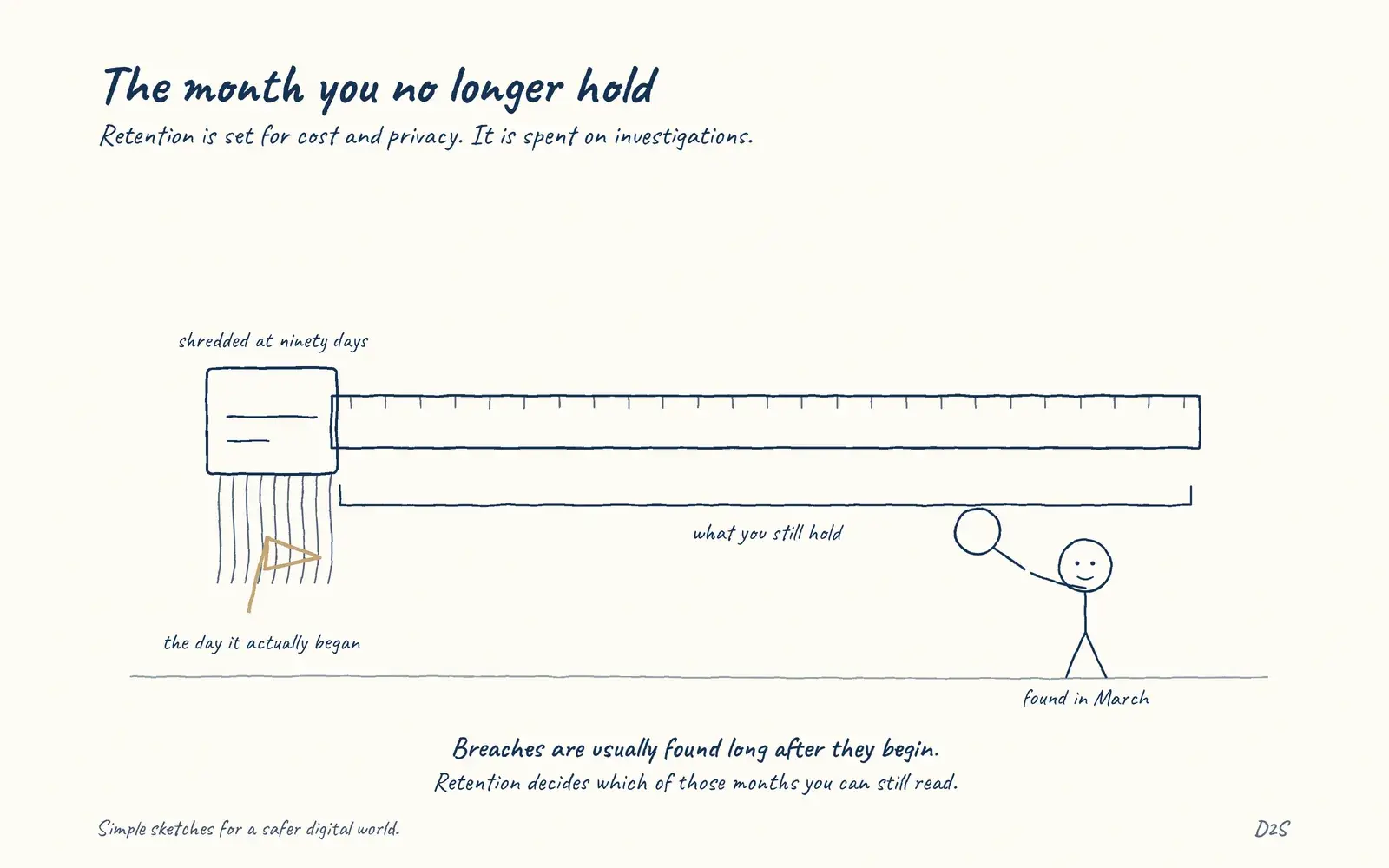 Log retentionThe month you no longer hold
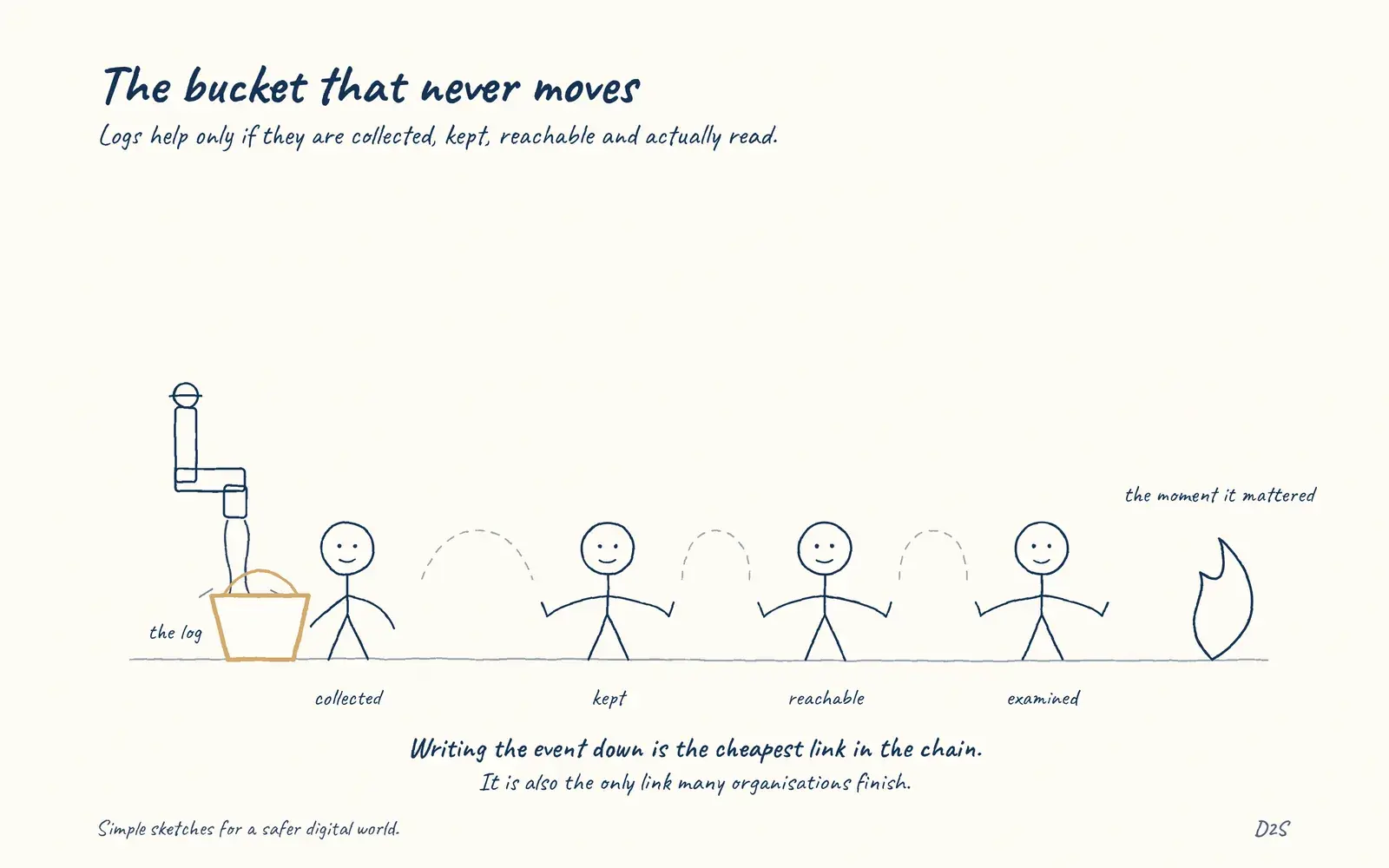 LoggingThe bucket that never moves
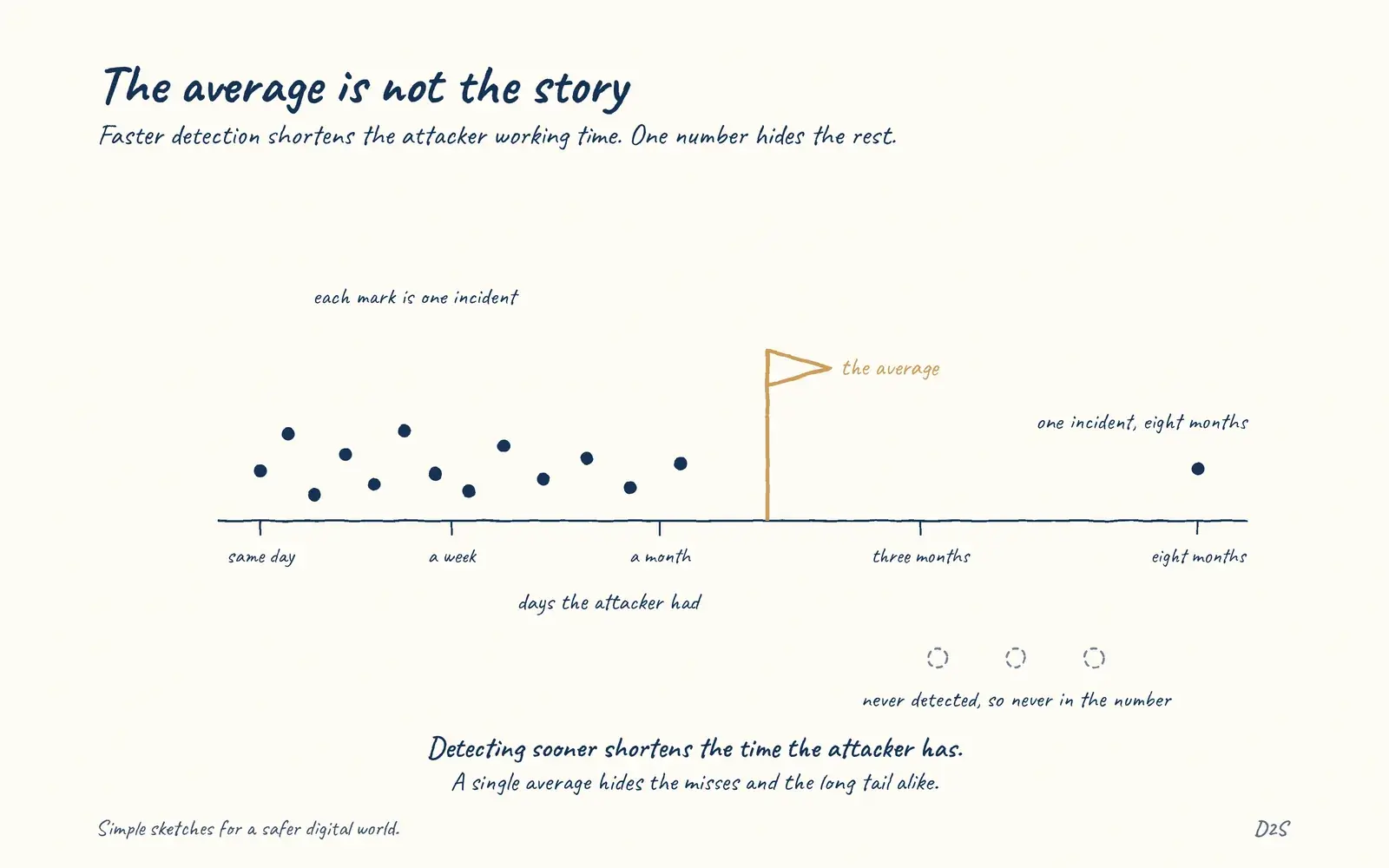 Mean time to detectThe average is not the story
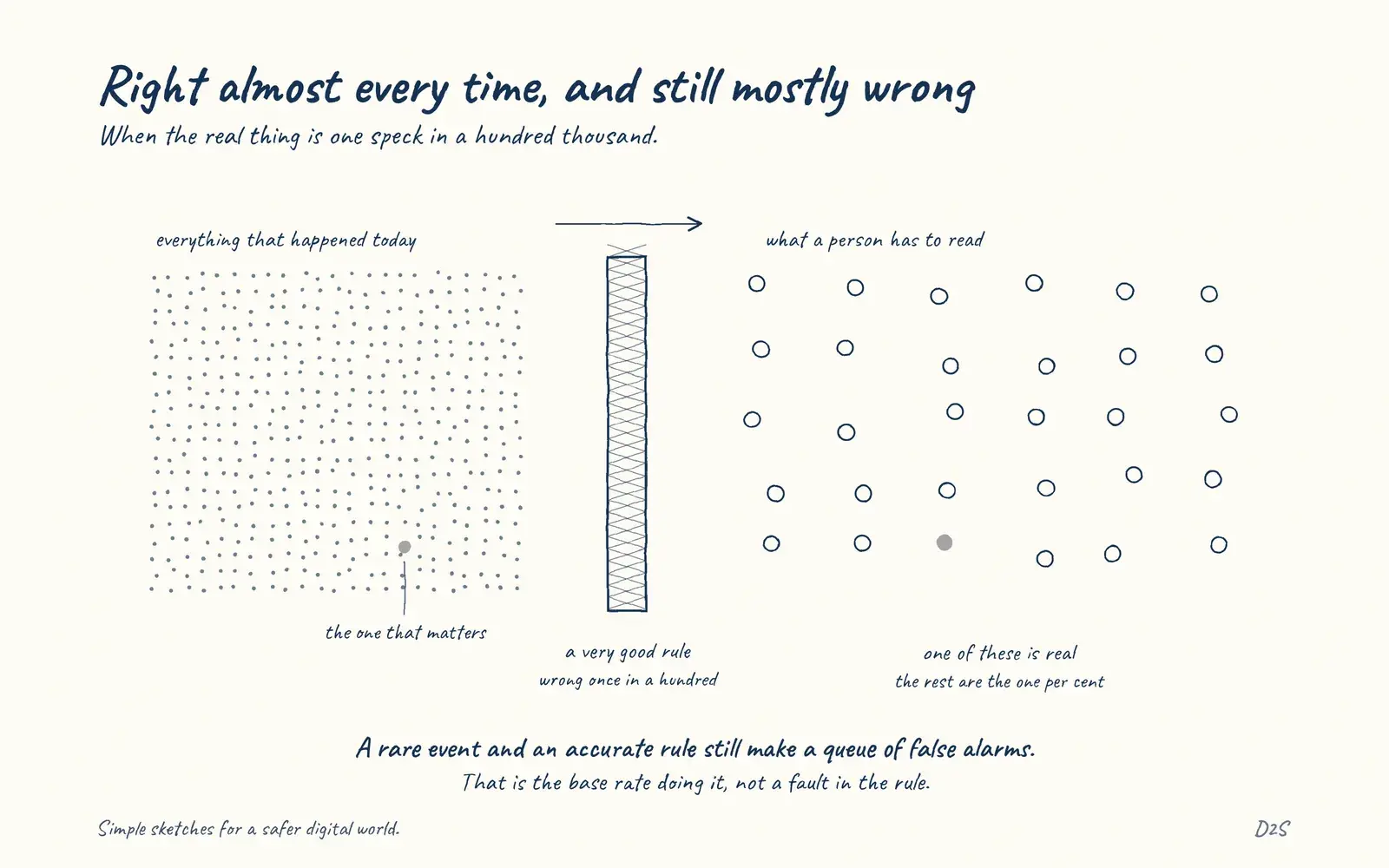 Signal and noiseRight almost every time, and still mostly wrong
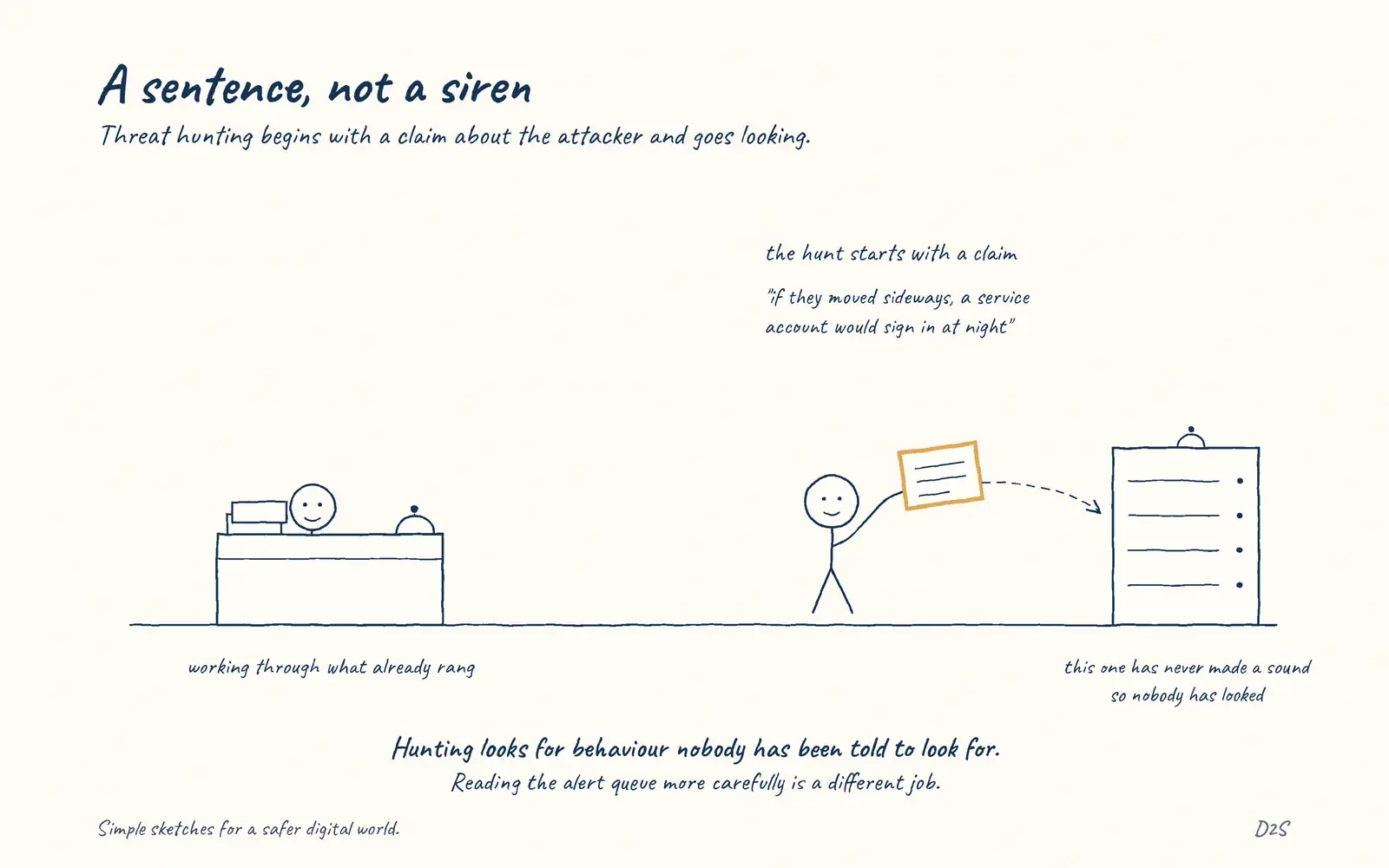 Threat huntingA sentence, not a siren
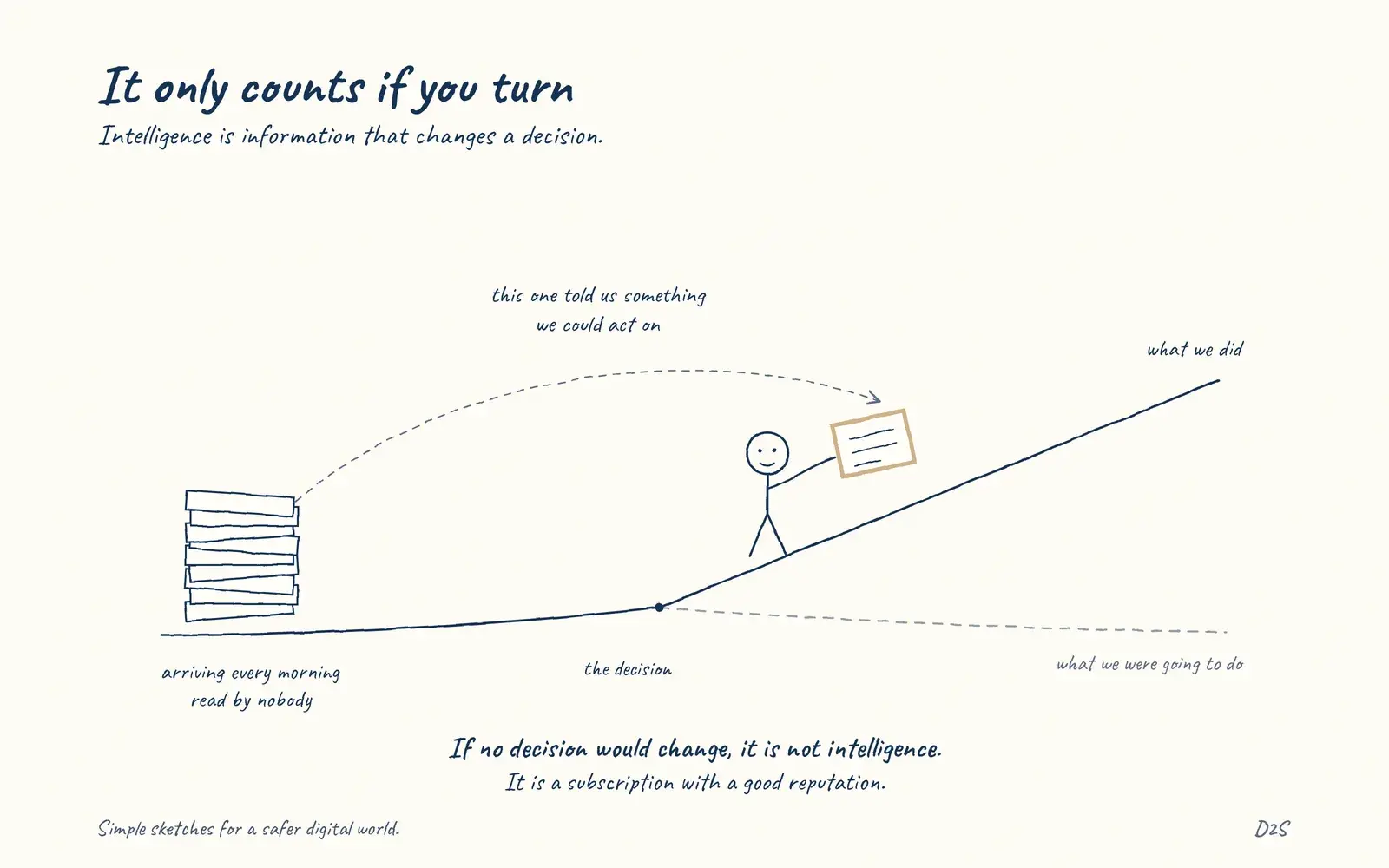 Threat intelligenceIt only counts if you turn
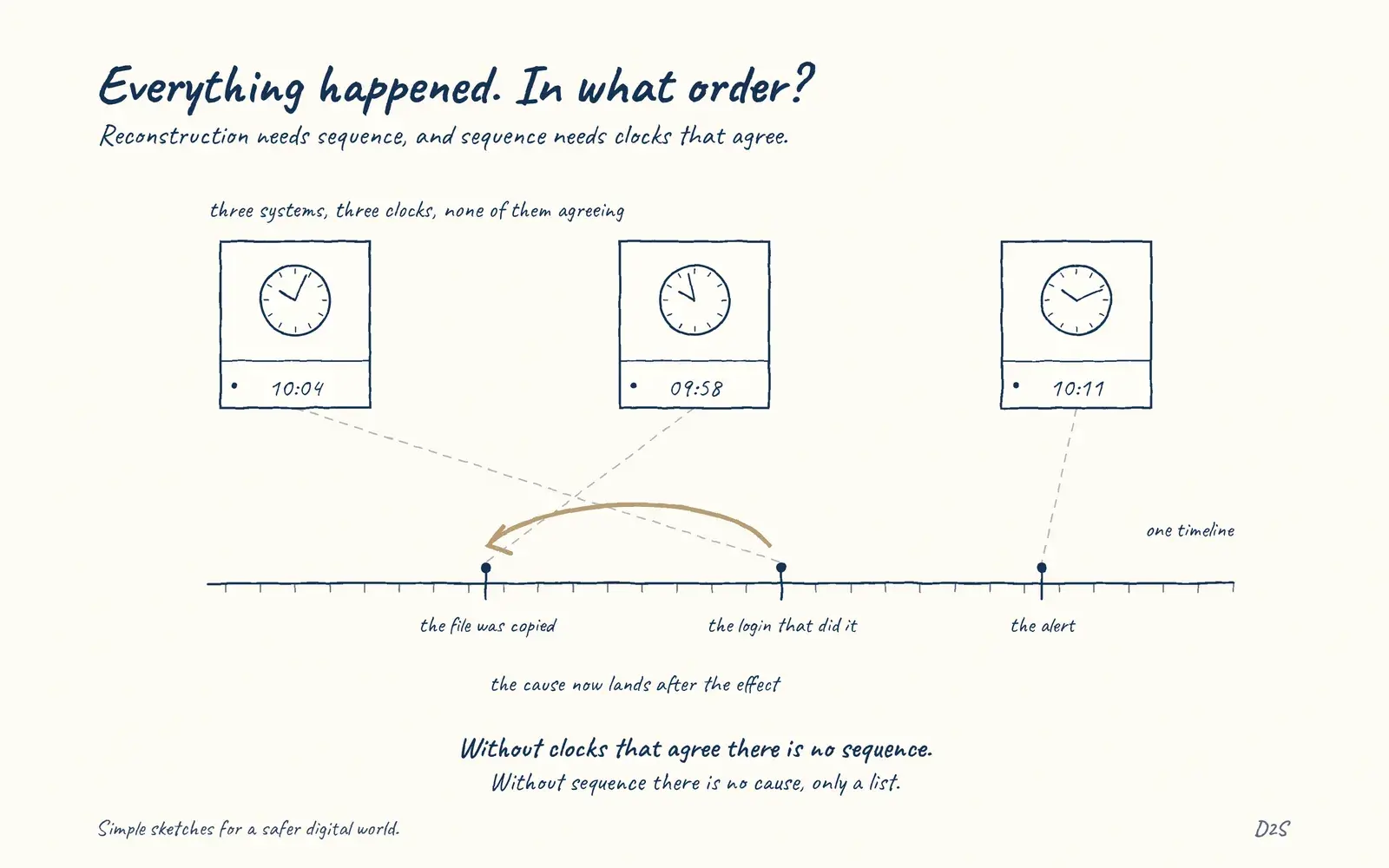 Time synchronisationEverything happened
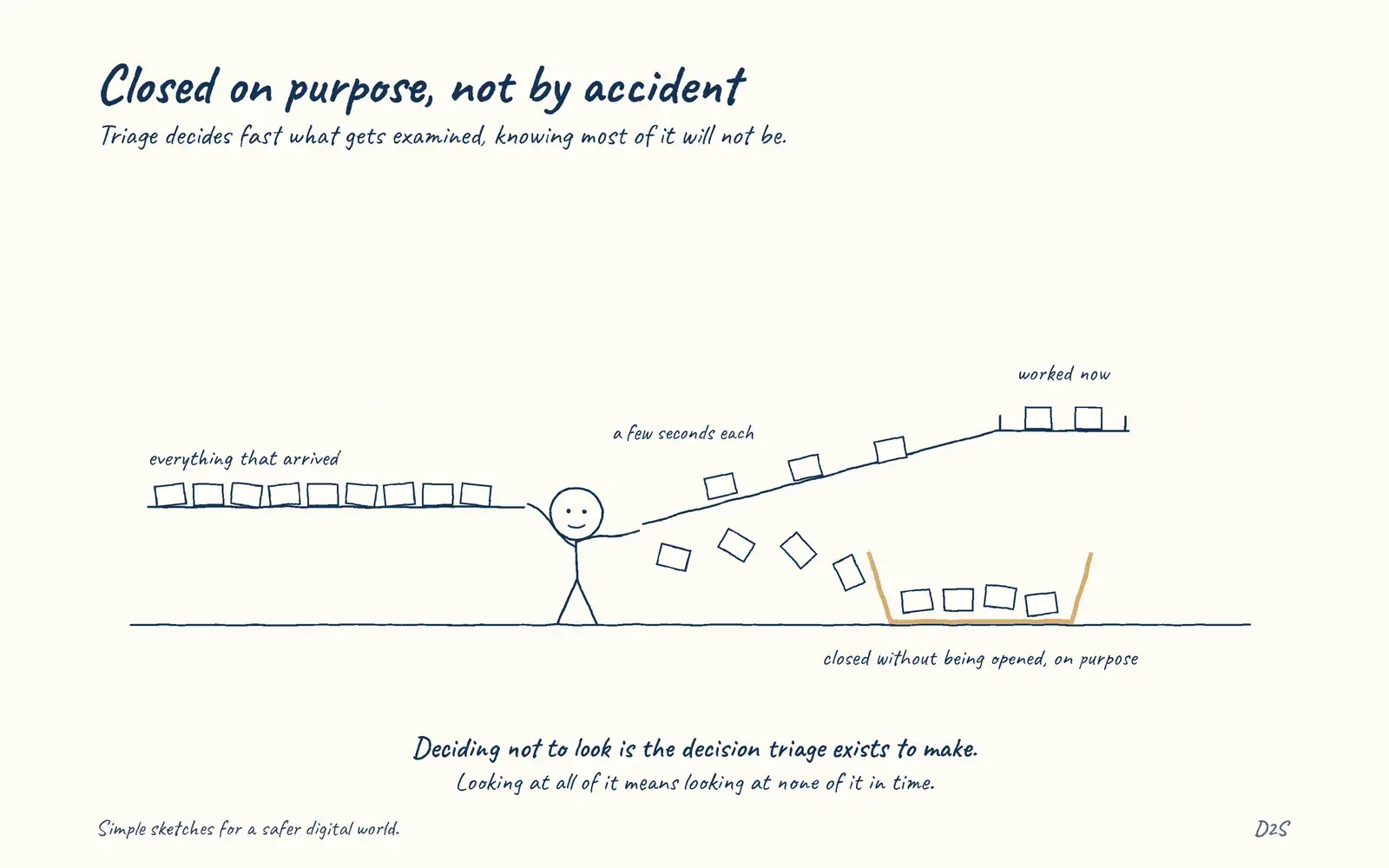 TriageClosed on purpose, not by accident
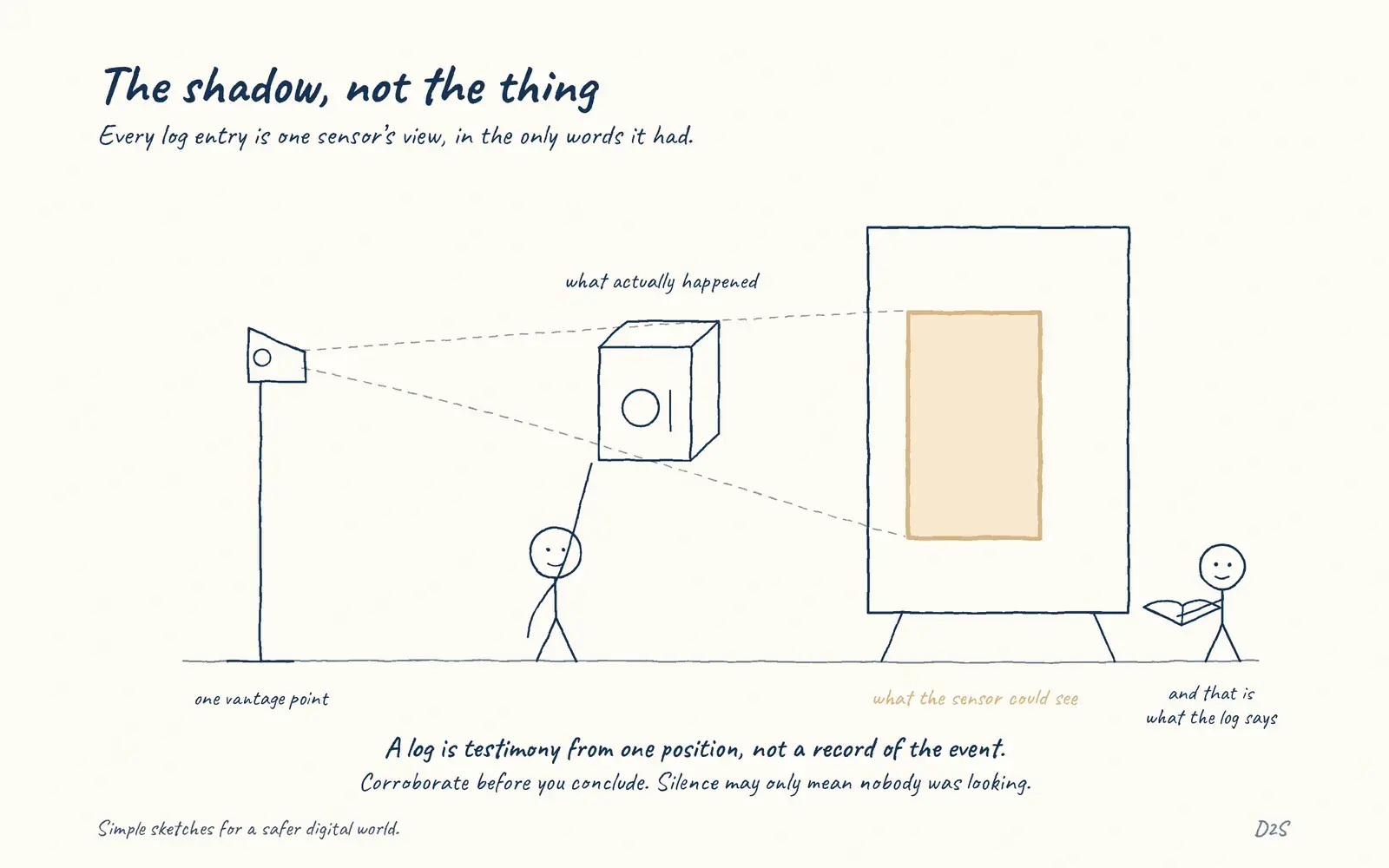 A log records an observation, not objective truthThe shadow, not the thing
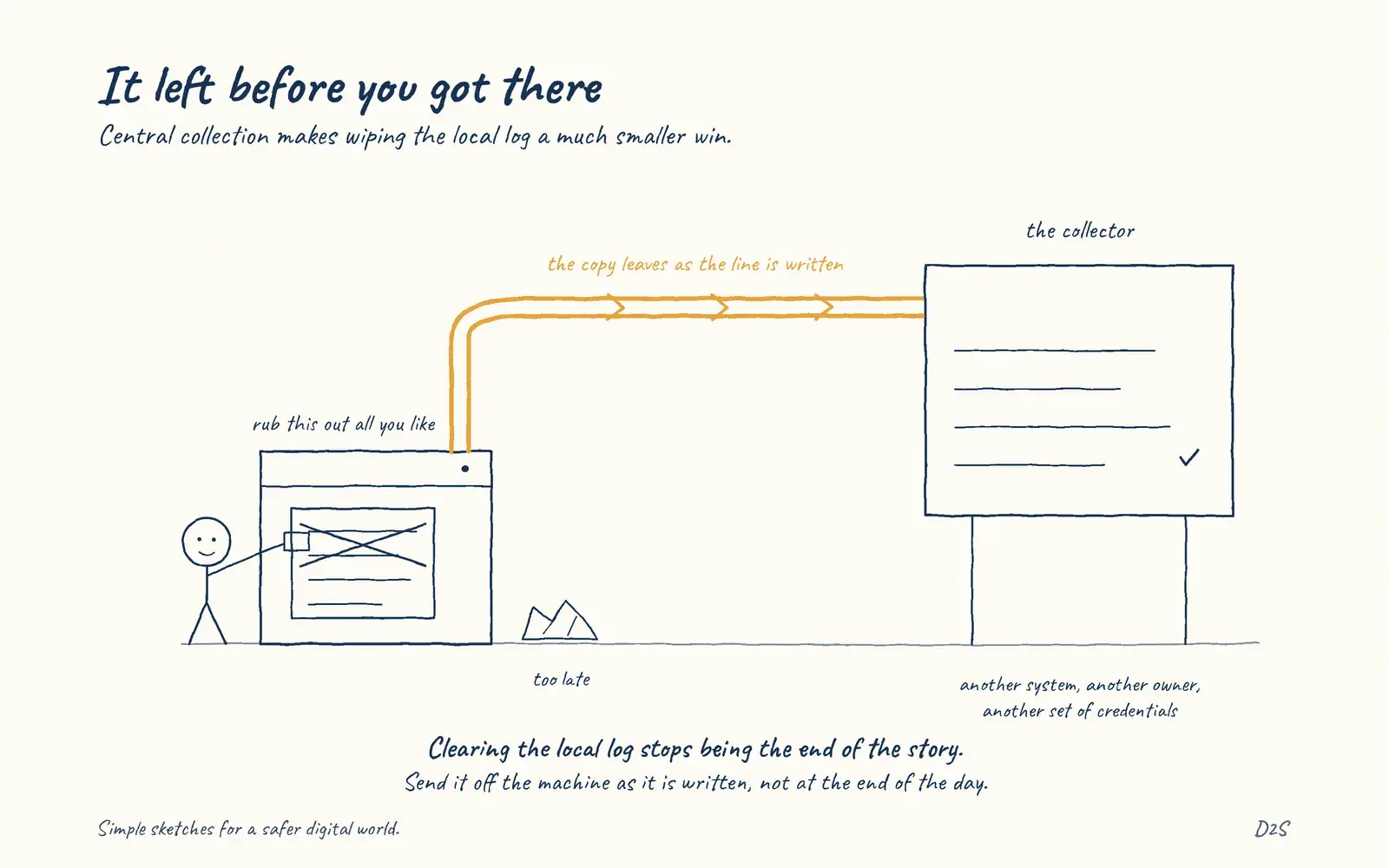 Central logging reduces local erasure riskIt left before you got there
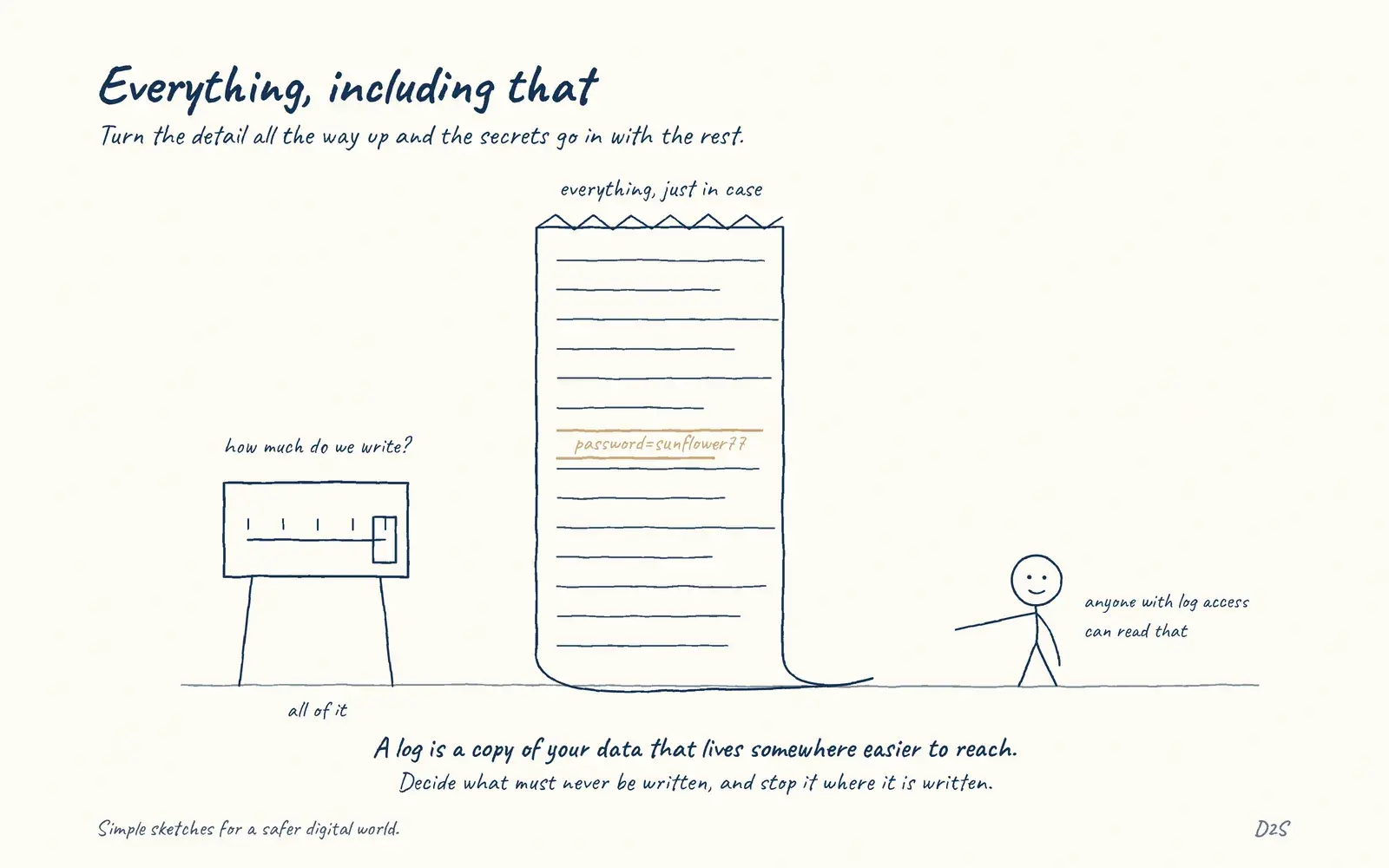 Verbose logging can leak secretsEverything, including that
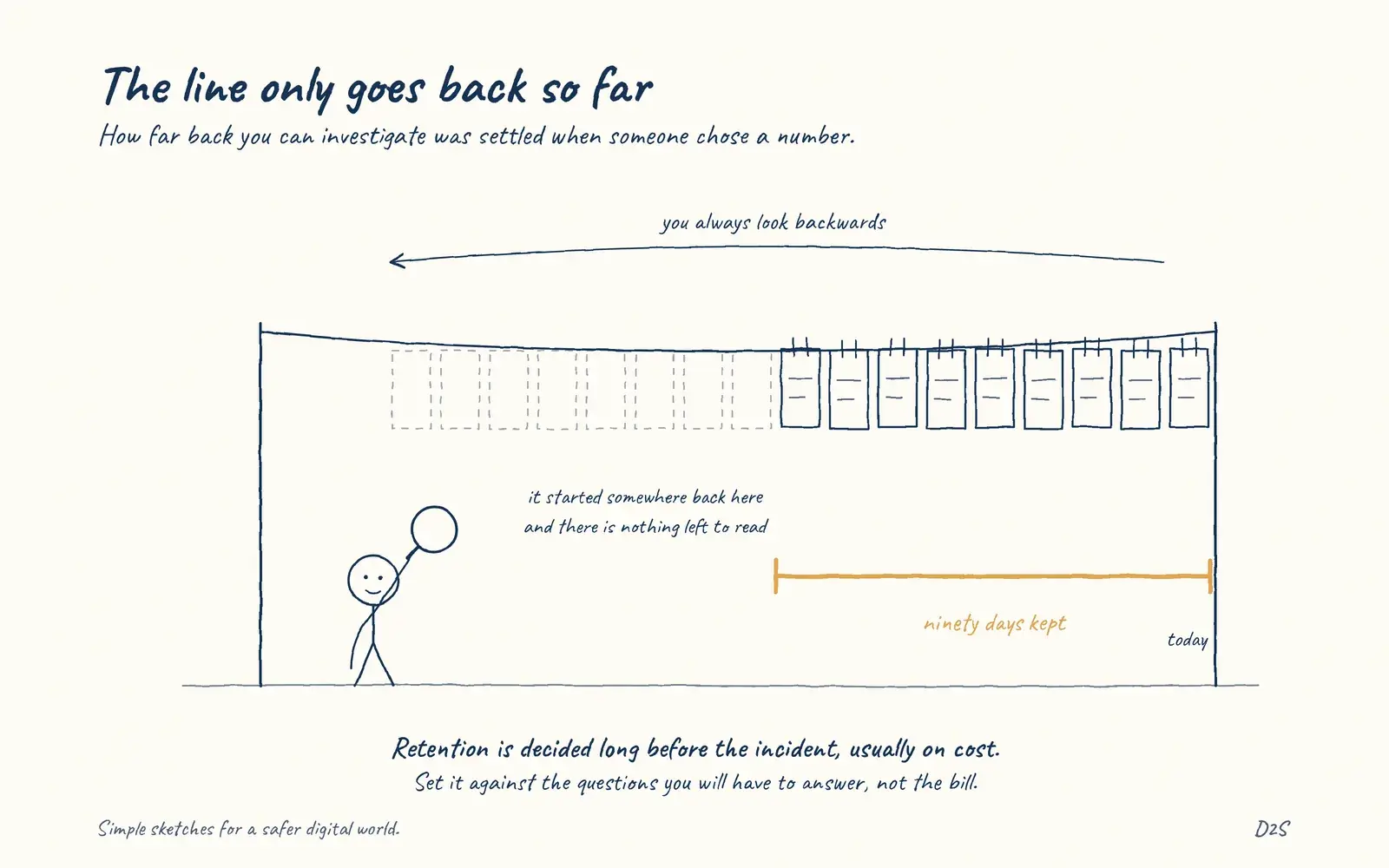 Retention determines how far back you can investigateThe line only goes back so far
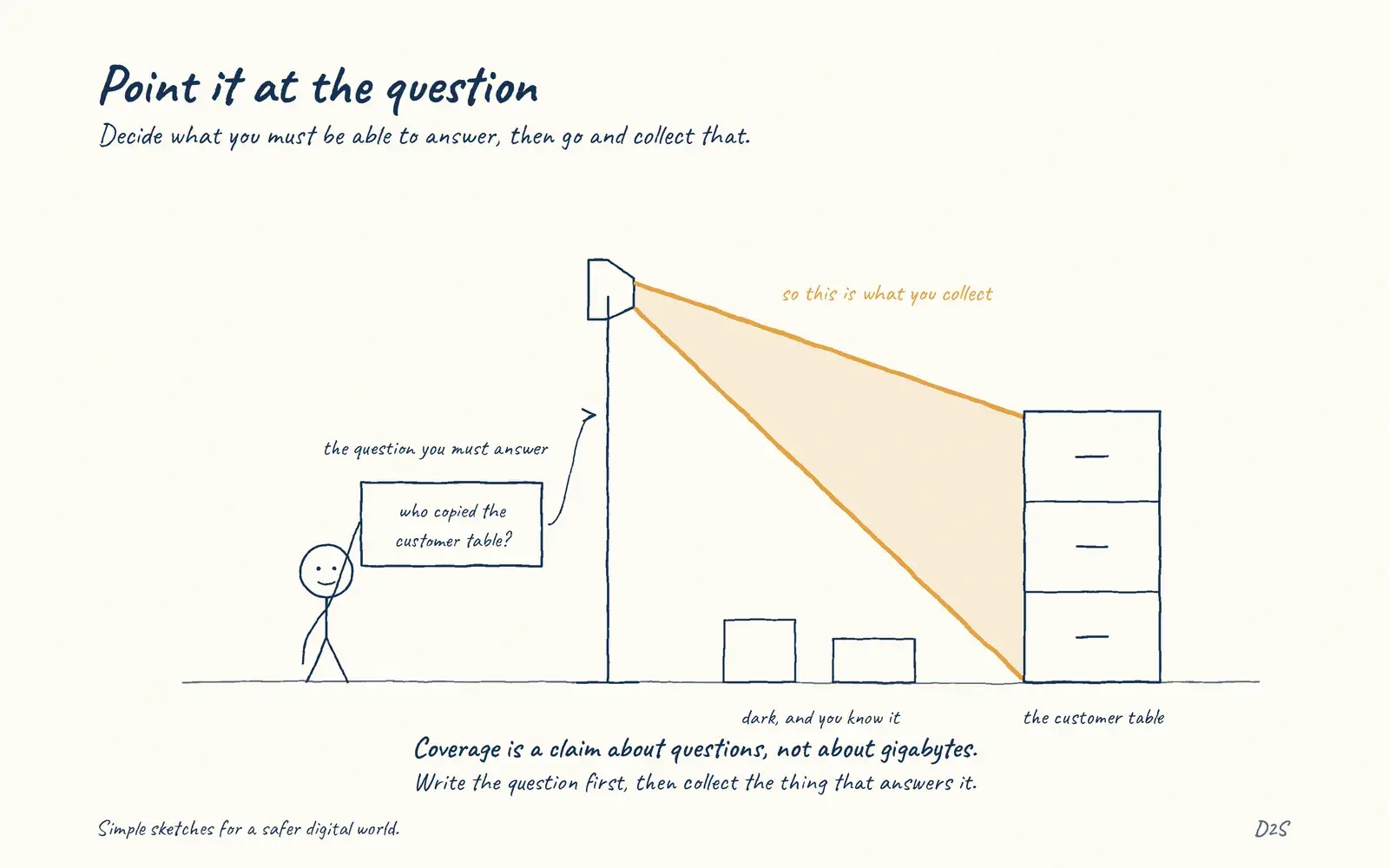 Telemetry coverage should map to detection questionsPoint it at the question
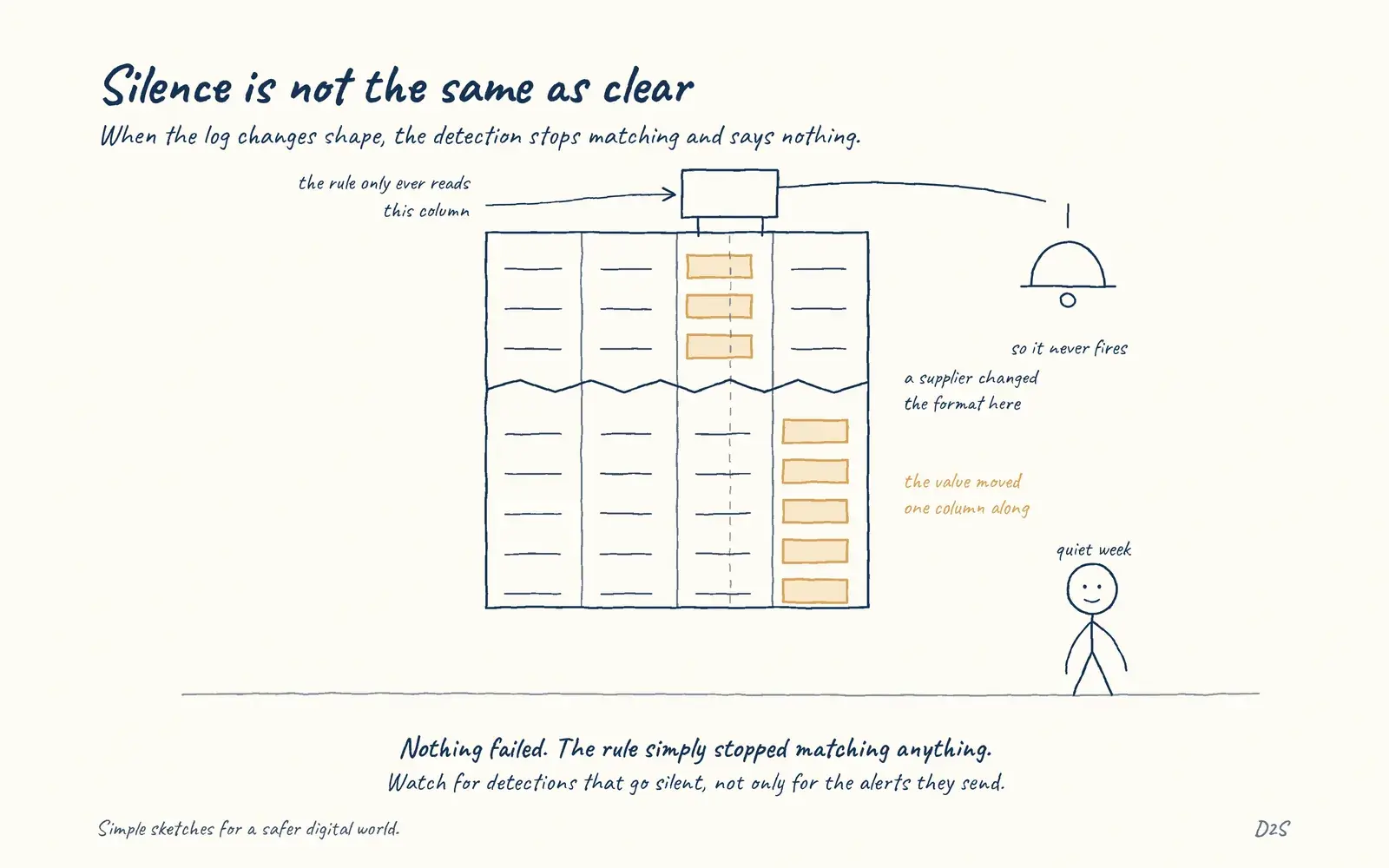 Parsing errors can silently break detectionsSilence is not the same as clear
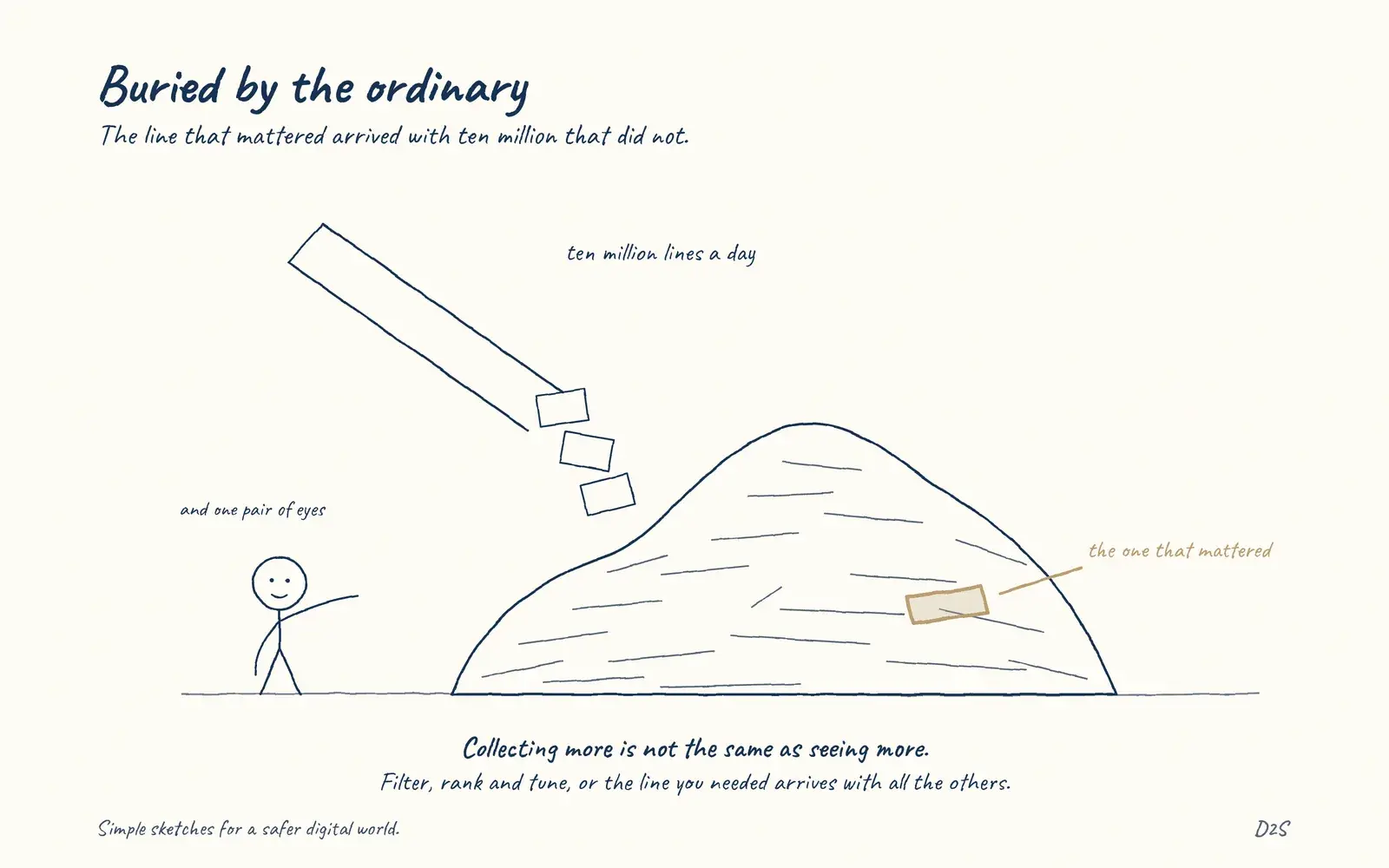 High-volume logs can hide high-value eventsBuried by the ordinary
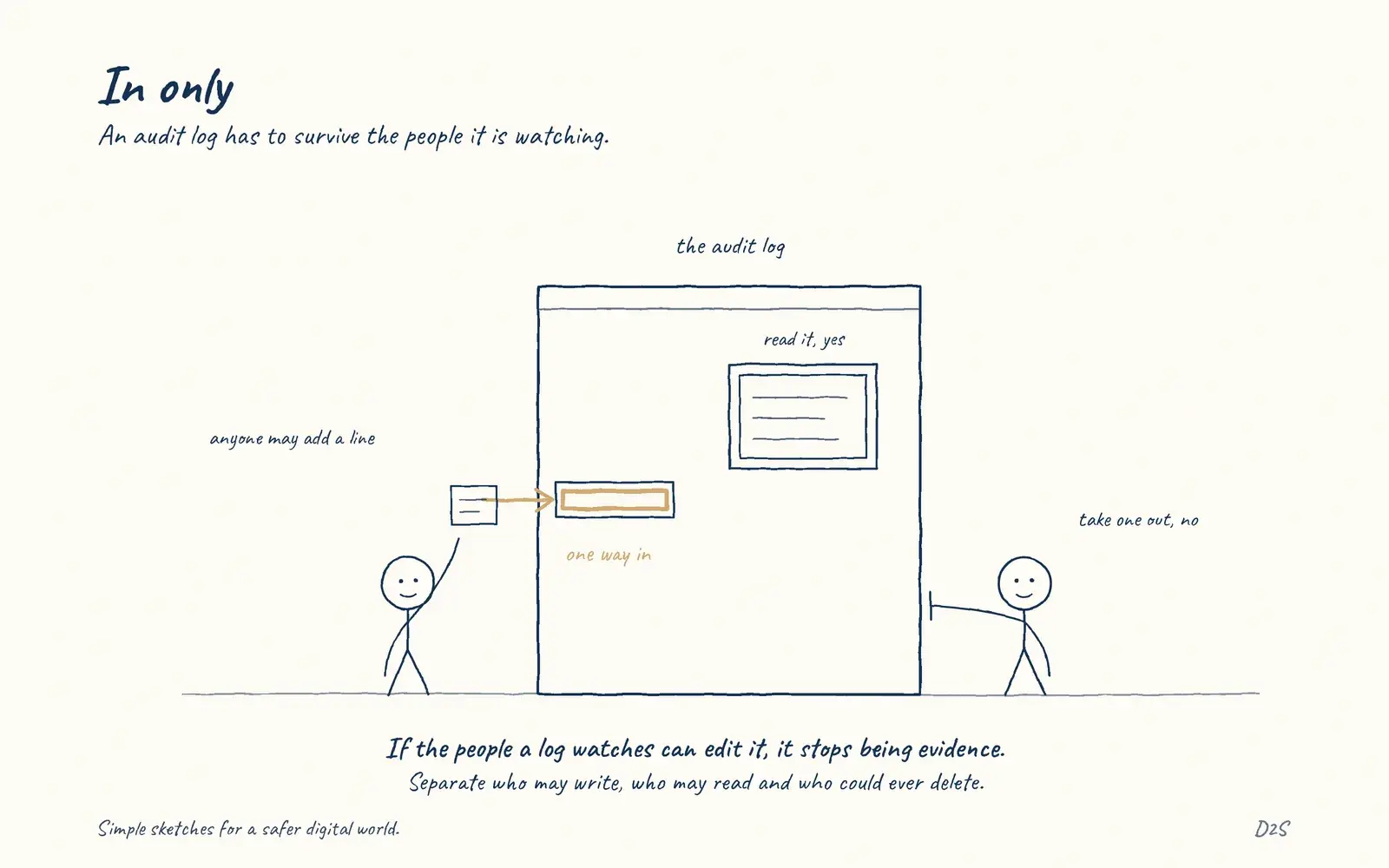 Audit logs need protected accessIn only
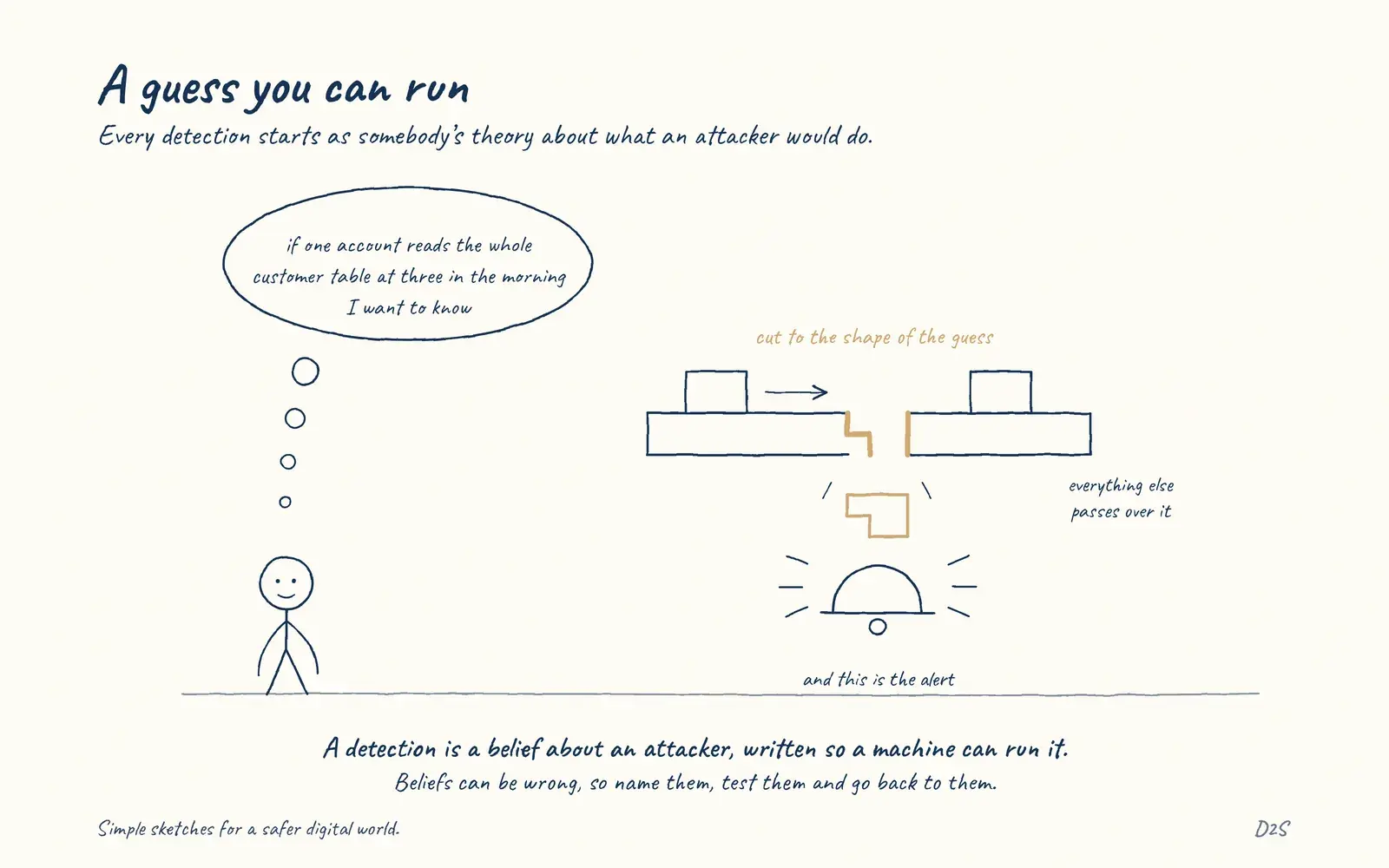 A detection is a hypothesis encoded as logicA guess you can run
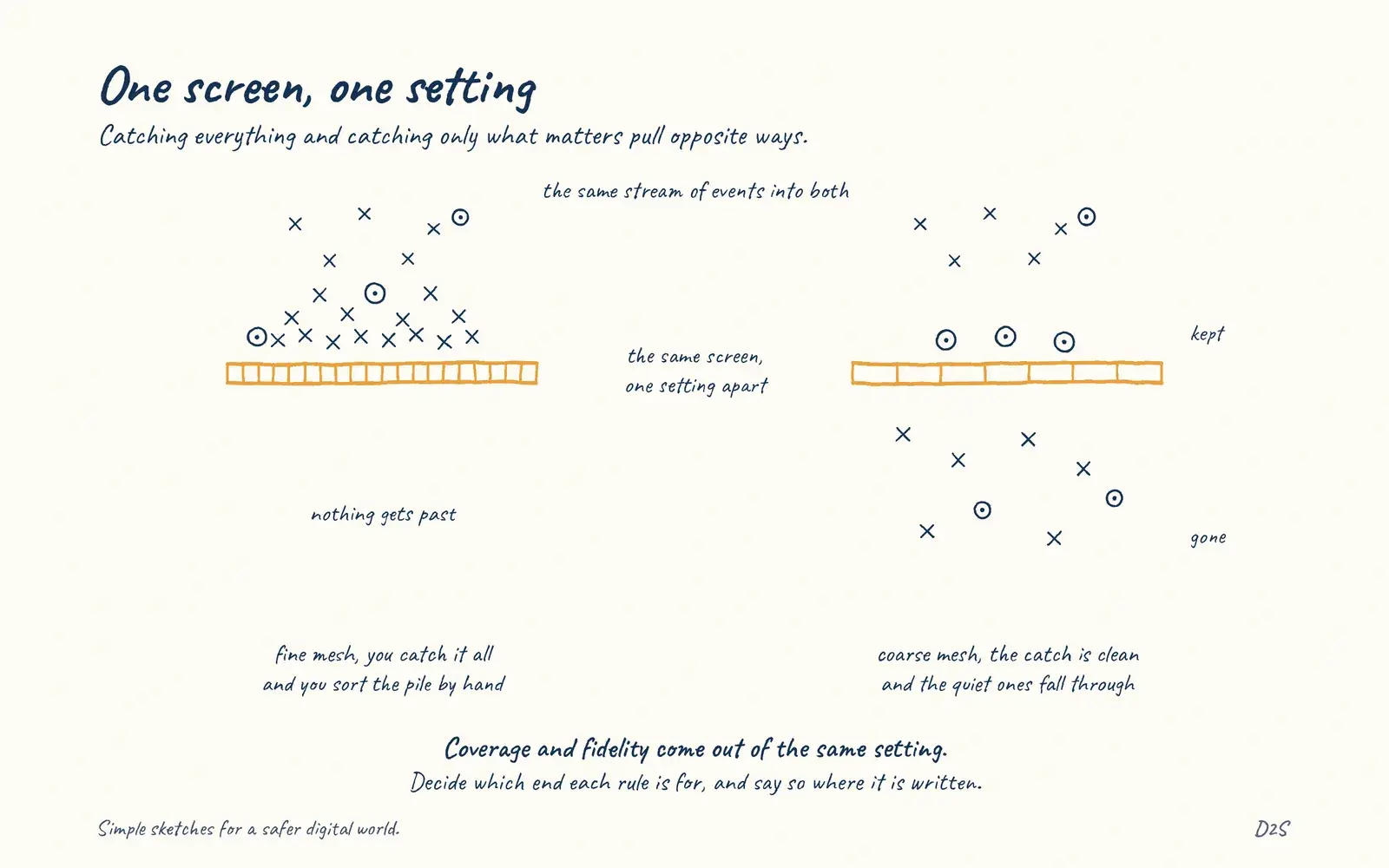 High fidelity and high coverage pull in different directionsOne screen, one setting
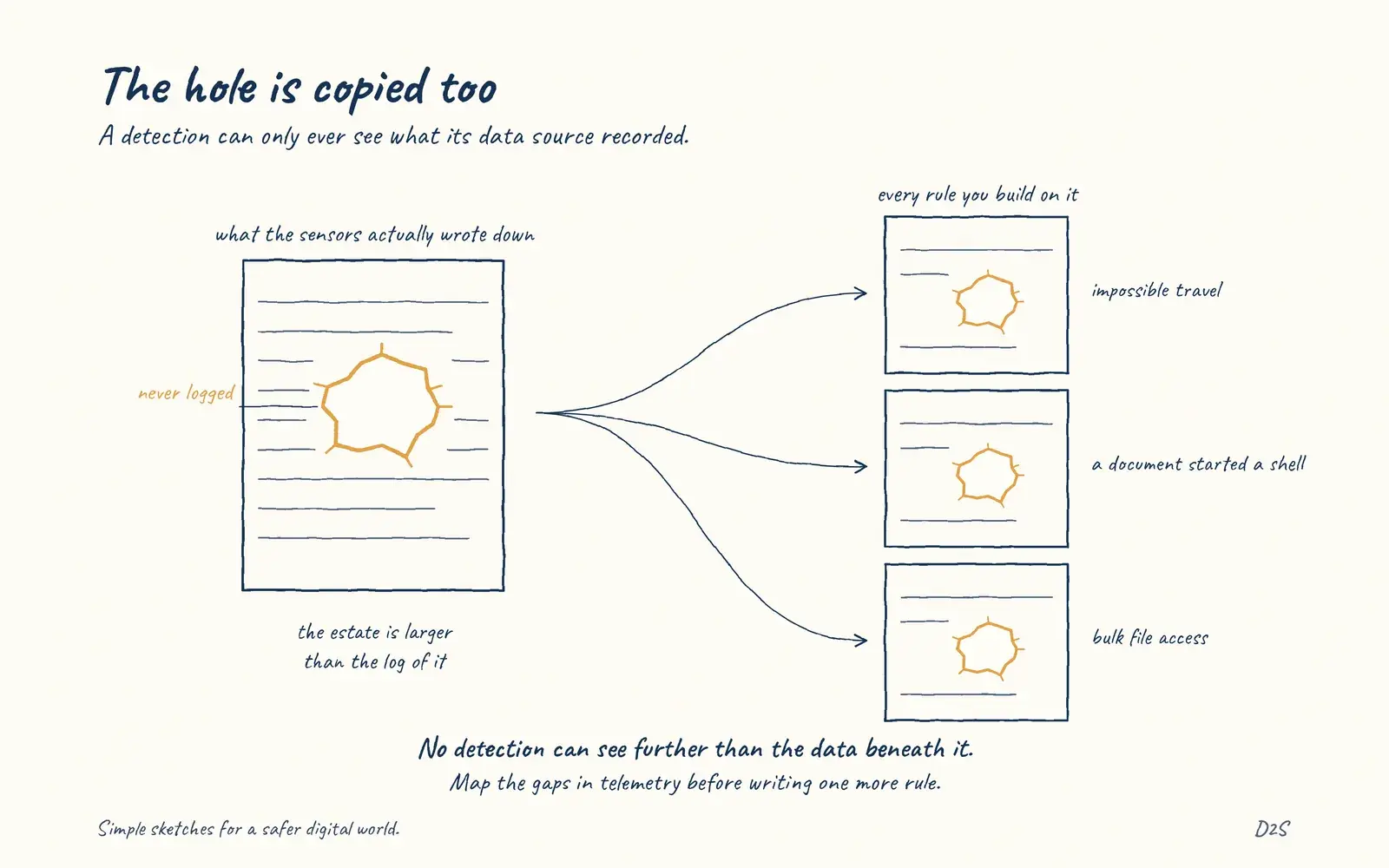 Detections inherit telemetry blind spotsThe hole is copied too
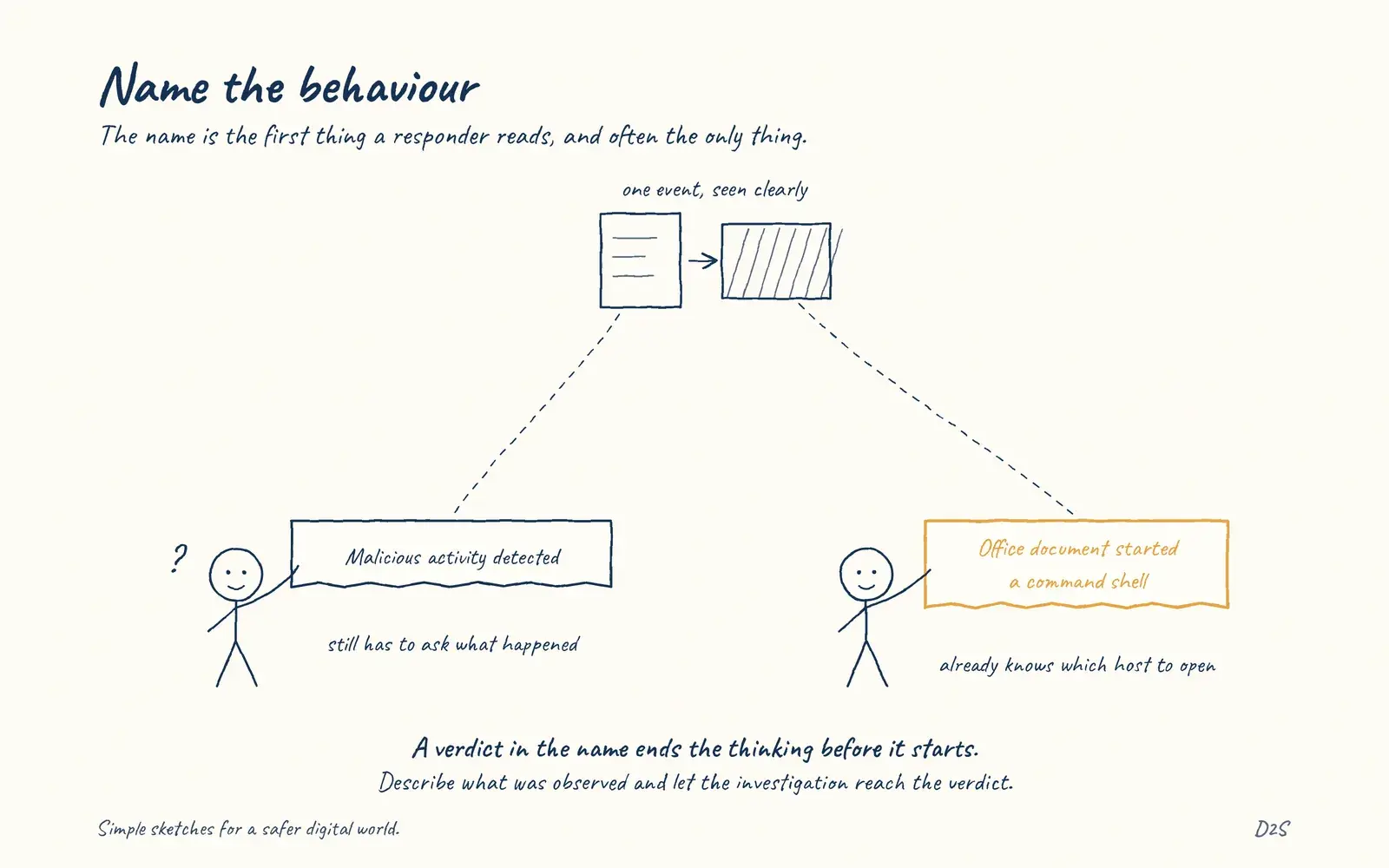 Detection names should describe behaviour, not certaintyName the behaviour
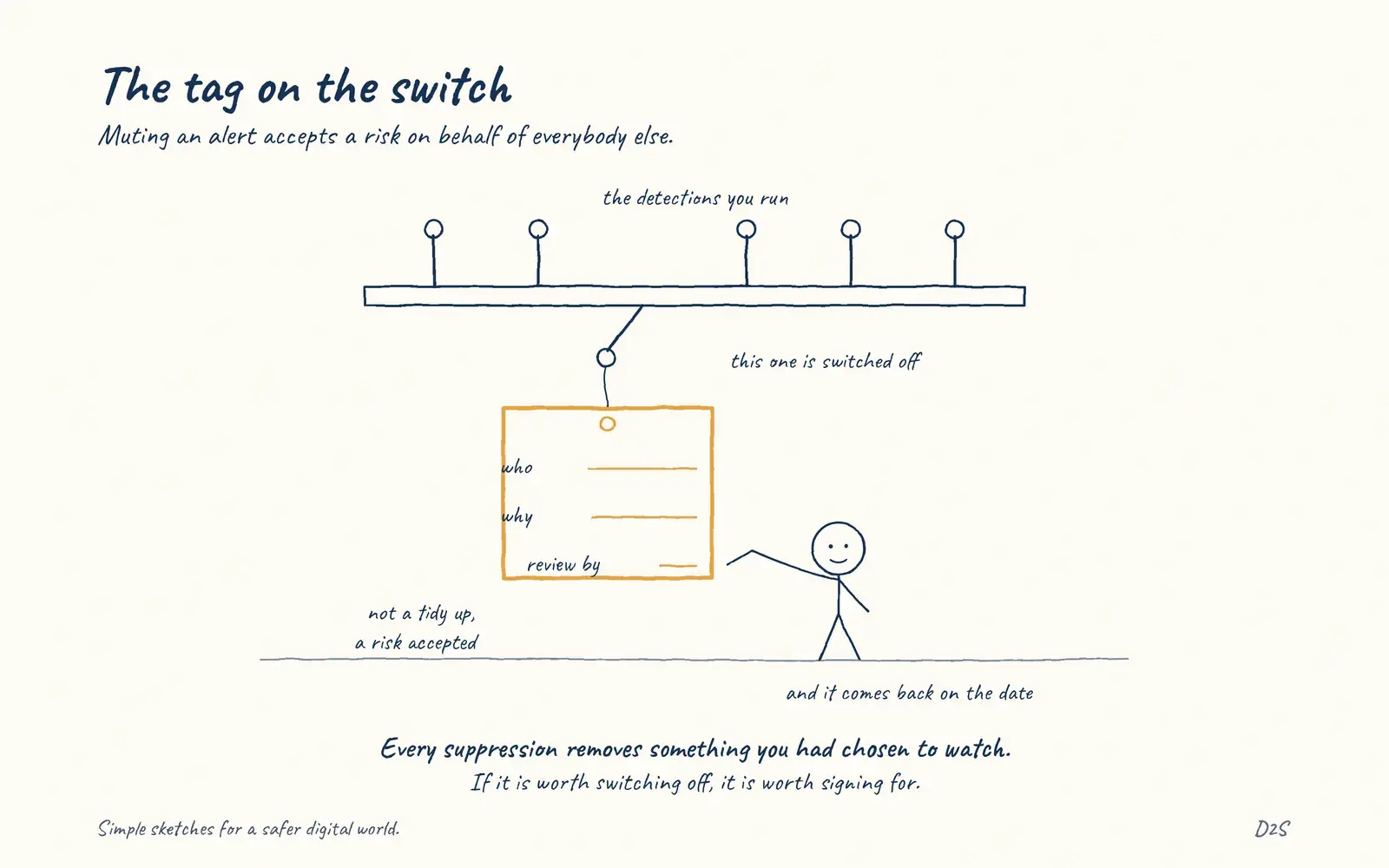 Suppression is a security decisionThe tag on the switch
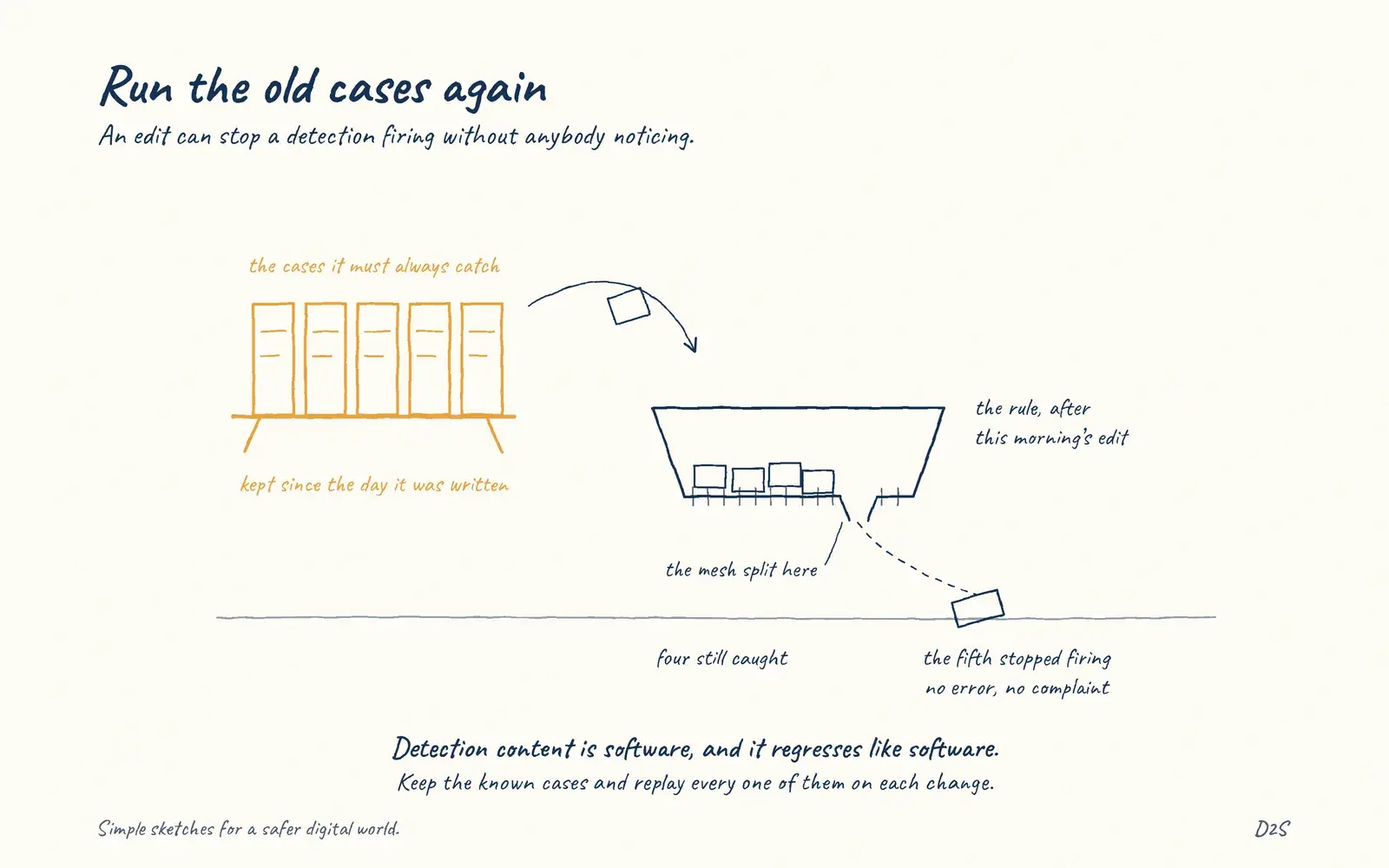 Detection rules need regression testsRun the old cases again
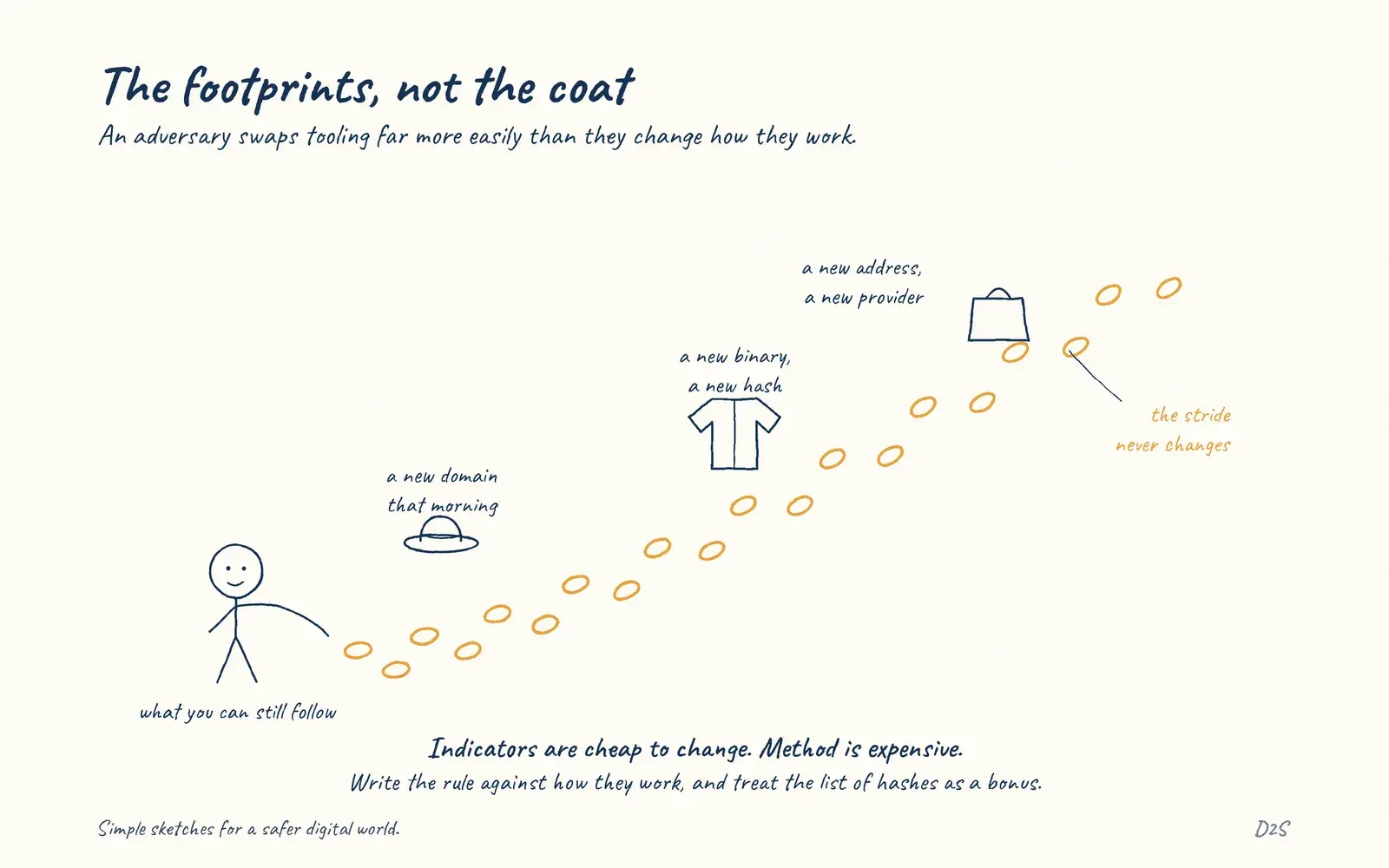 Behaviour often outlives static indicatorsThe footprints, not the coat
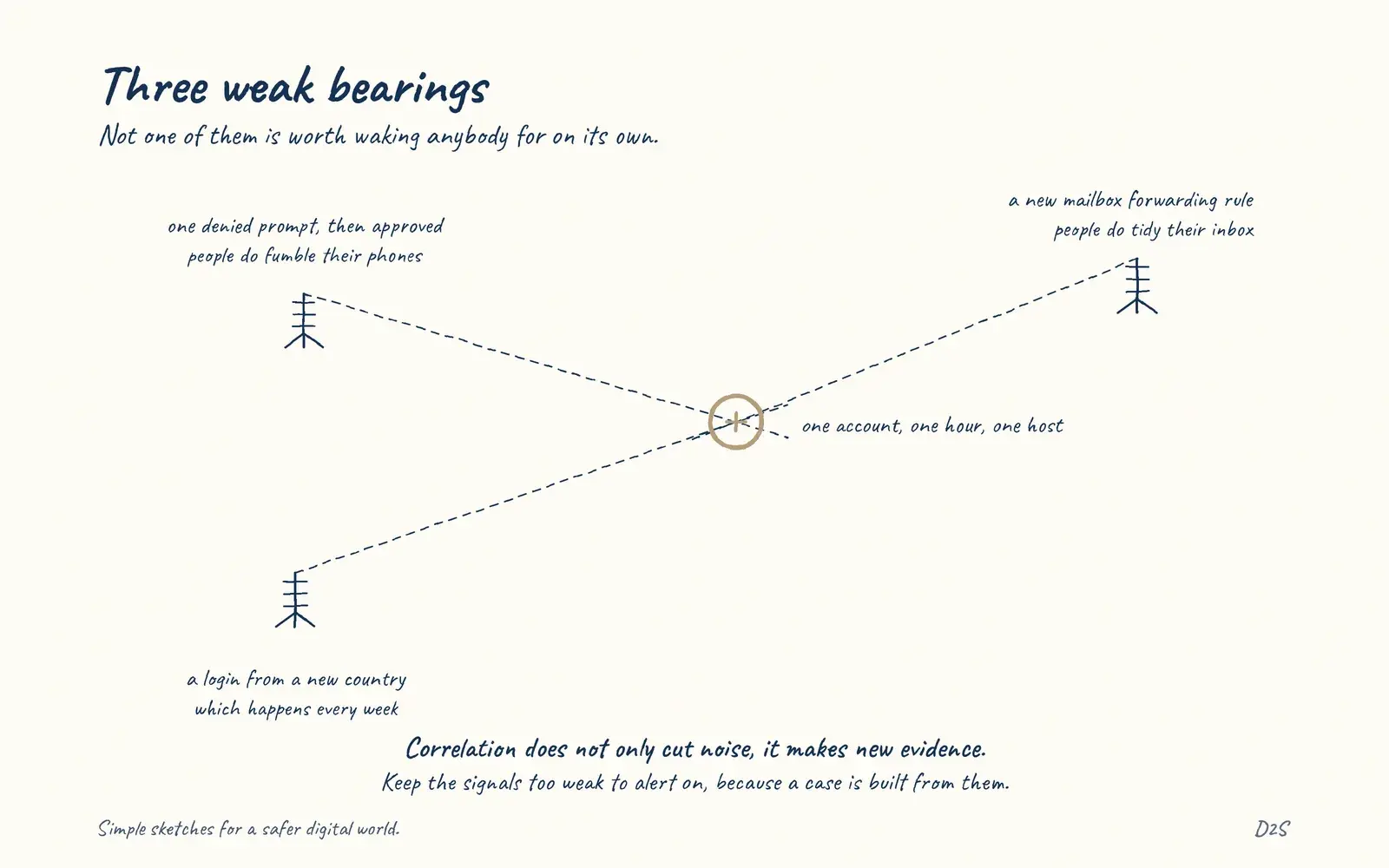 Weak signals can correlate into a strong caseThree weak bearings
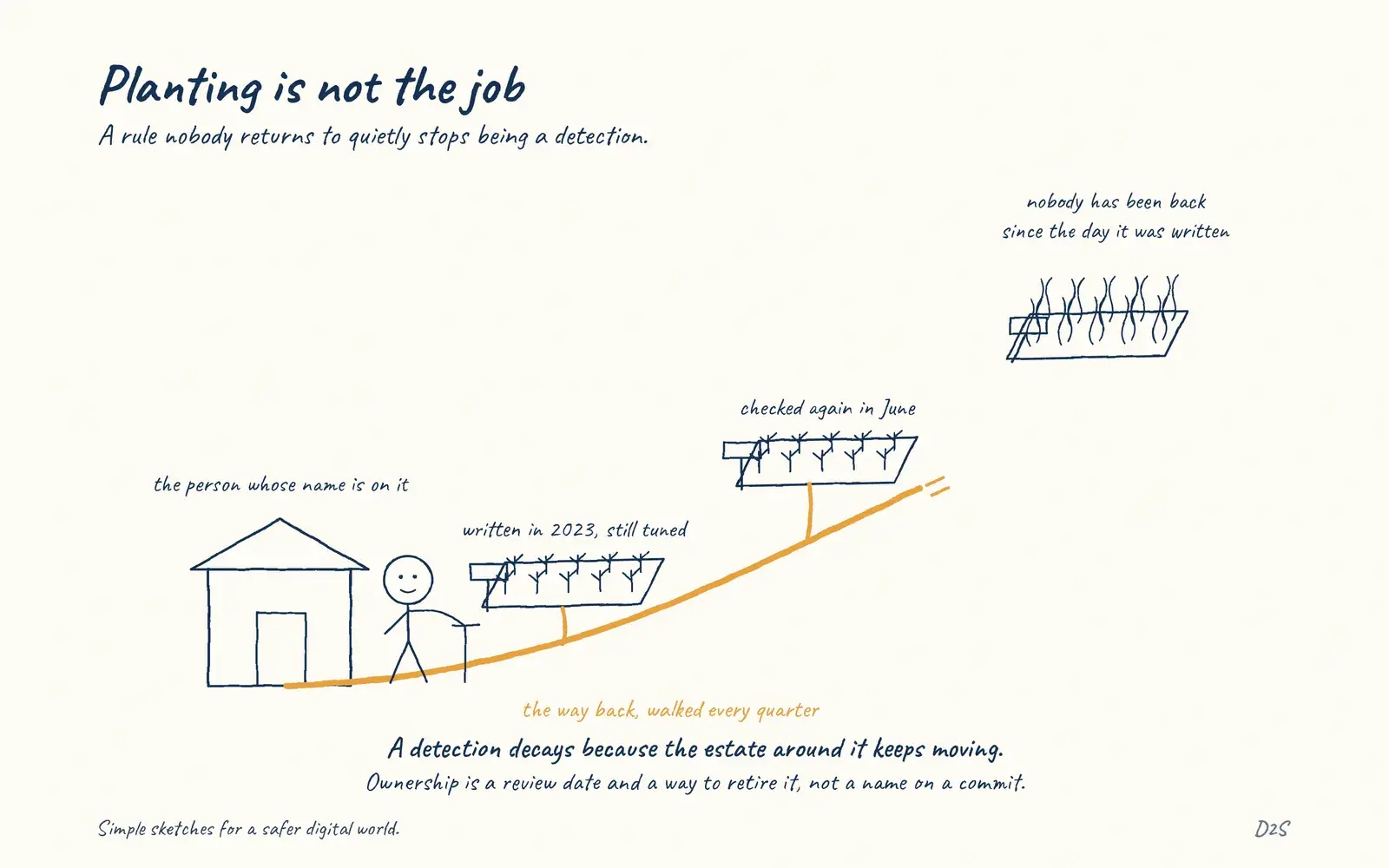 Detection ownership includes maintenancePlanting is not the job
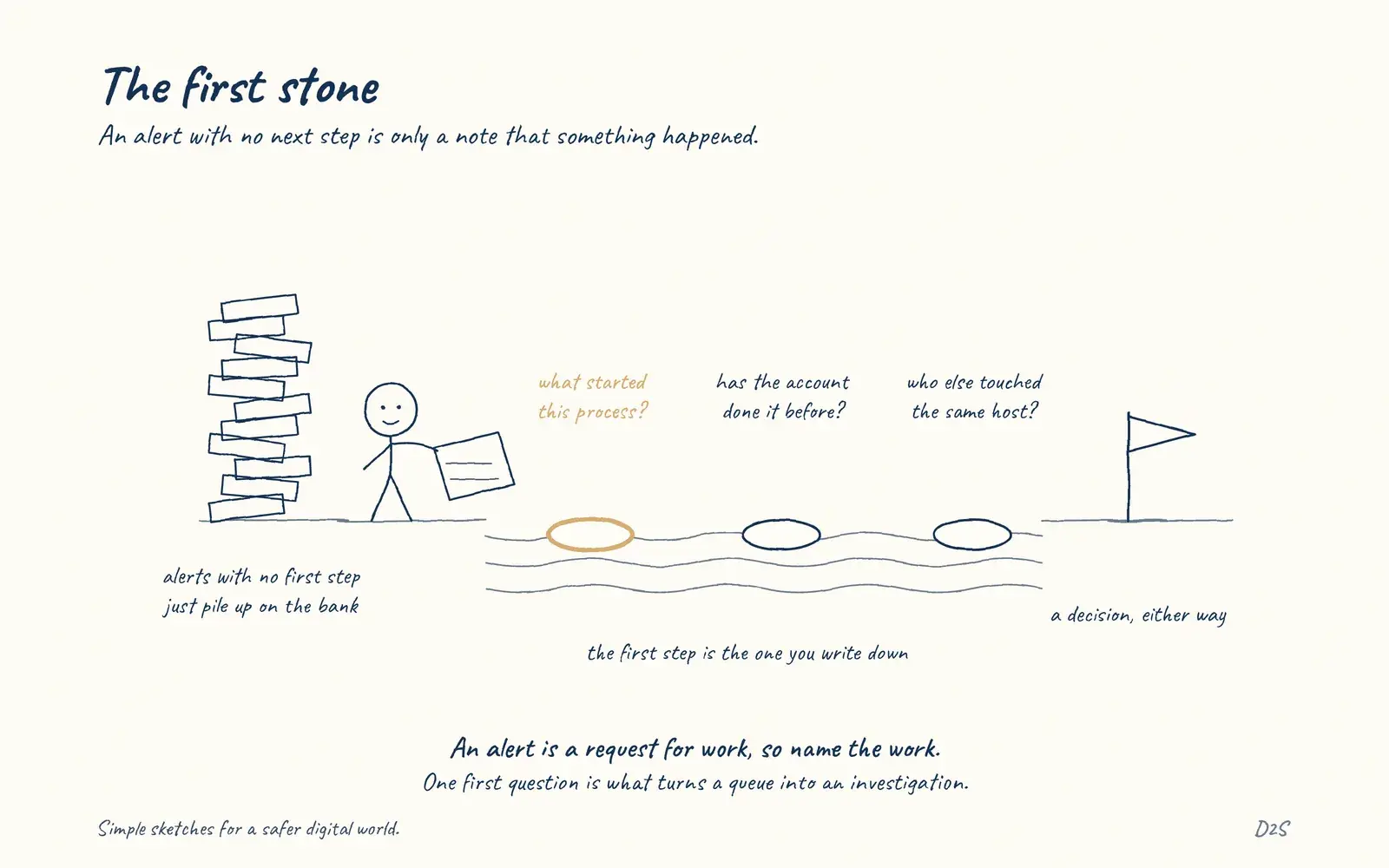 Every alert should have an investigative next stepThe first stone
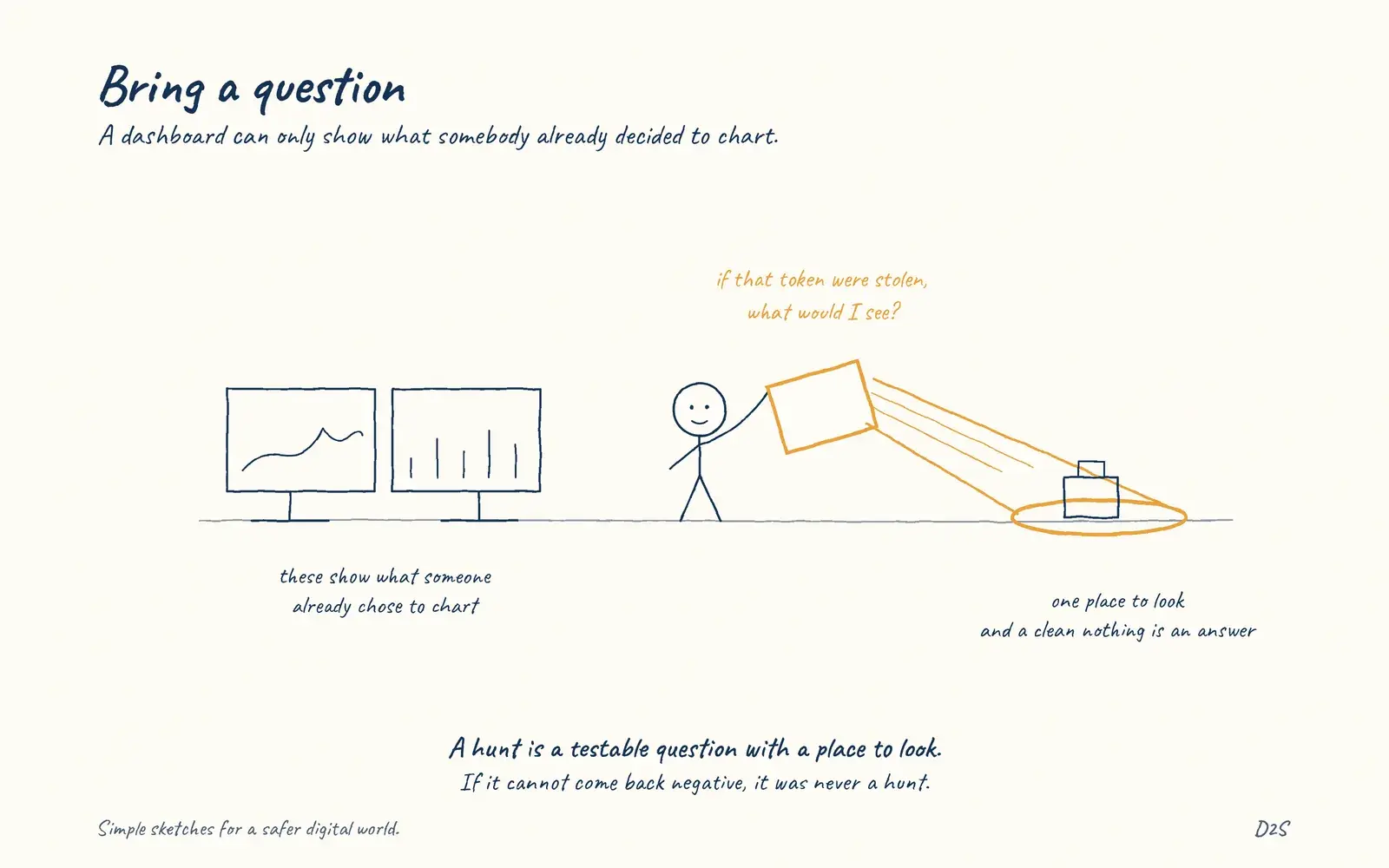 Hunting starts with a question, not a dashboardBring a question
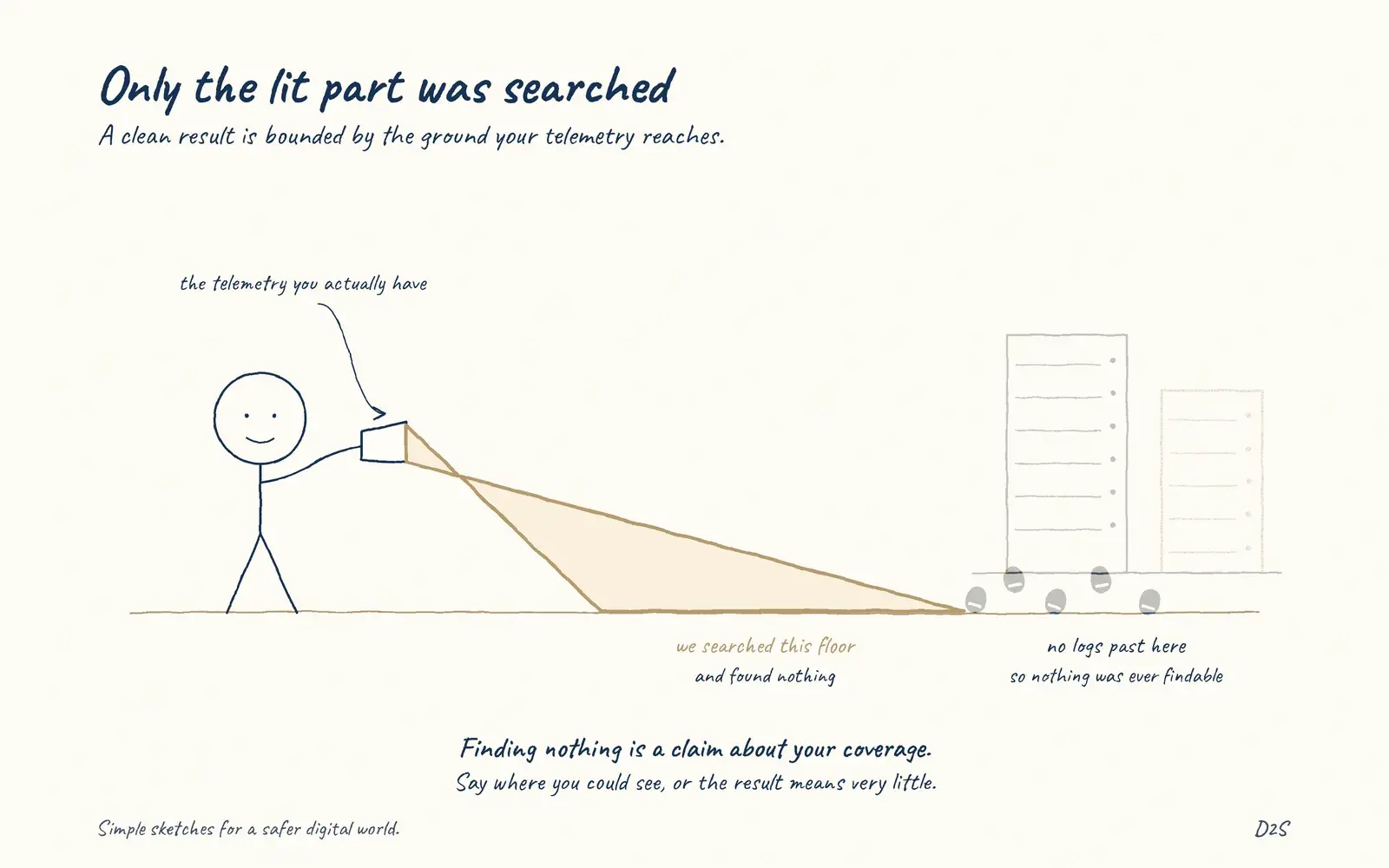 Absence of evidence depends on coverageOnly the lit part was searched
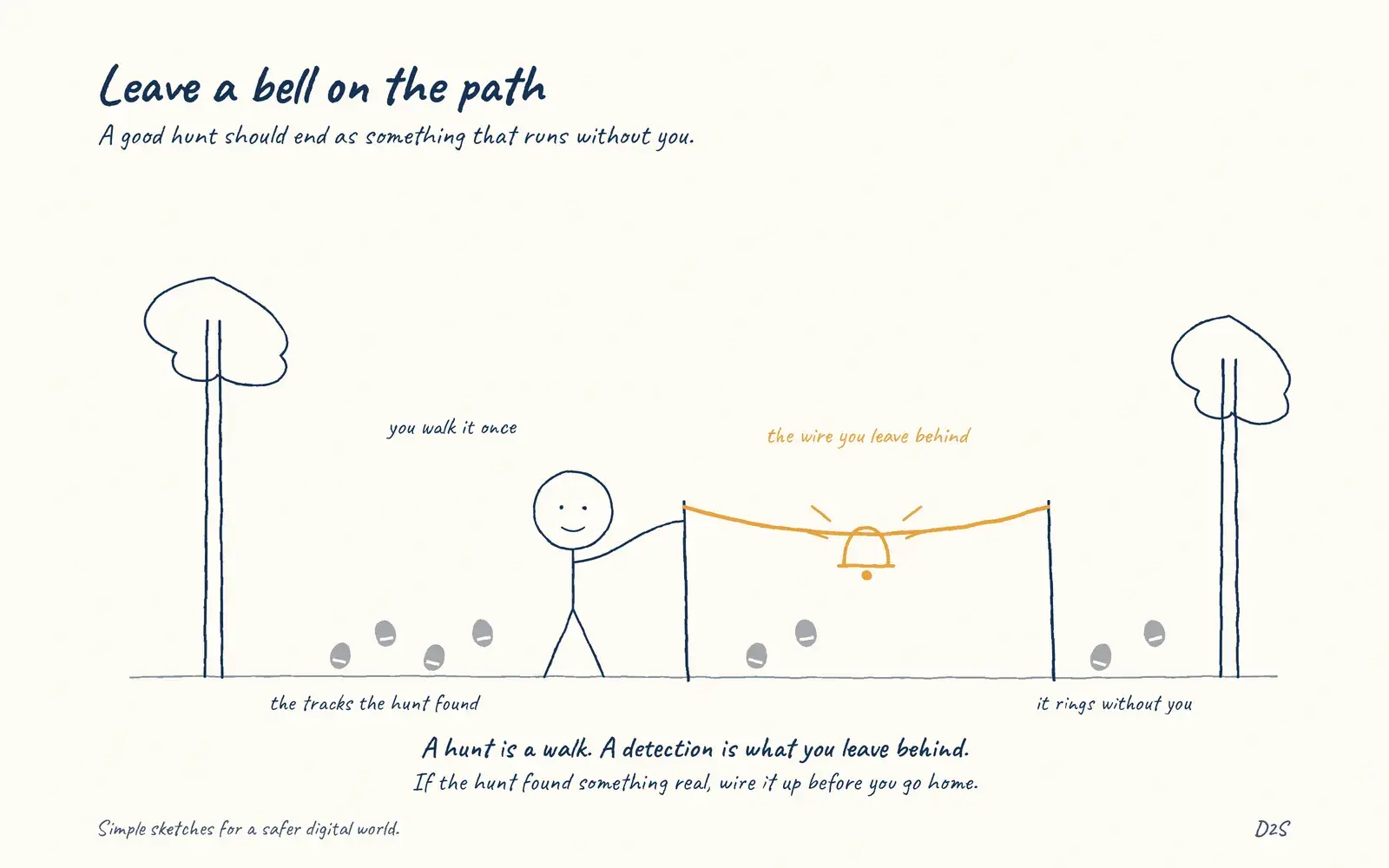 Hunts can become future detectionsLeave a bell on the path
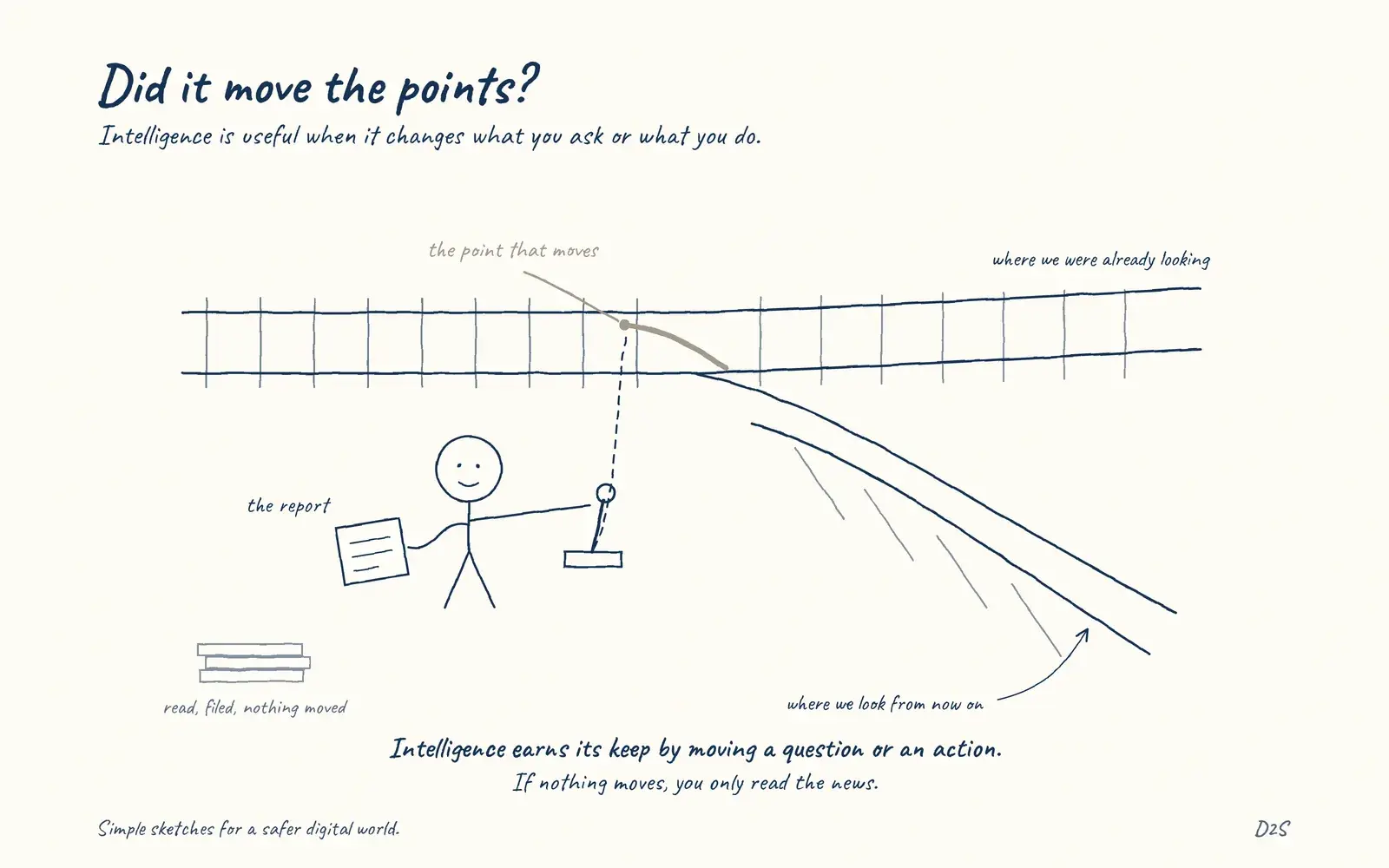 Threat intelligence should change a question or actionDid it move the points? Intelligence is useful when it changes what you ask or what you do
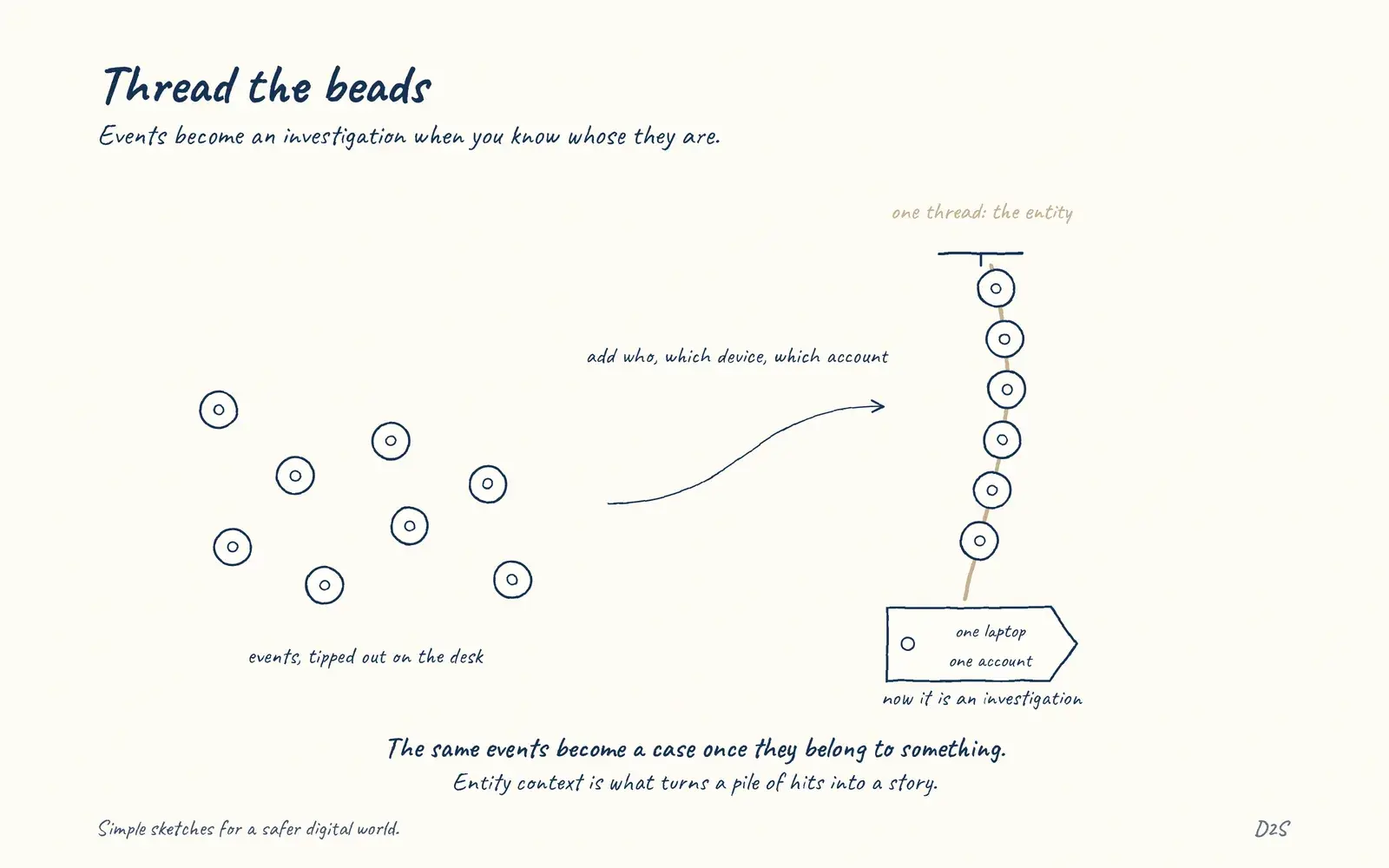 Entity context turns events into investigationsThread the beads
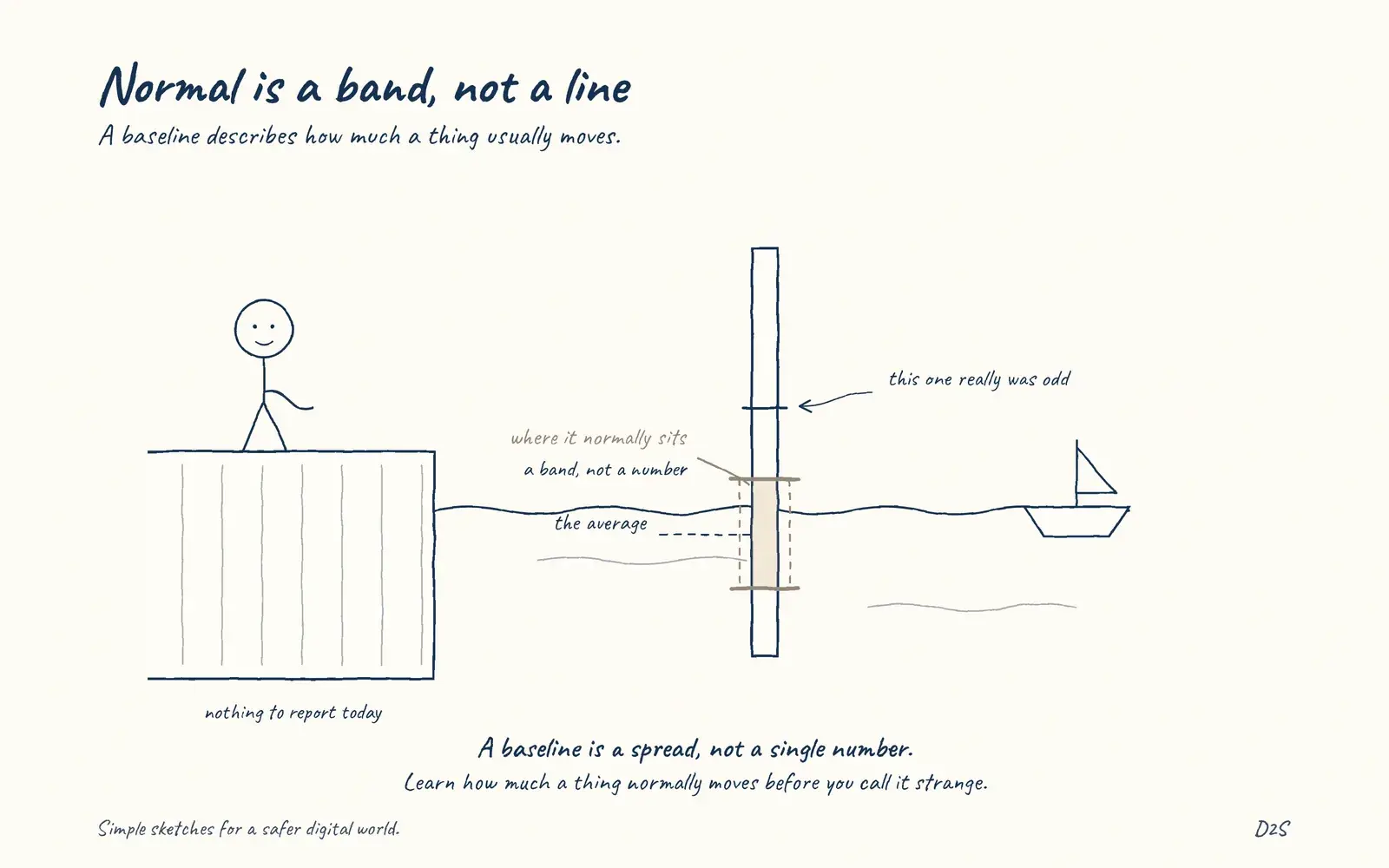 Baseline means understanding normal variationNormal is a band, not a line
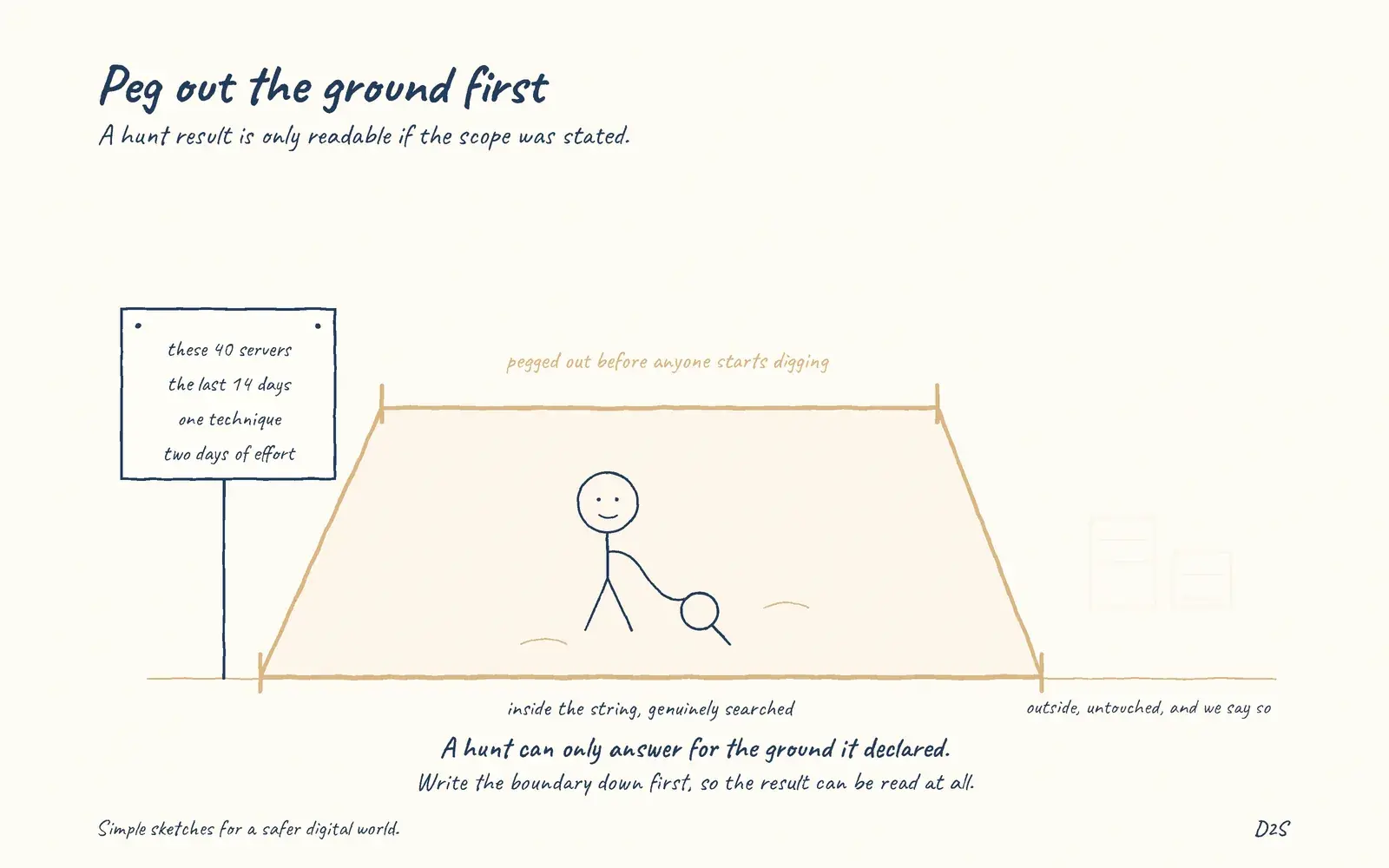 Hunt scope should be explicitPeg out the ground first
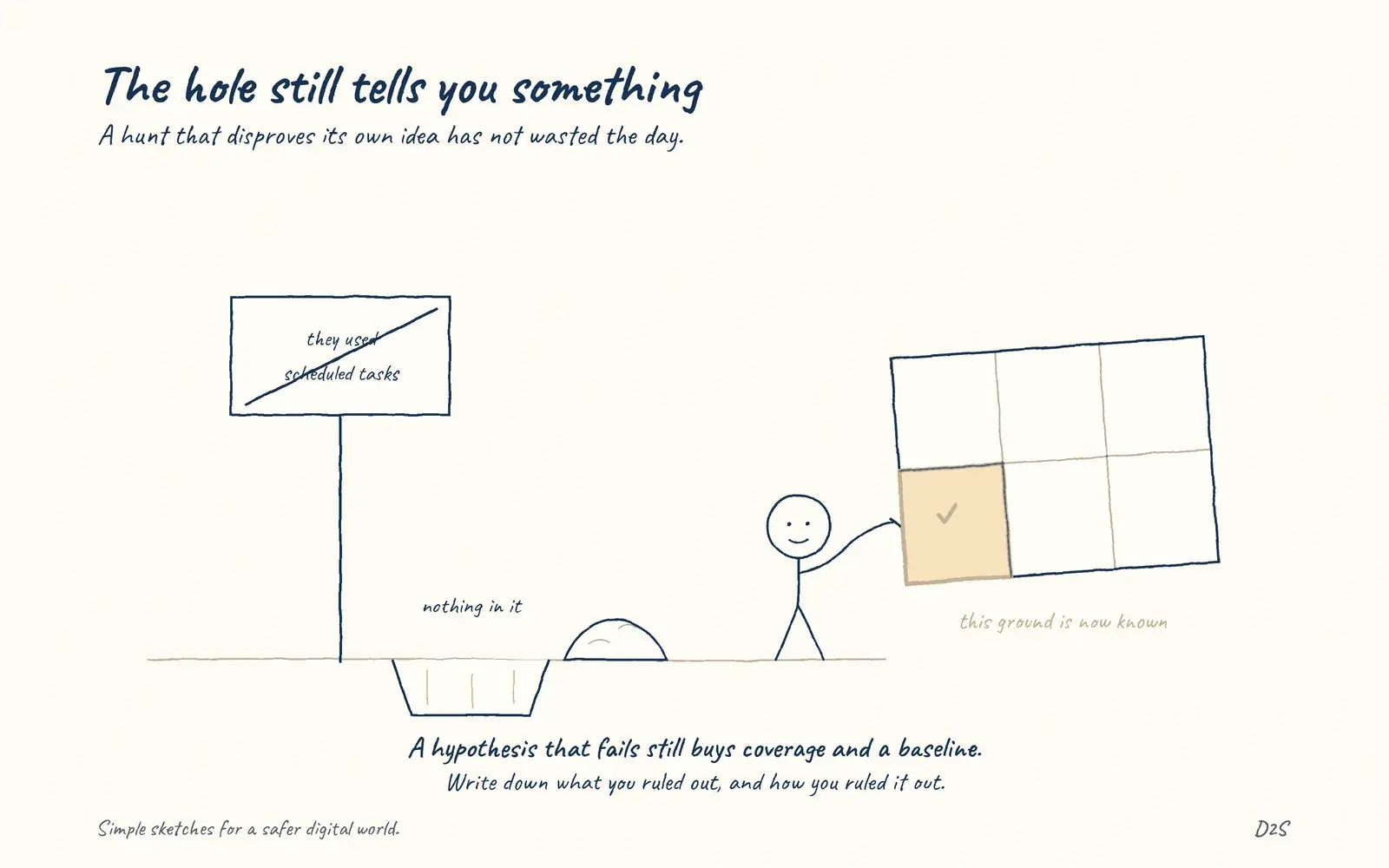 A wrong hypothesis can still be usefulThe hole still tells you something
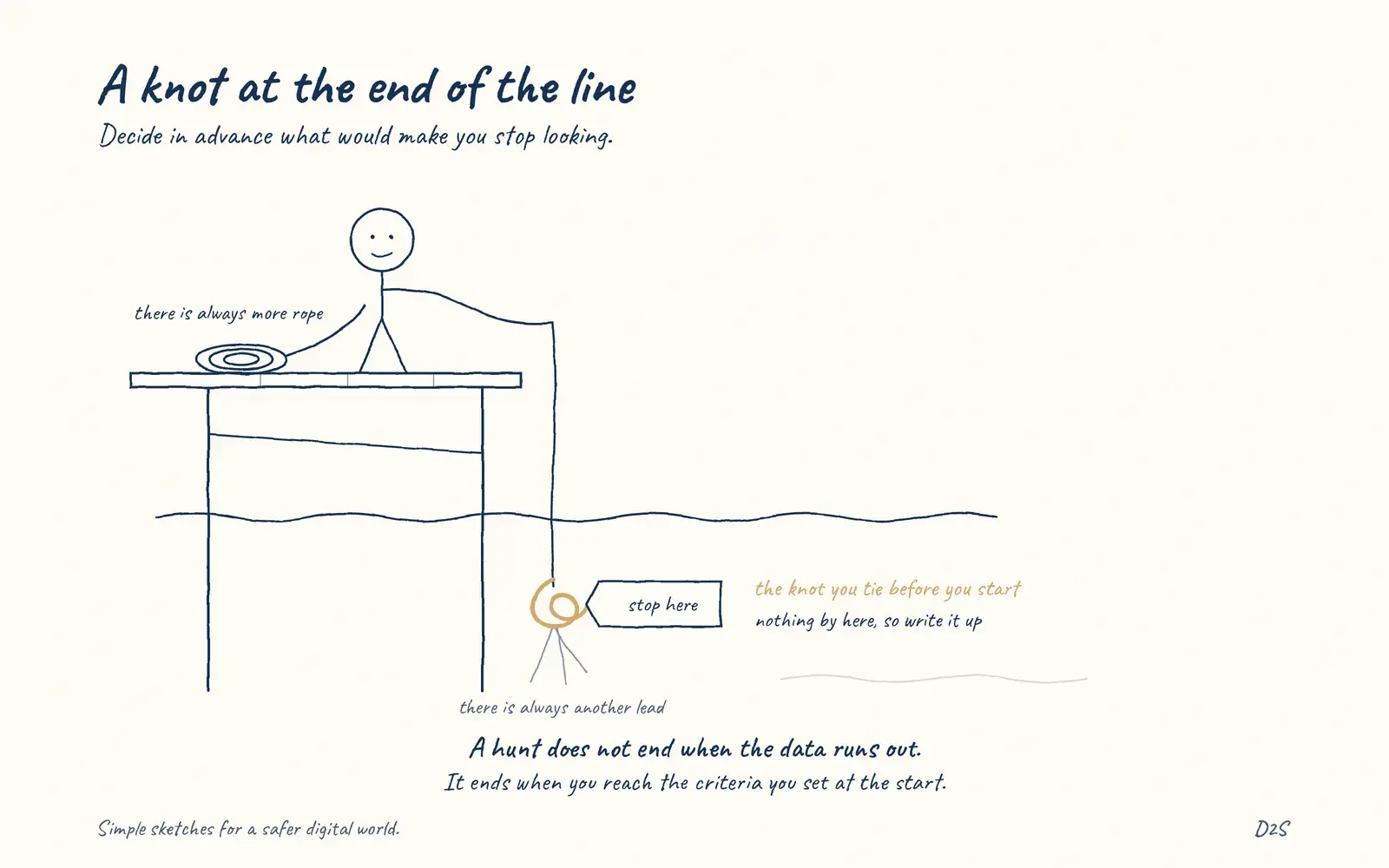 Hunts need stopping criteriaA knot at the end of the line