
Incident response
What you do once it has already happened, and what you wish you had done first.
50 sketches
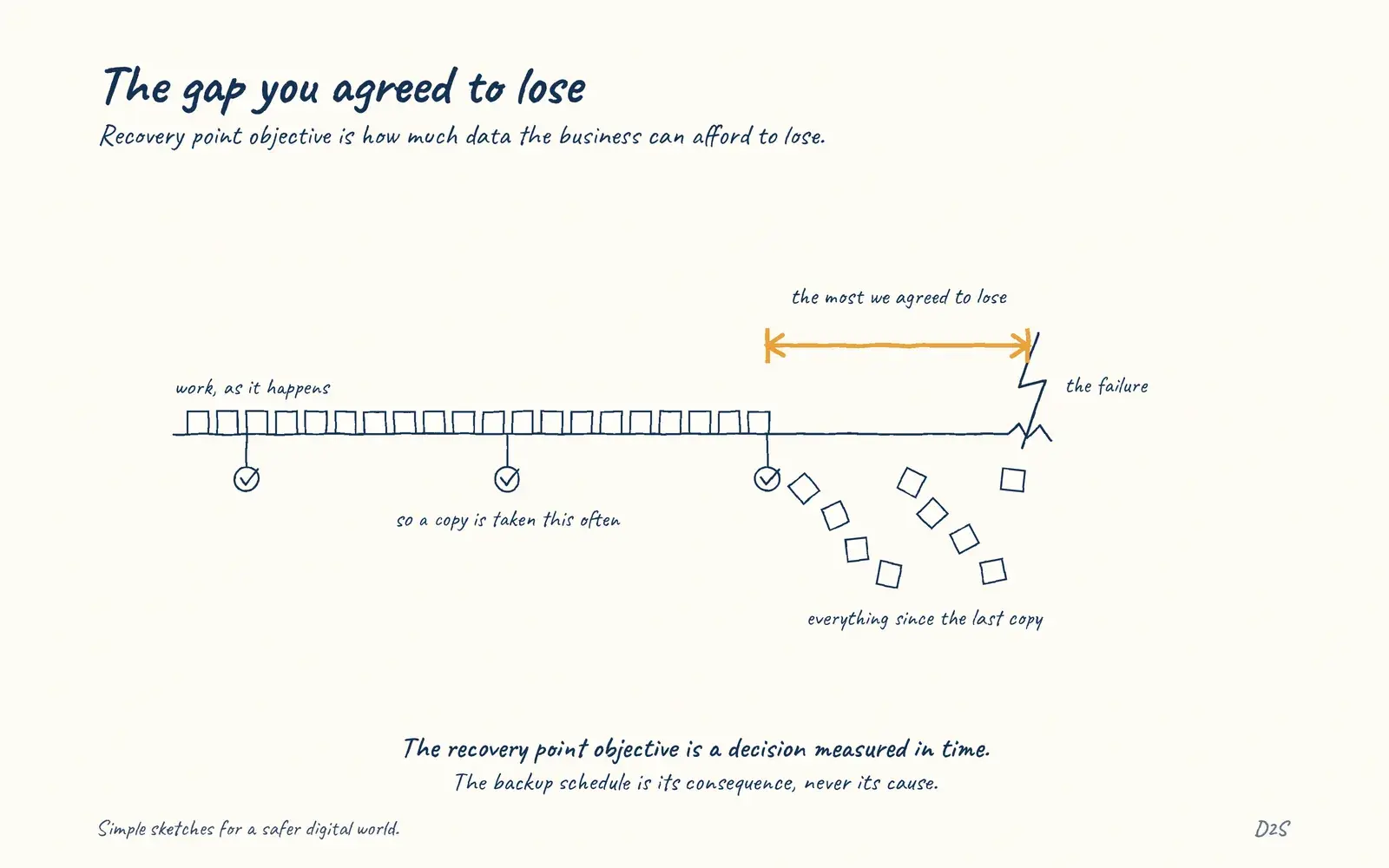 RPOThe gap you agreed to lose
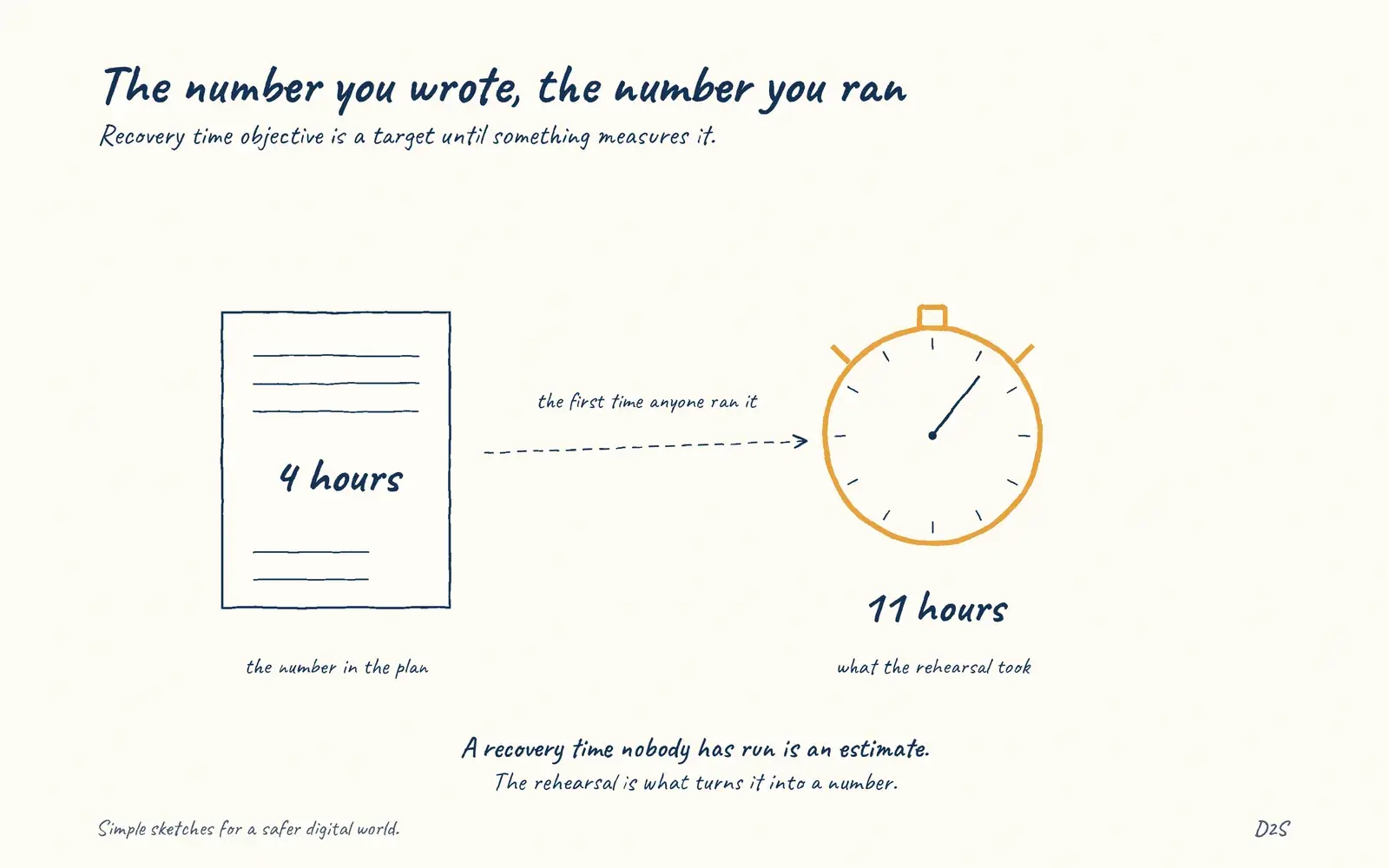 RTOThe number you wrote, the number you ran
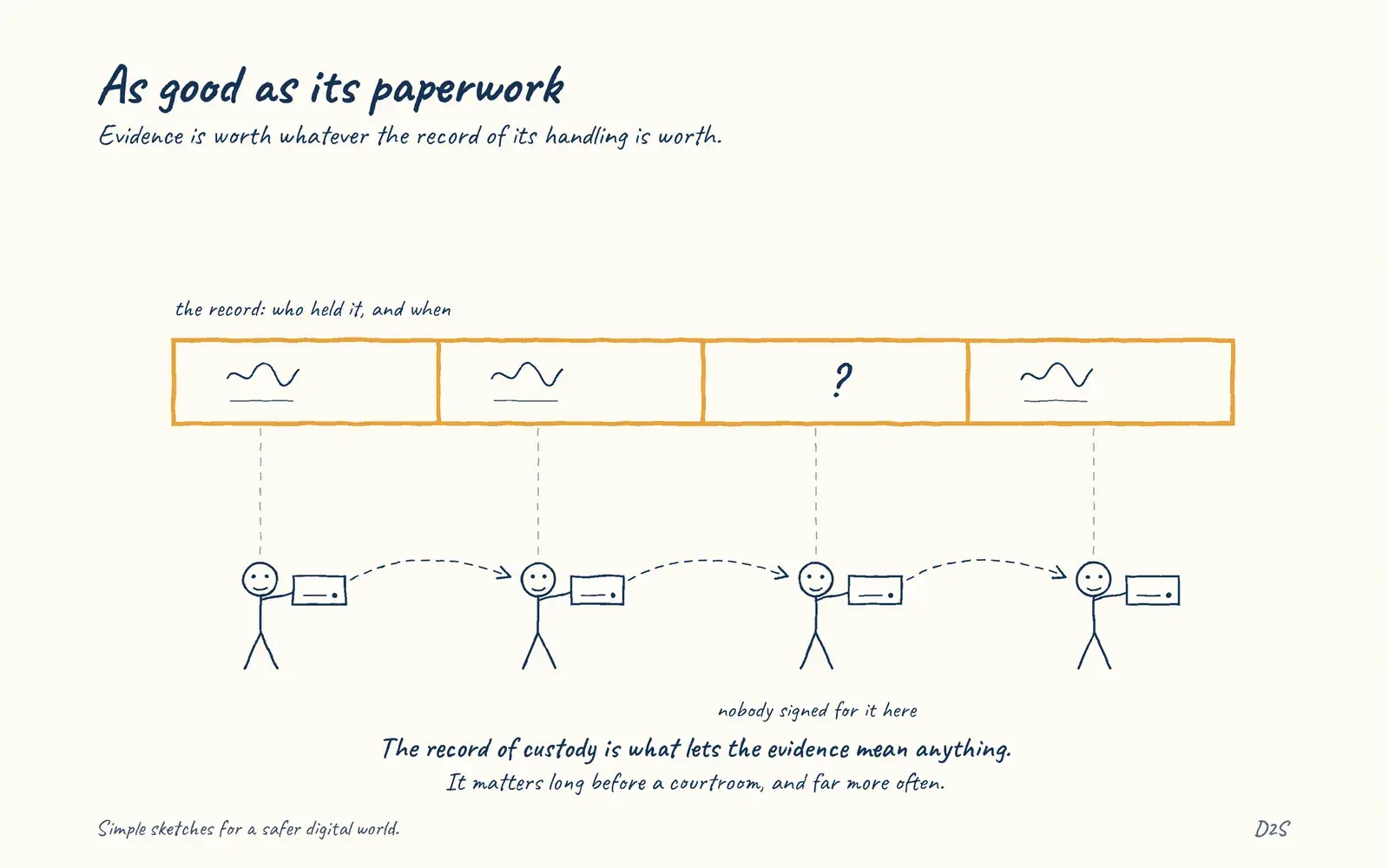 Chain of custodyAs good as its paperwork
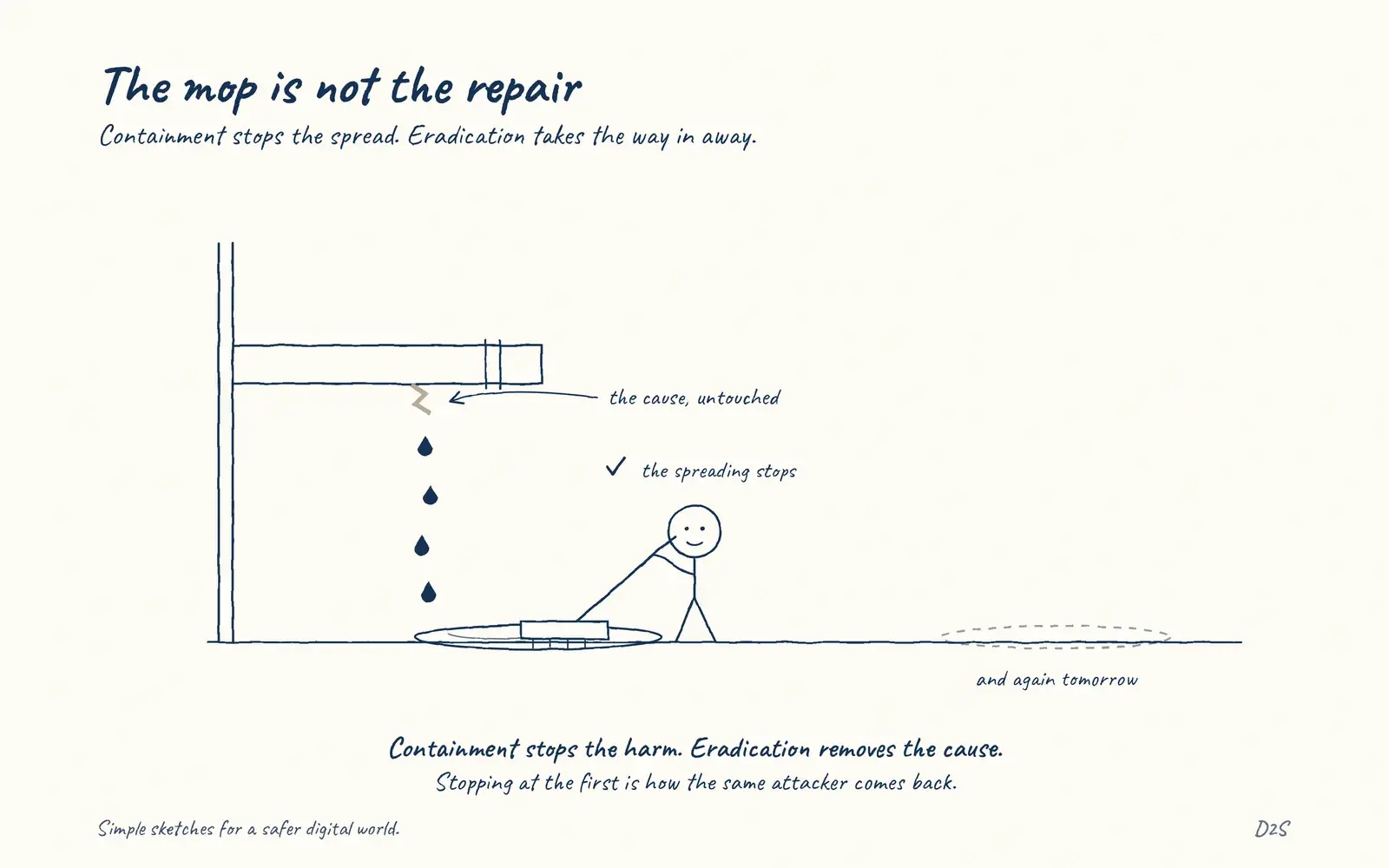 ContainmentThe mop is not the repair
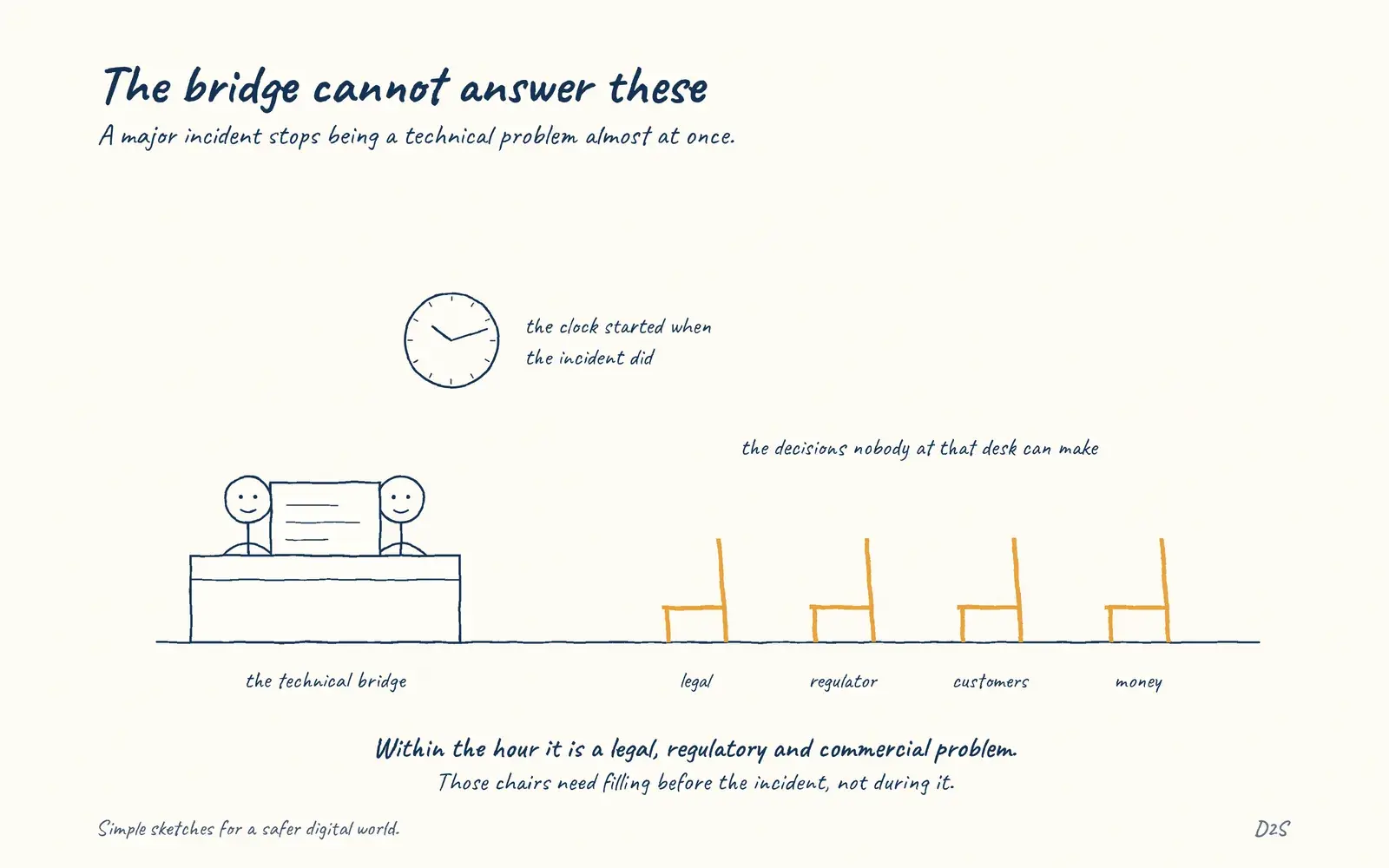 Crisis managementThe bridge cannot answer these
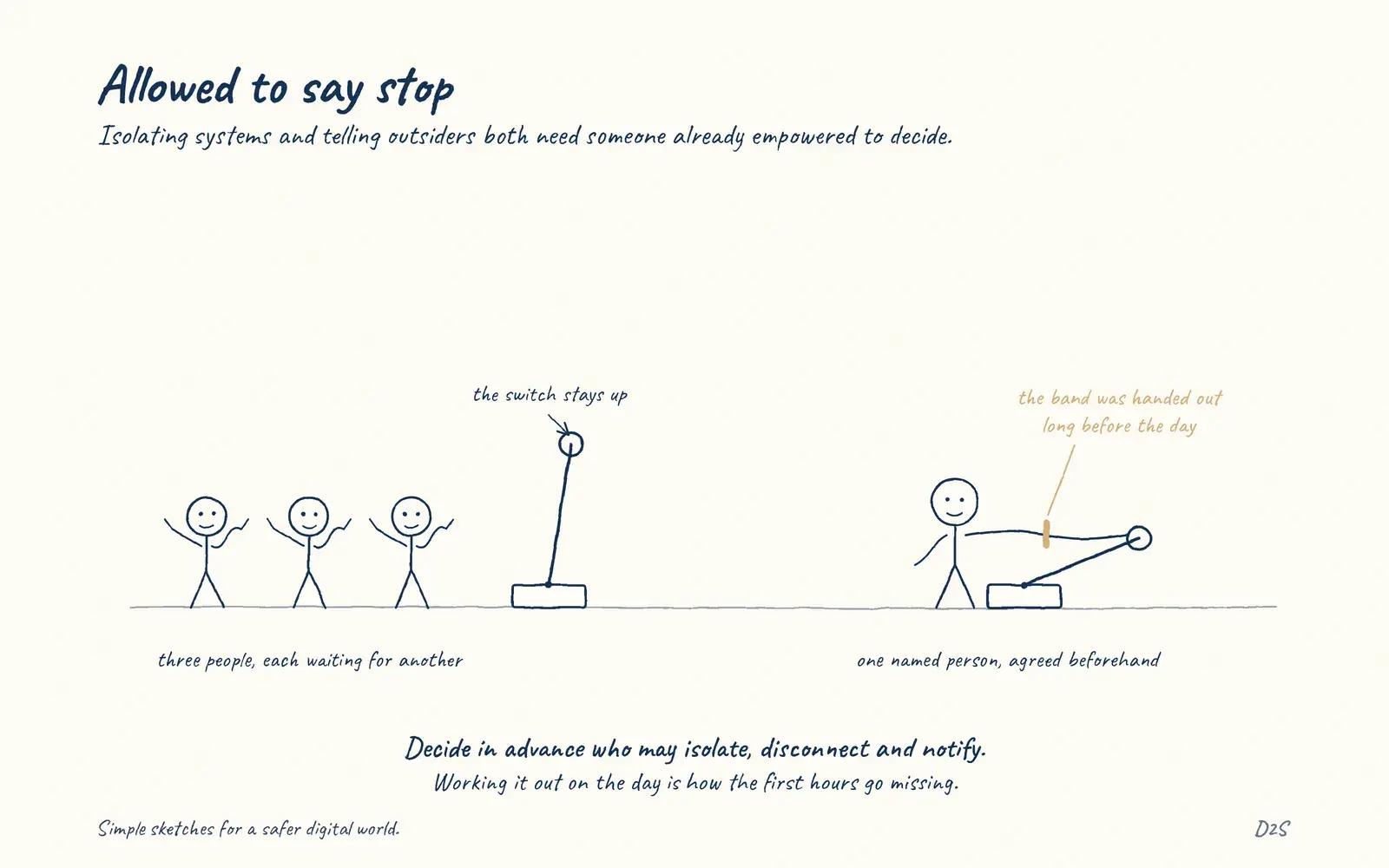 Decision authorityAllowed to say stop
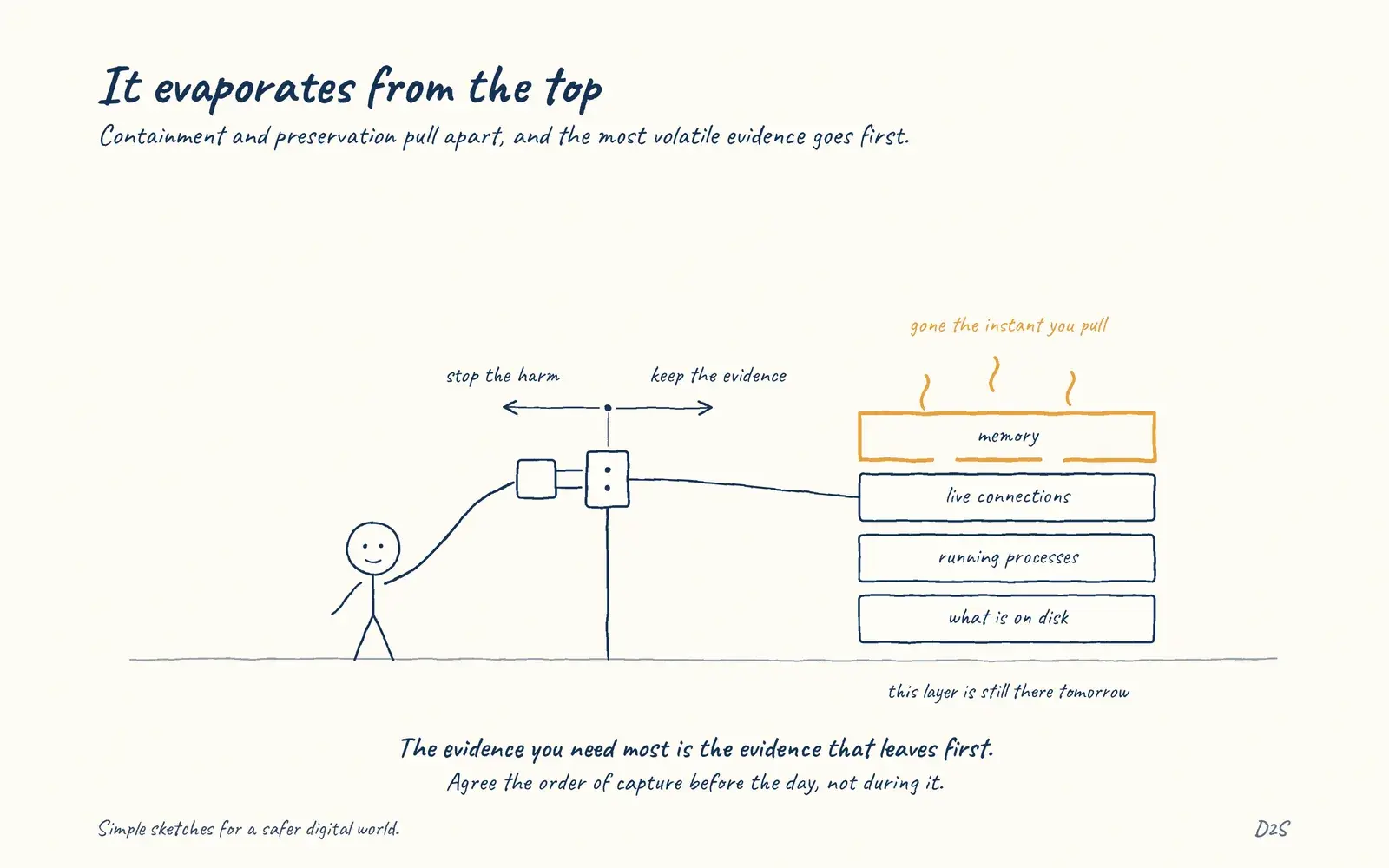 Forensic preservationIt evaporates from the top
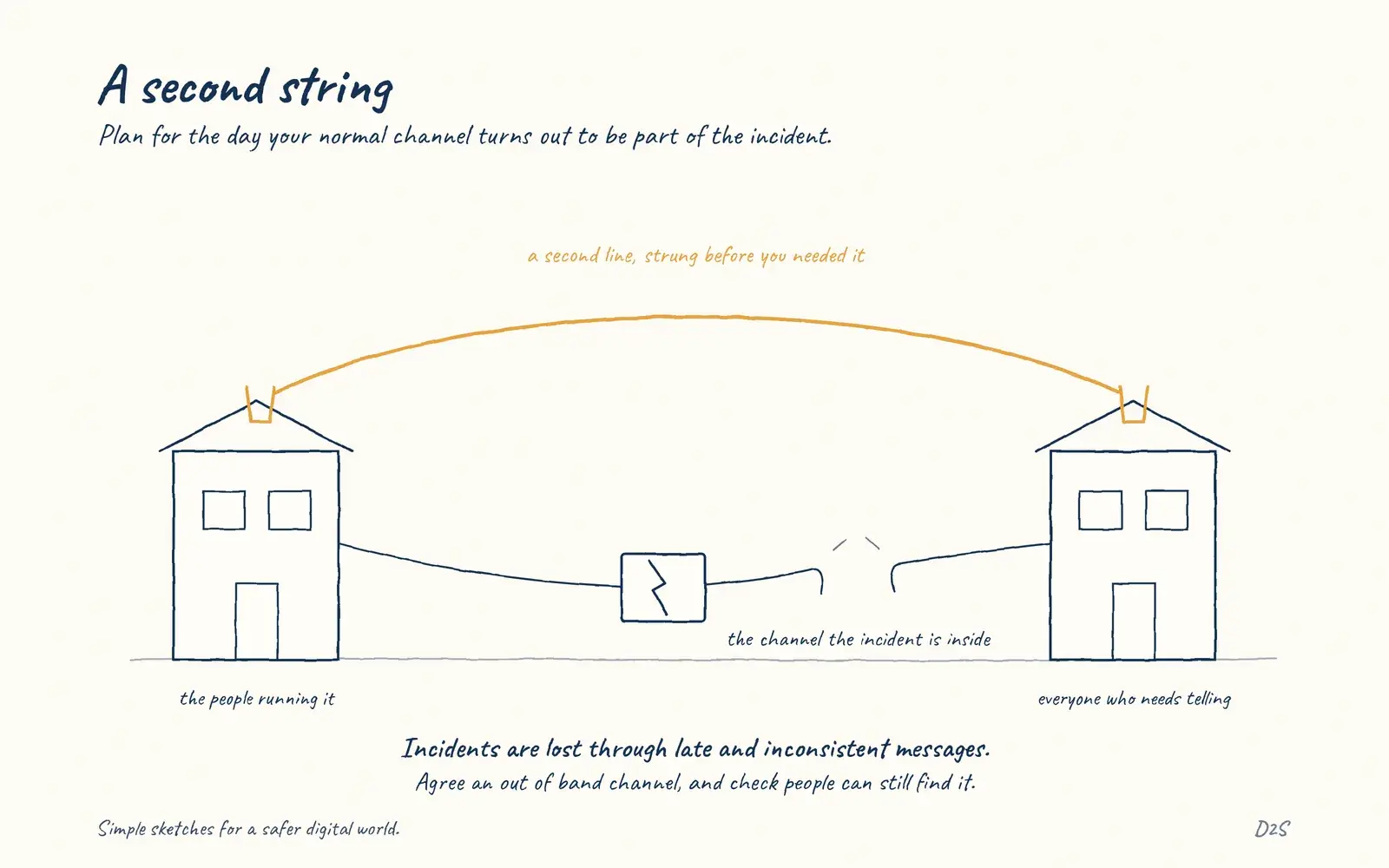 Incident communicationsA second string
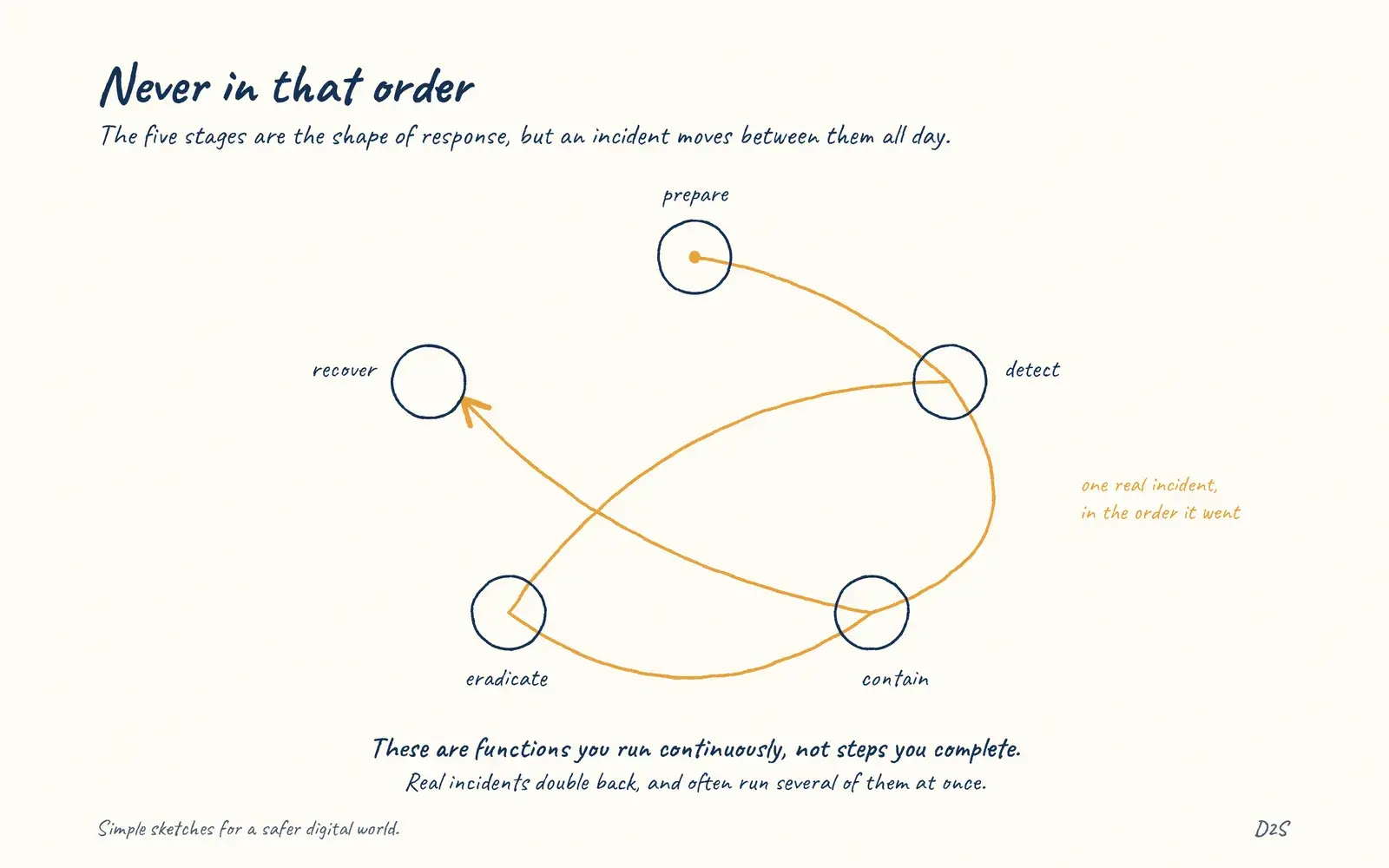 Incident response lifecycleNever in that order
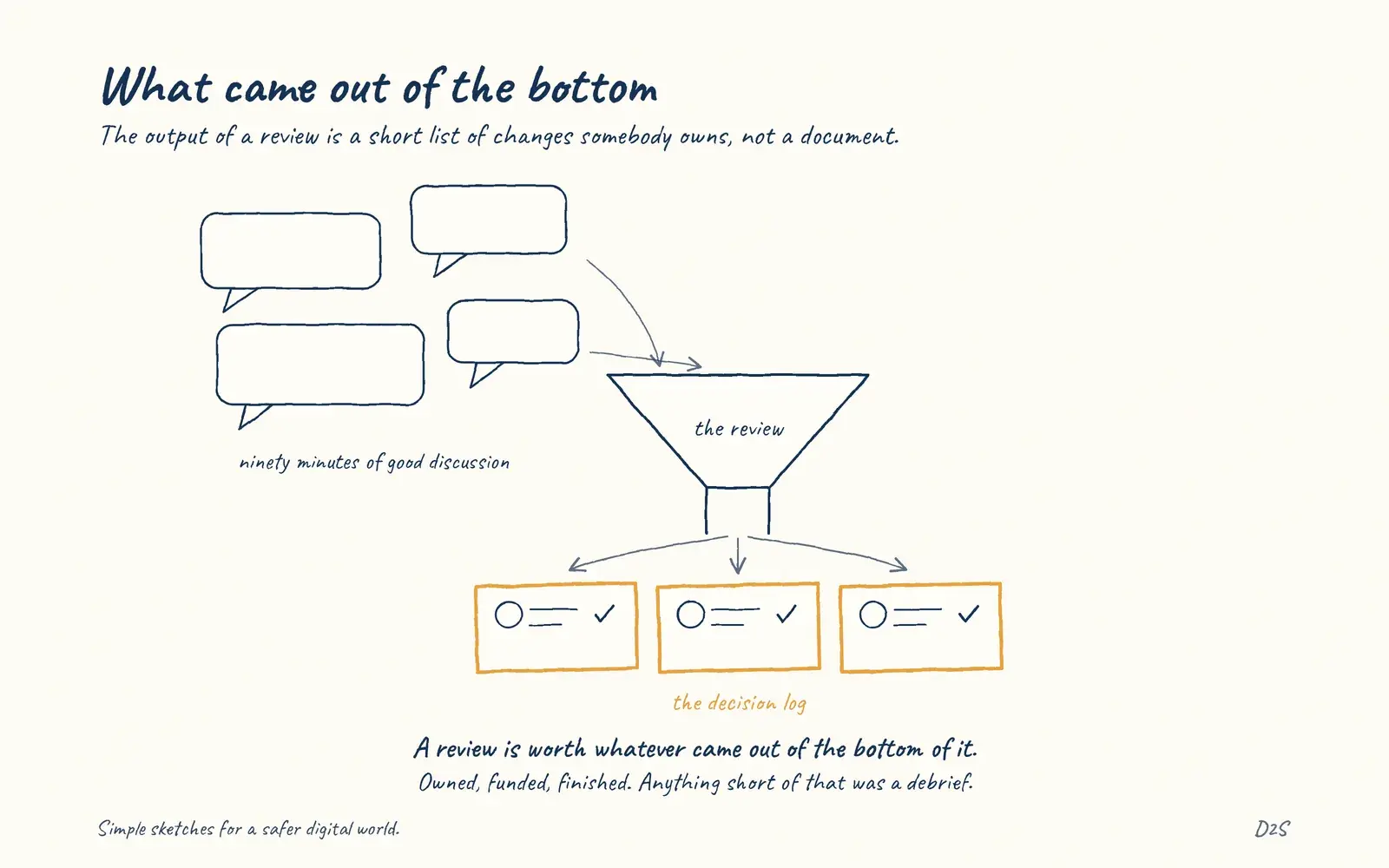 Lessons learnedWhat came out of the bottom
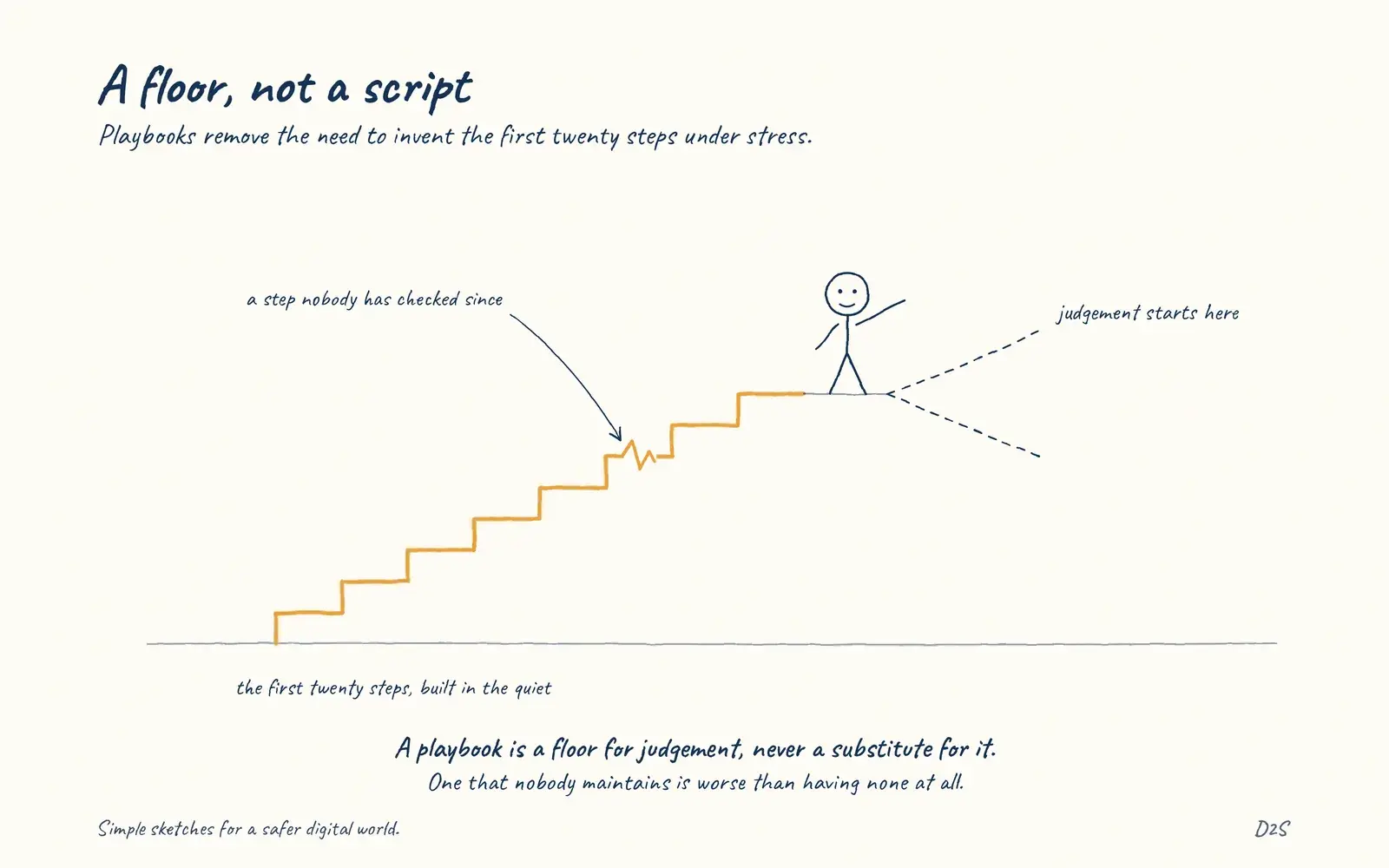 PlaybooksA floor, not a script
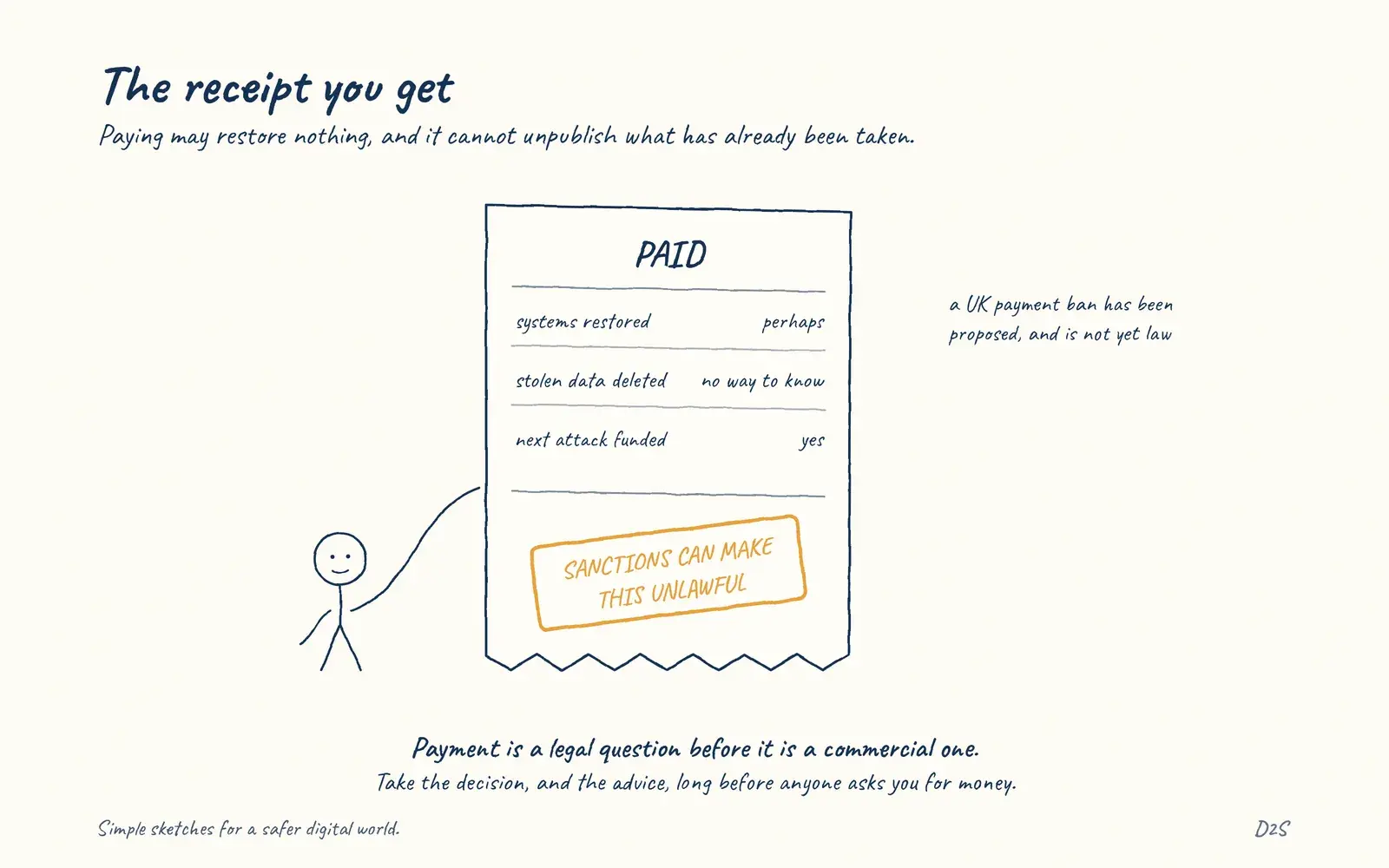 Ransom decisionsThe receipt you get
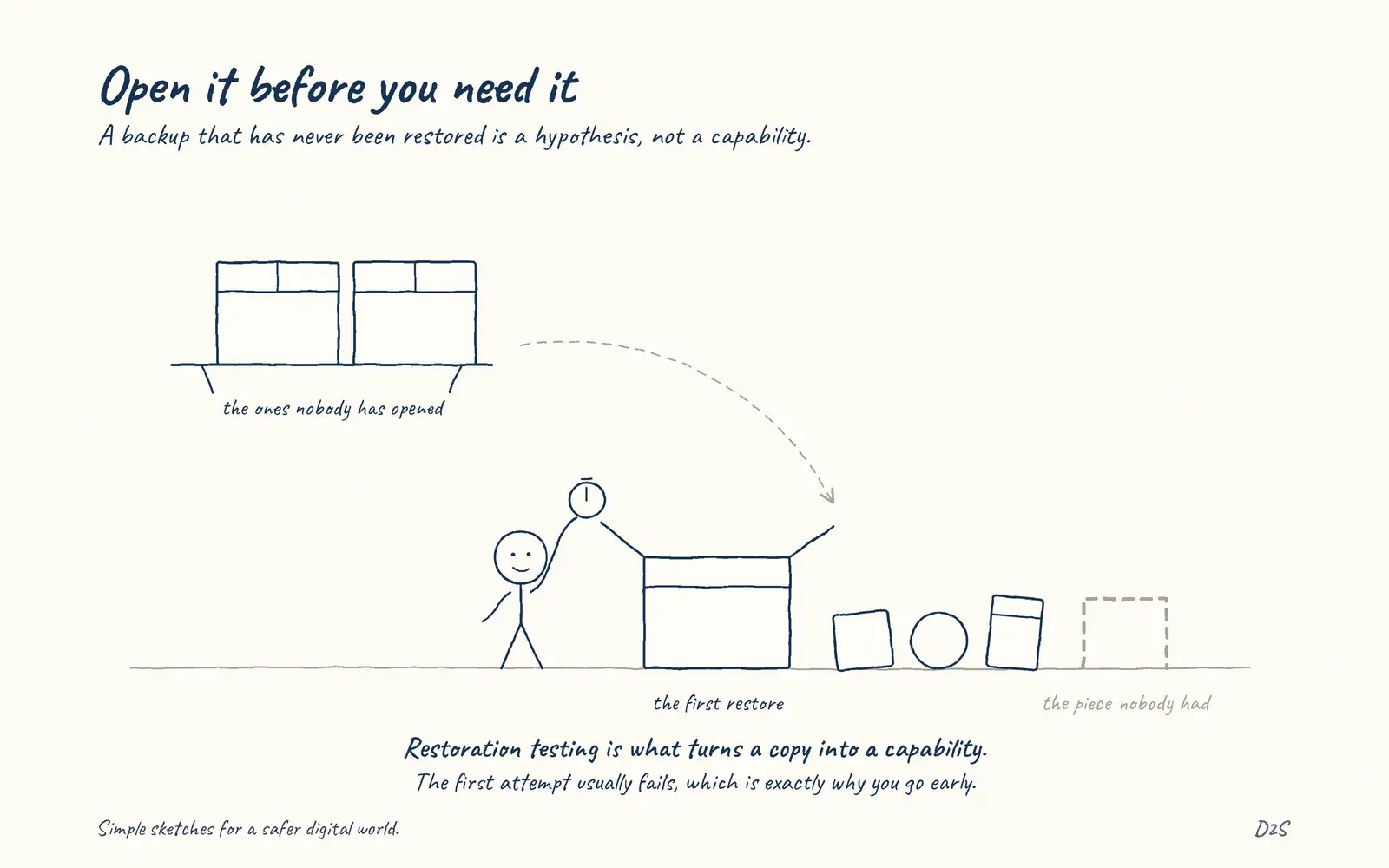 Restoration testingOpen it before you need it
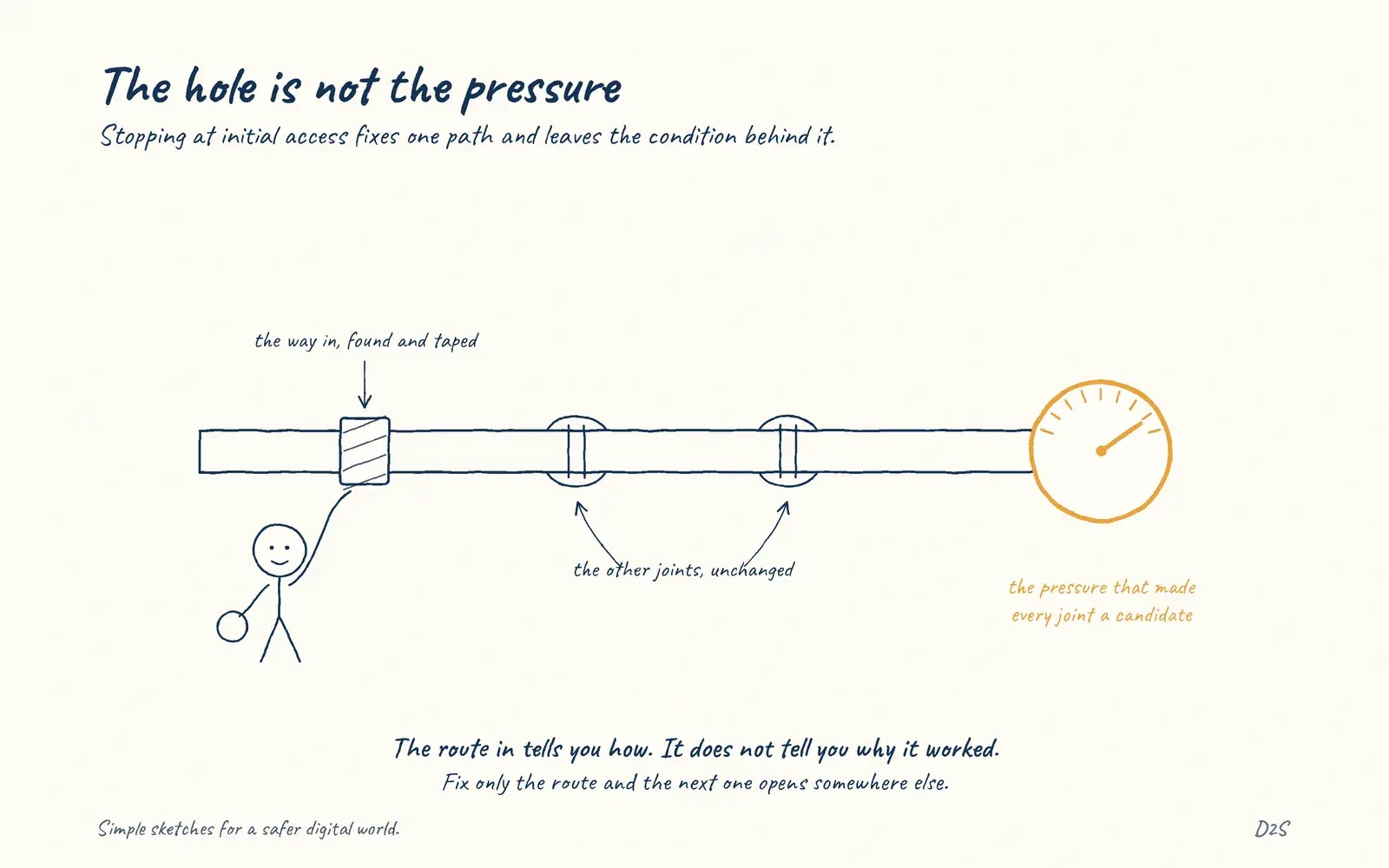 Root causeThe hole is not the pressure
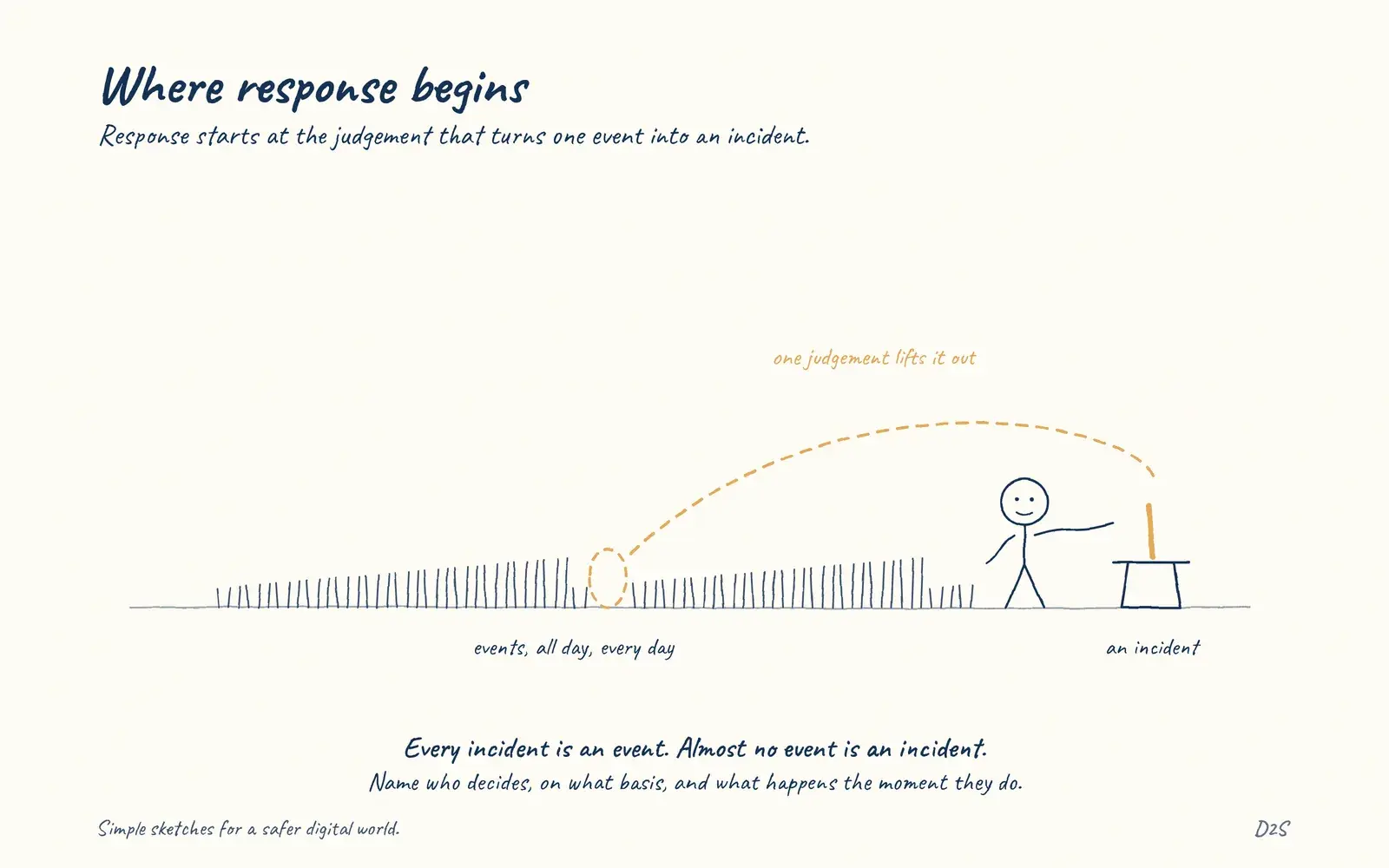 Security eventsWhere response begins
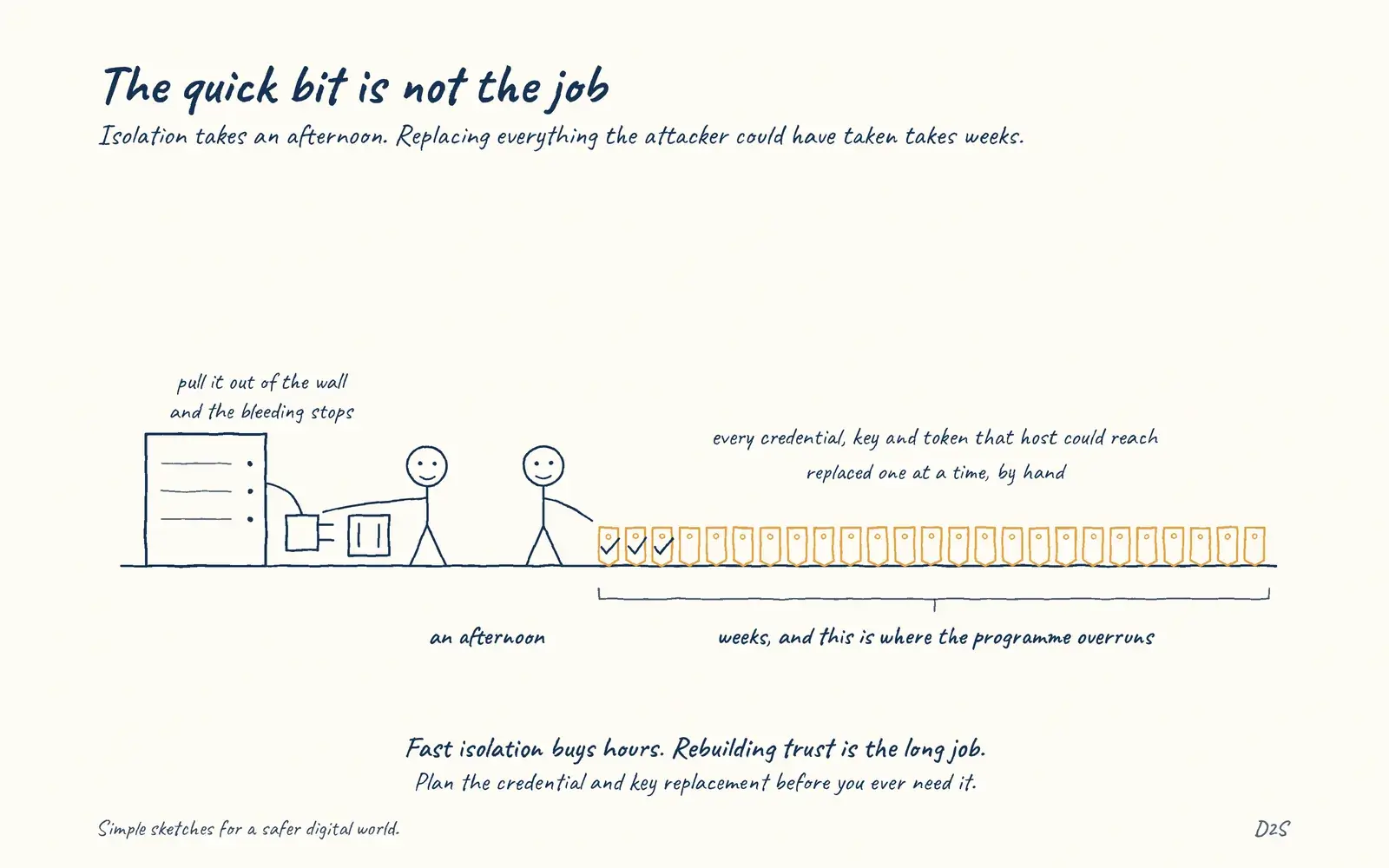 Short-term containmentThe quick bit is not the job
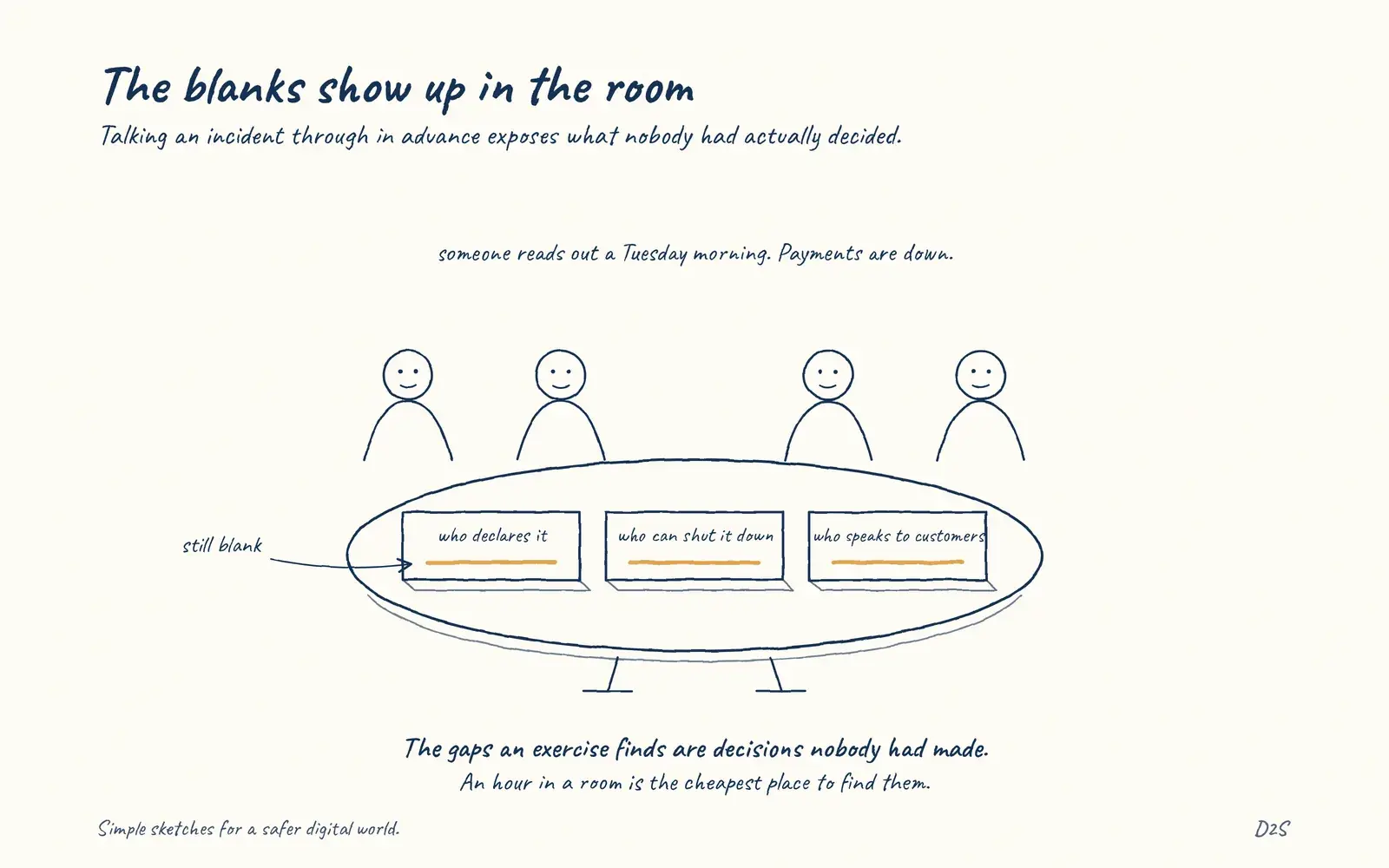 Tabletop exercisesThe blanks show up in the room
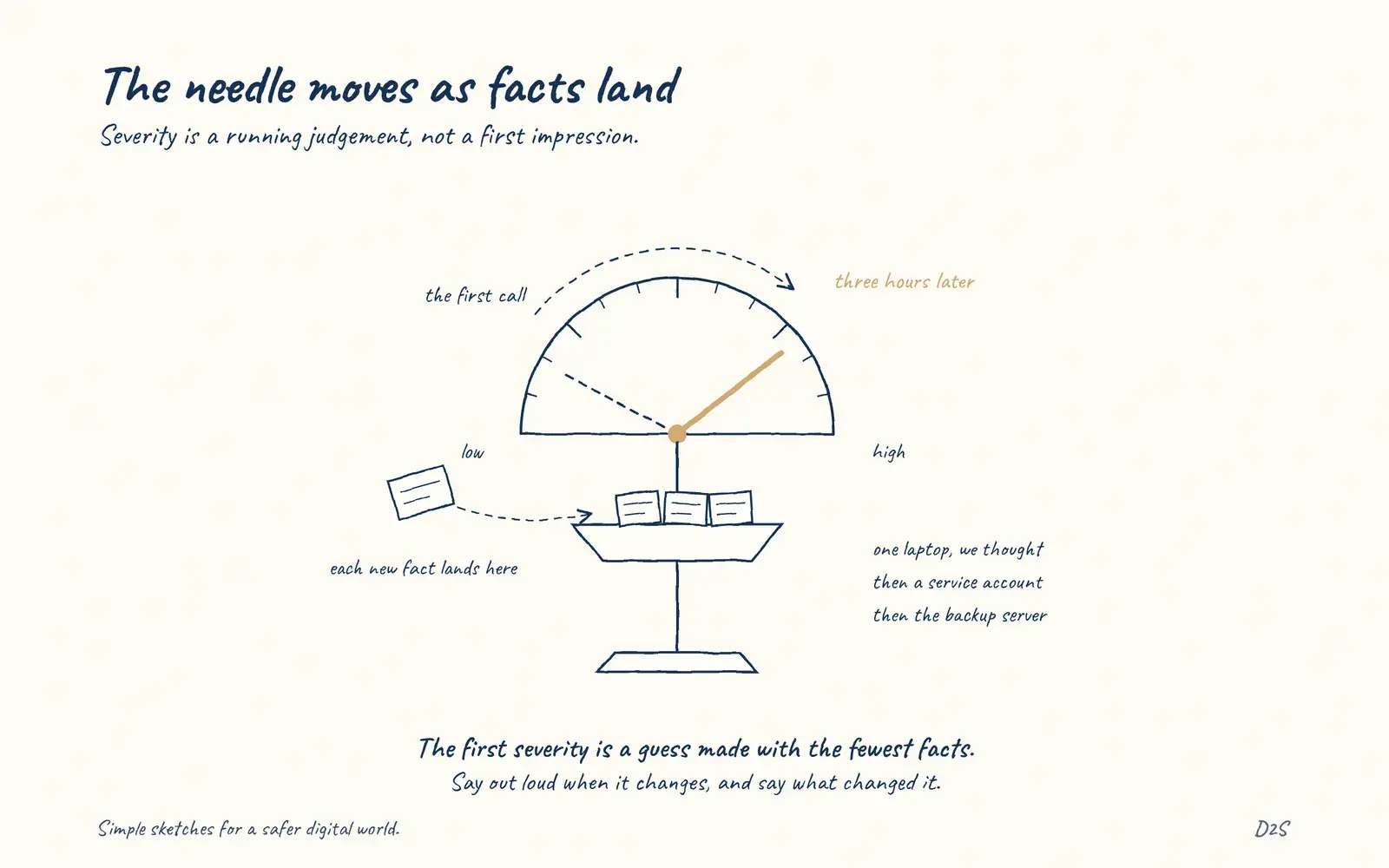 Incident severity can change as facts emergeThe needle moves as facts land
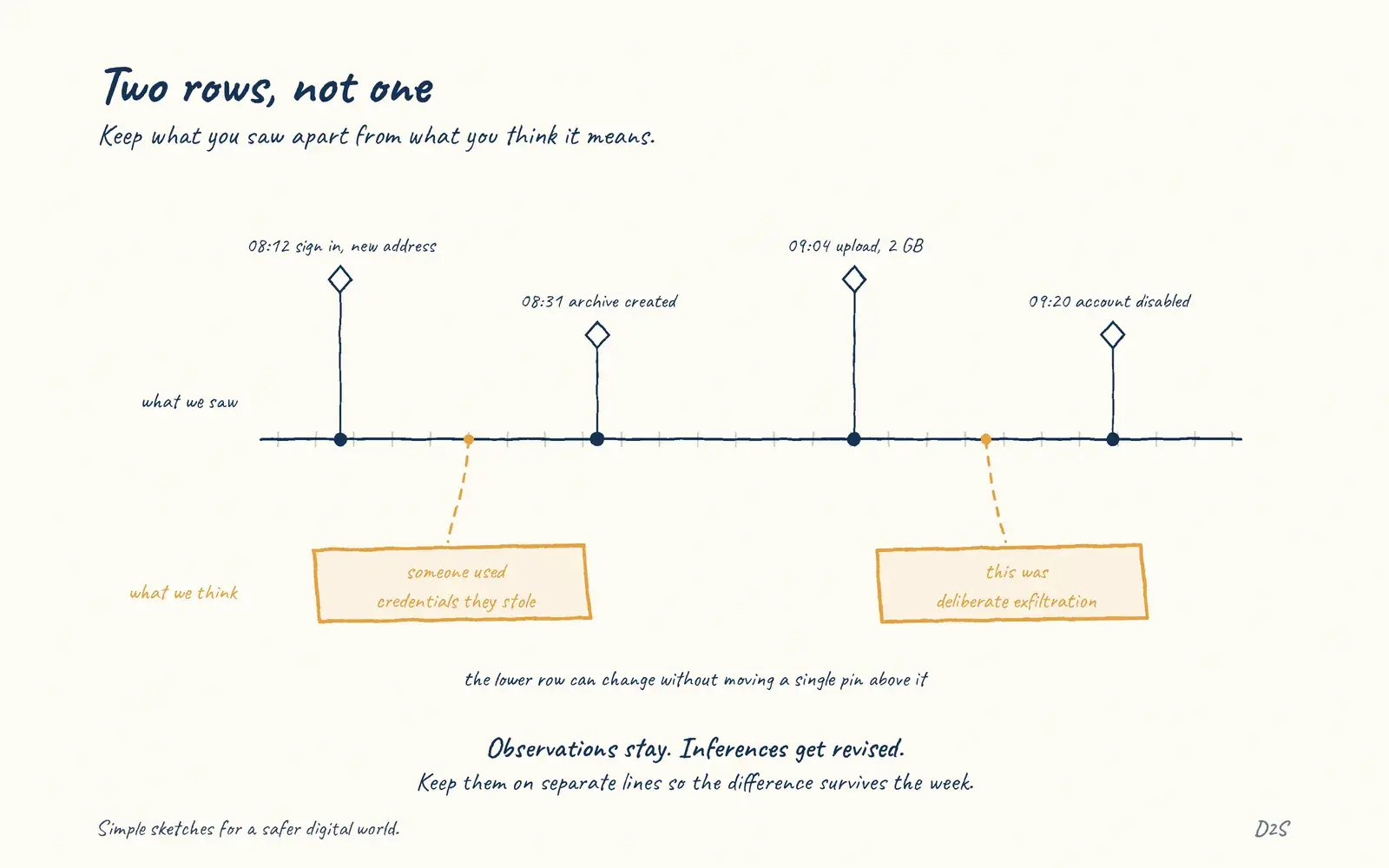 A timeline should separate observation from inferenceTwo rows, not one
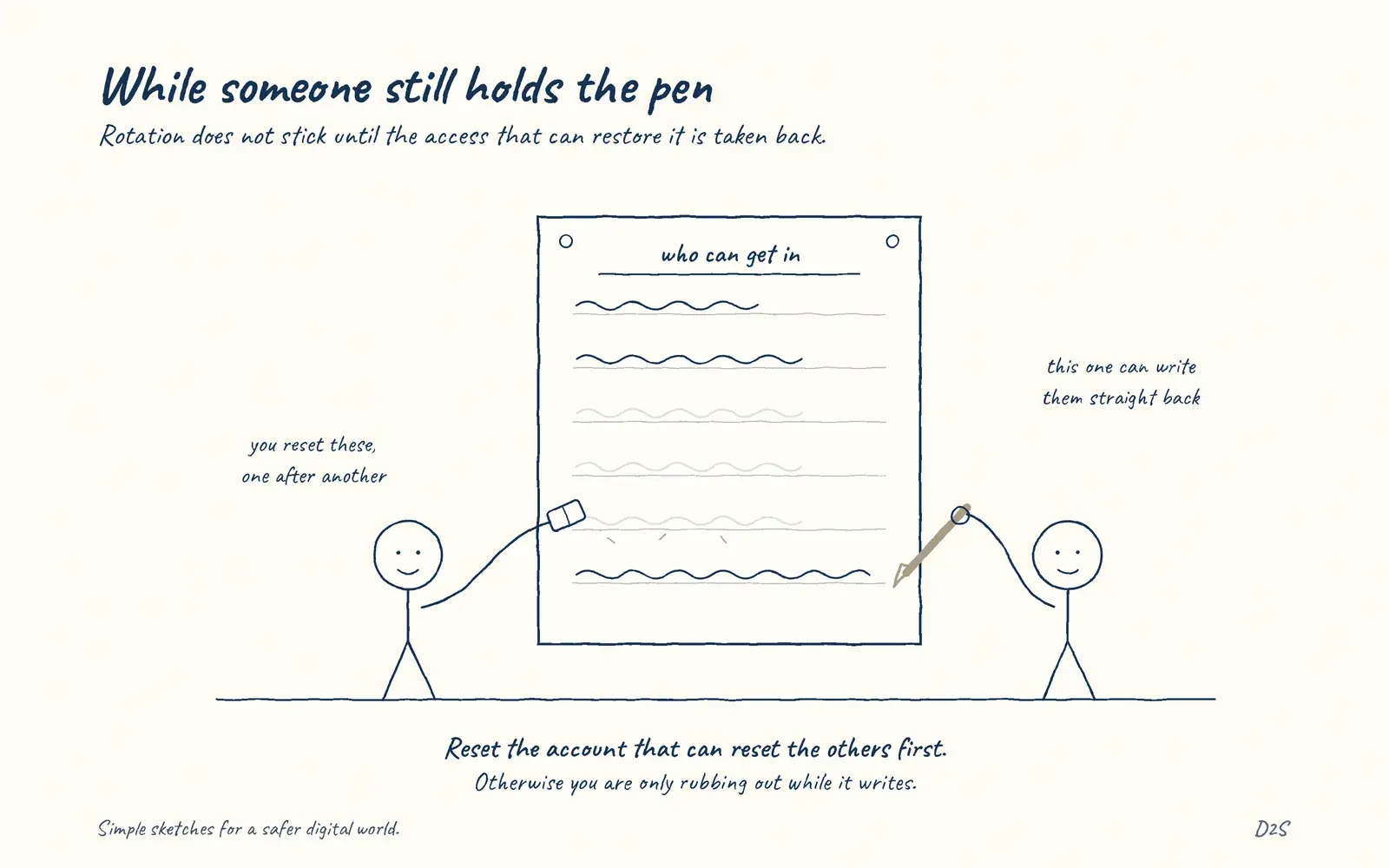 Credential reset order mattersWhile someone still holds the pen
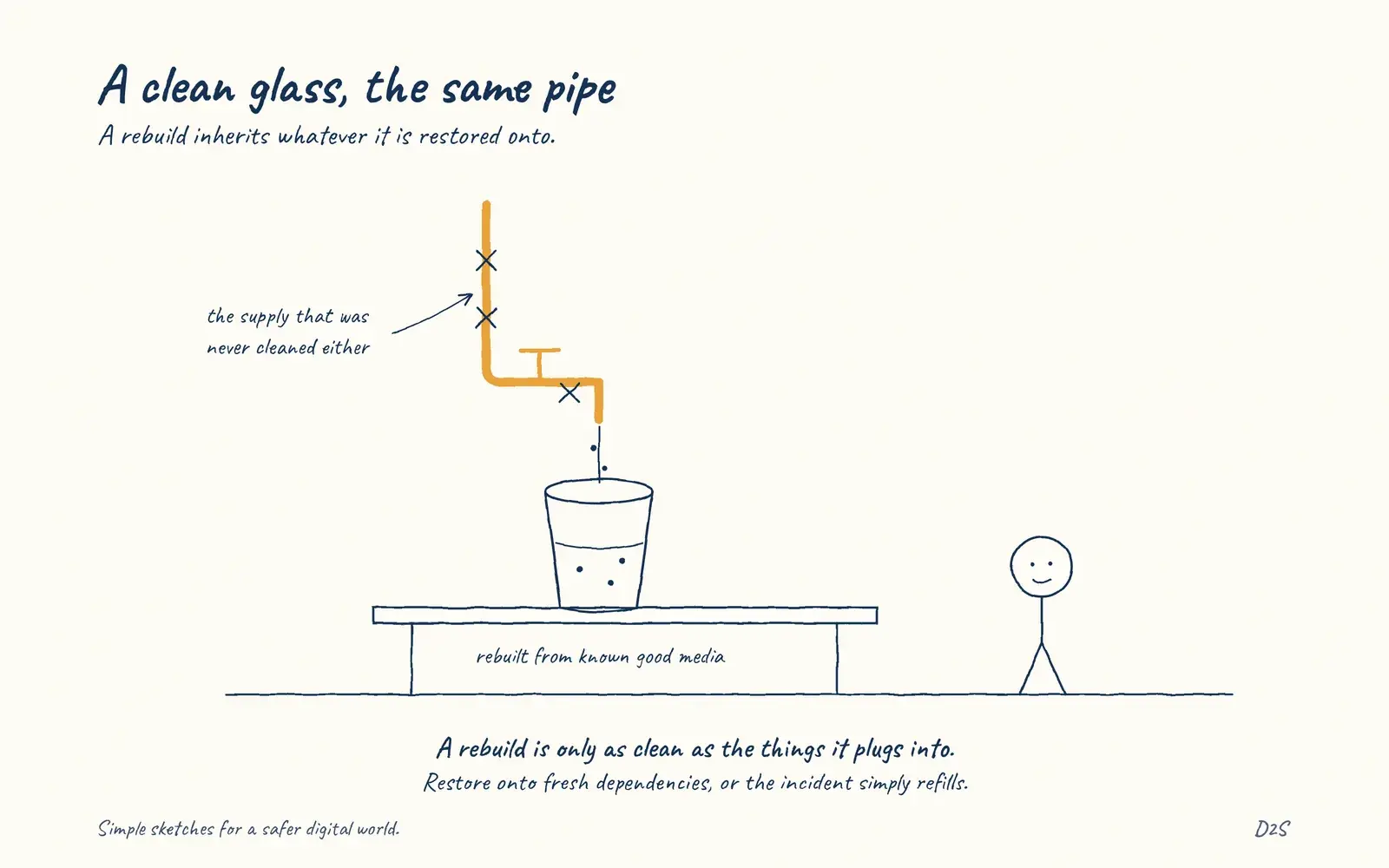 Recovery needs clean dependenciesA clean glass, the same pipe
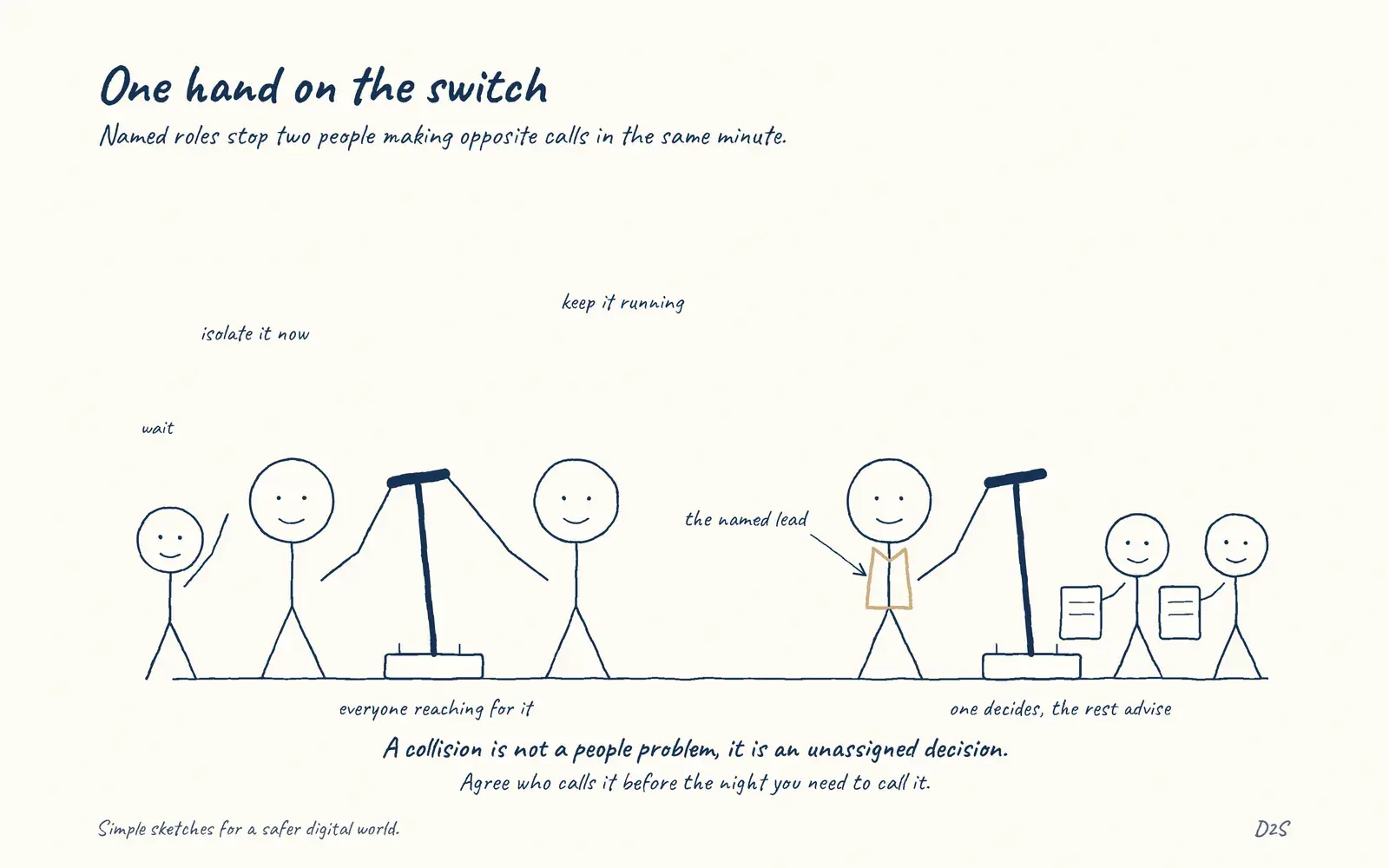 Incident roles reduce decision collisionsOne hand on the switch
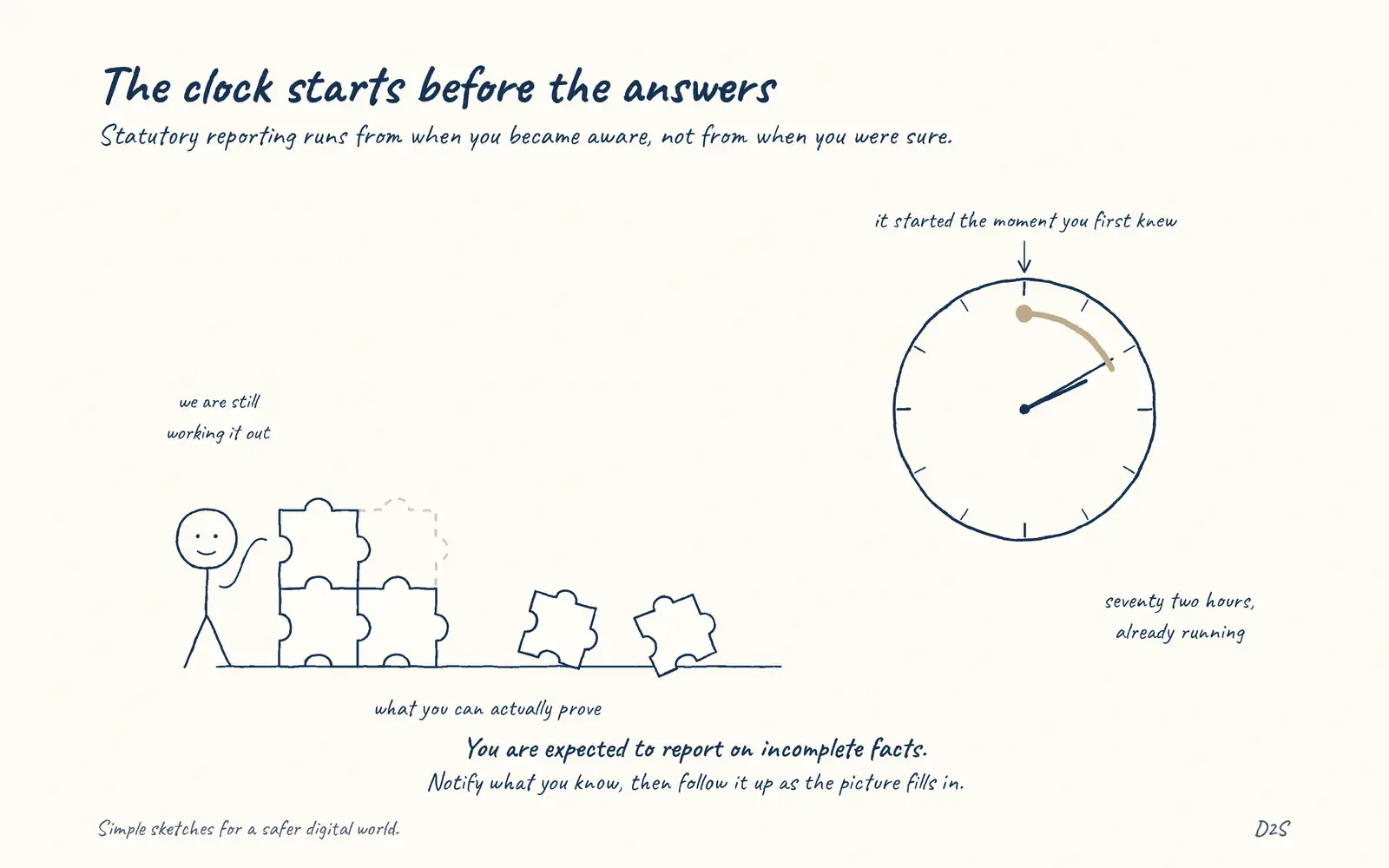 Reporting clocks can start before certaintyThe clock starts before the answers
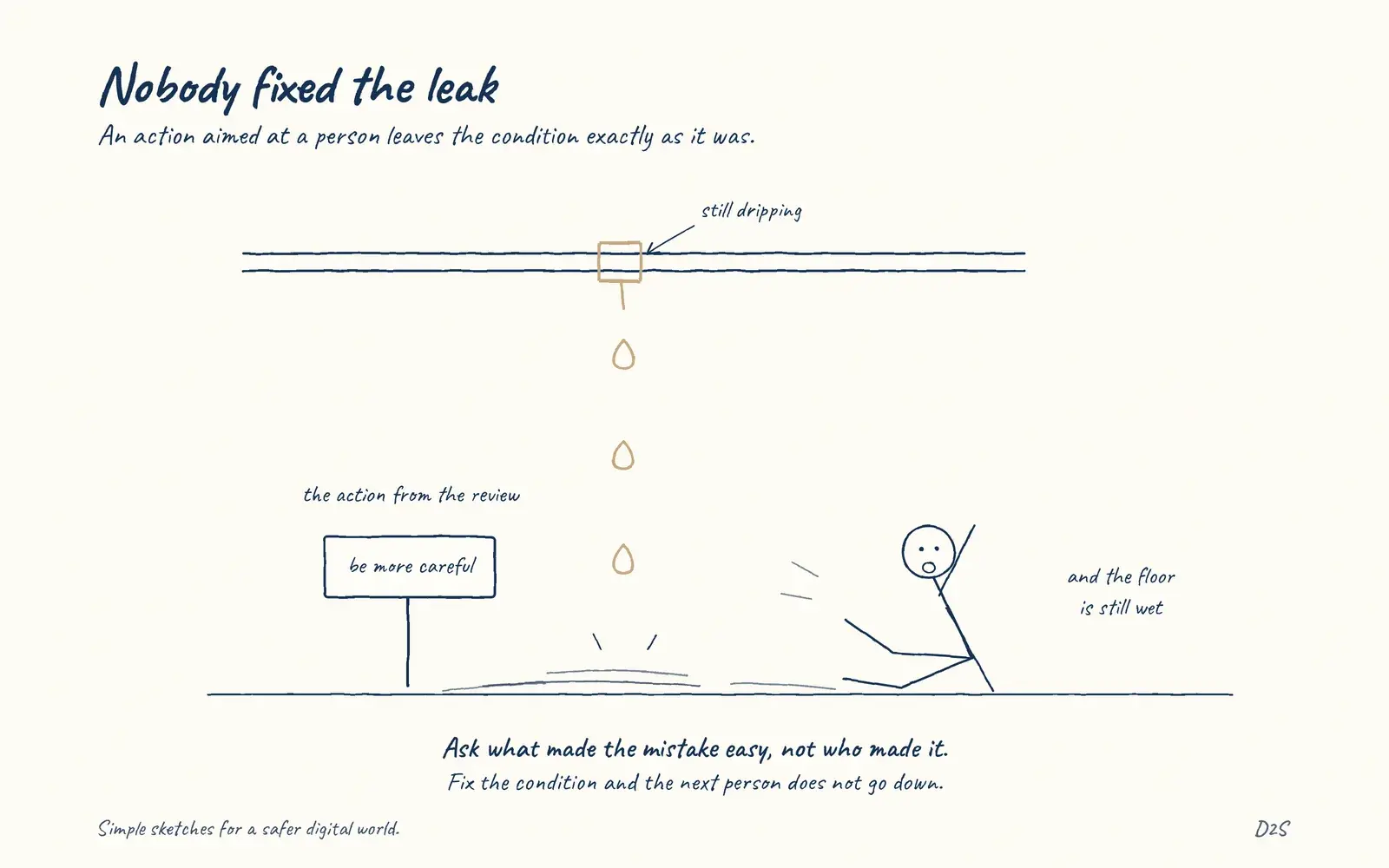 Post-incident actions should fix systems, not just peopleNobody fixed the leak
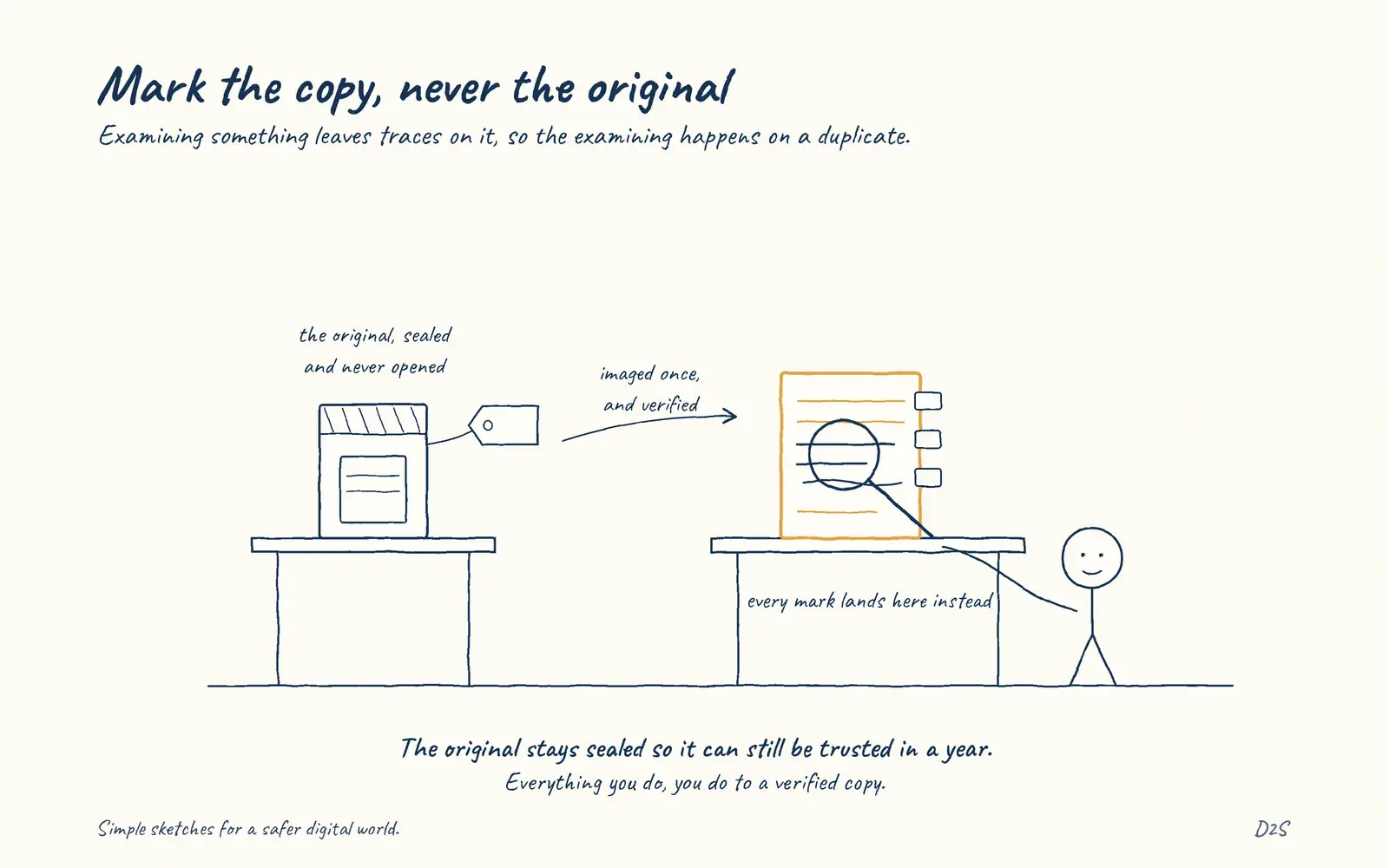 Forensic copies protect original evidenceMark the copy, never the original
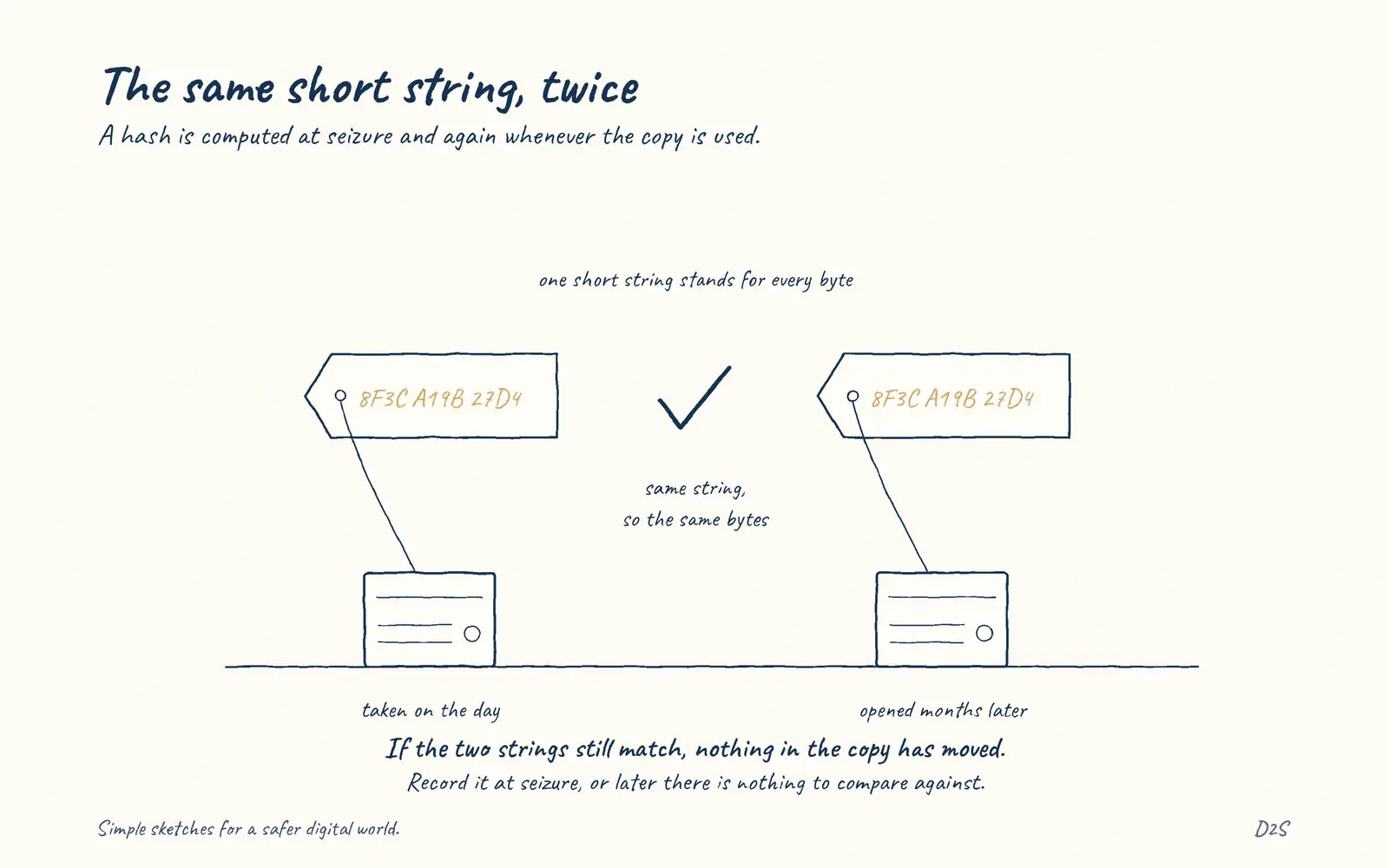 Hashes can show evidence stayed unchangedThe same short string, twice
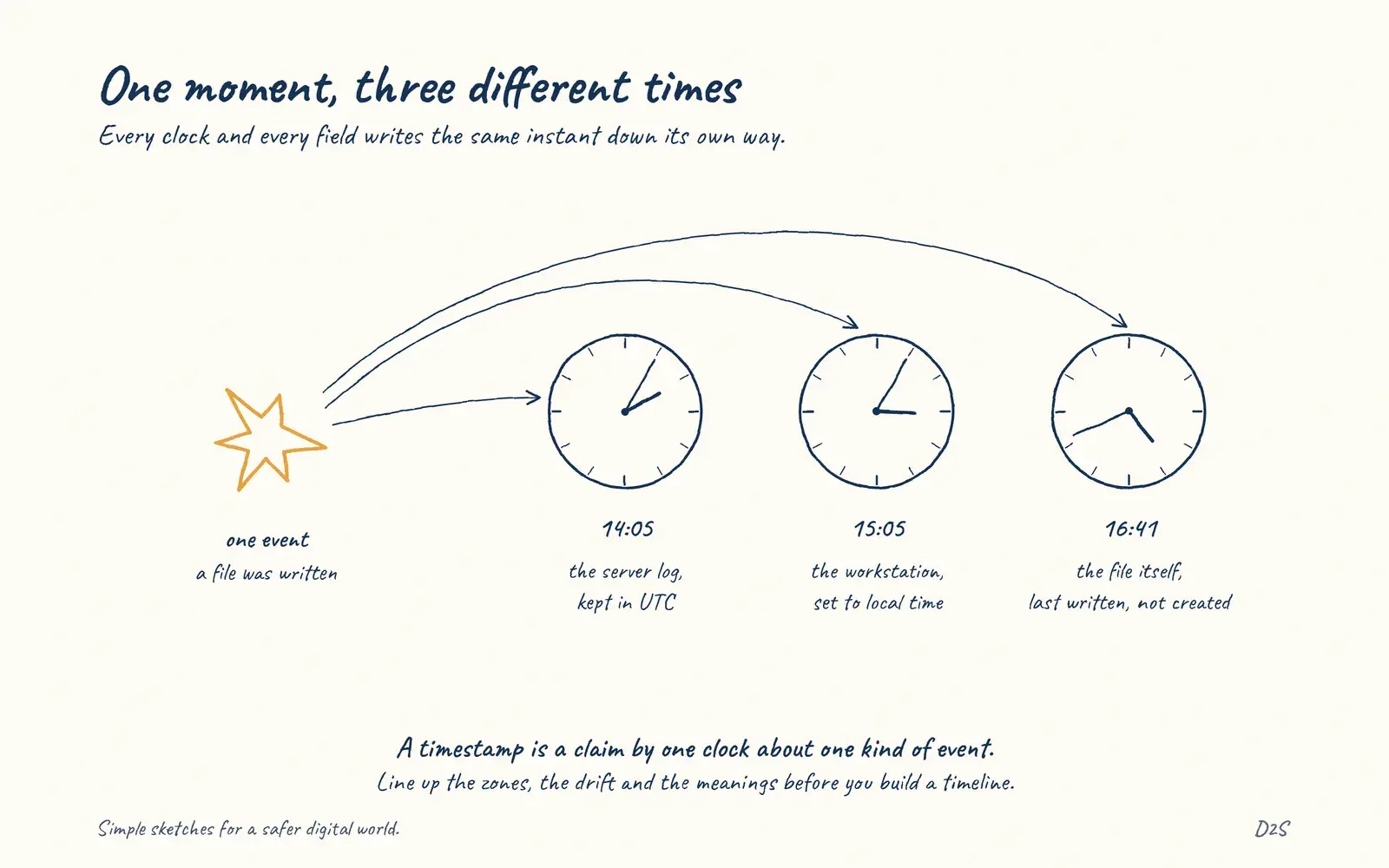 Timestamps need interpretationOne moment, three different times
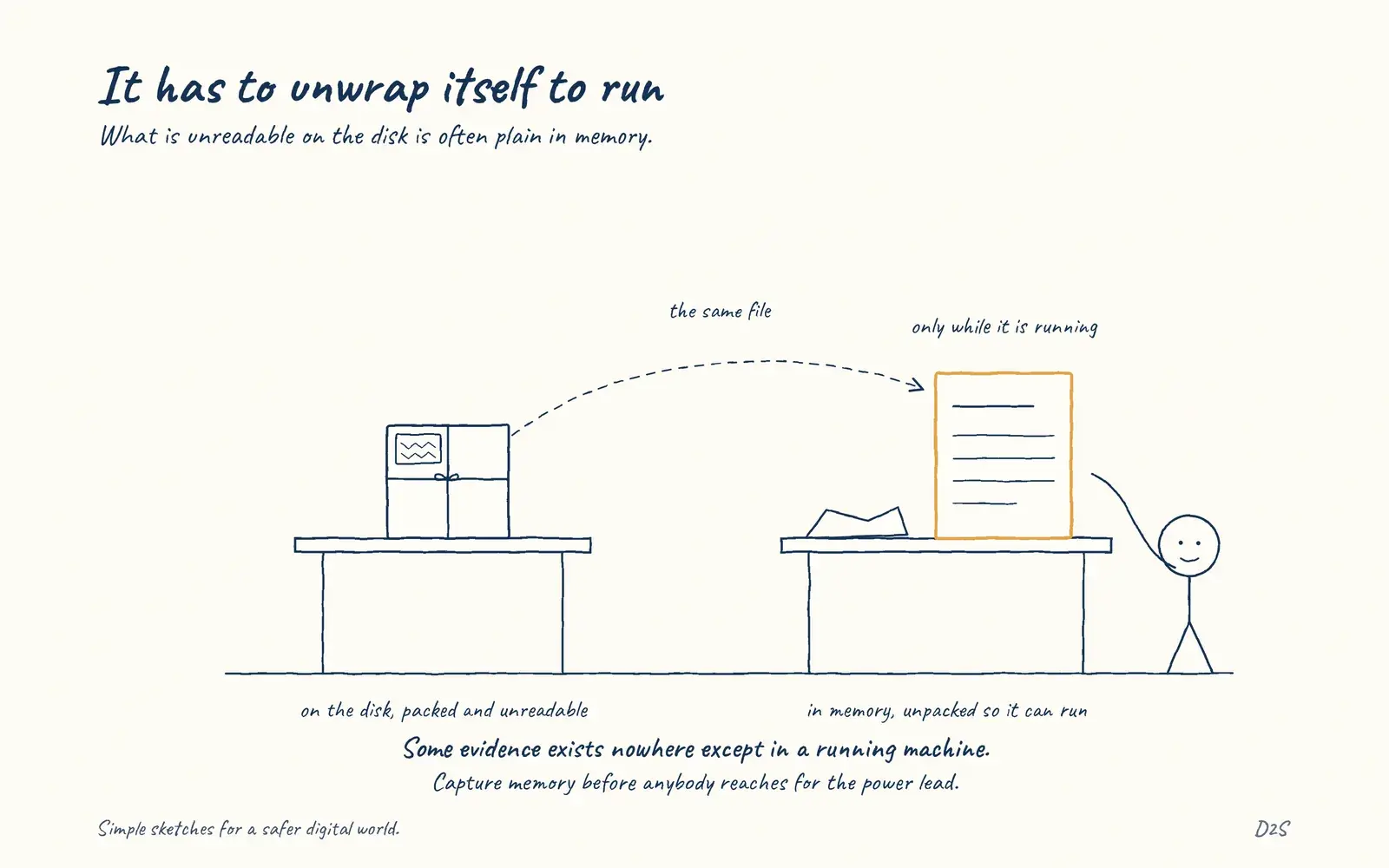 Memory can reveal what disk cannotIt has to unwrap itself to run
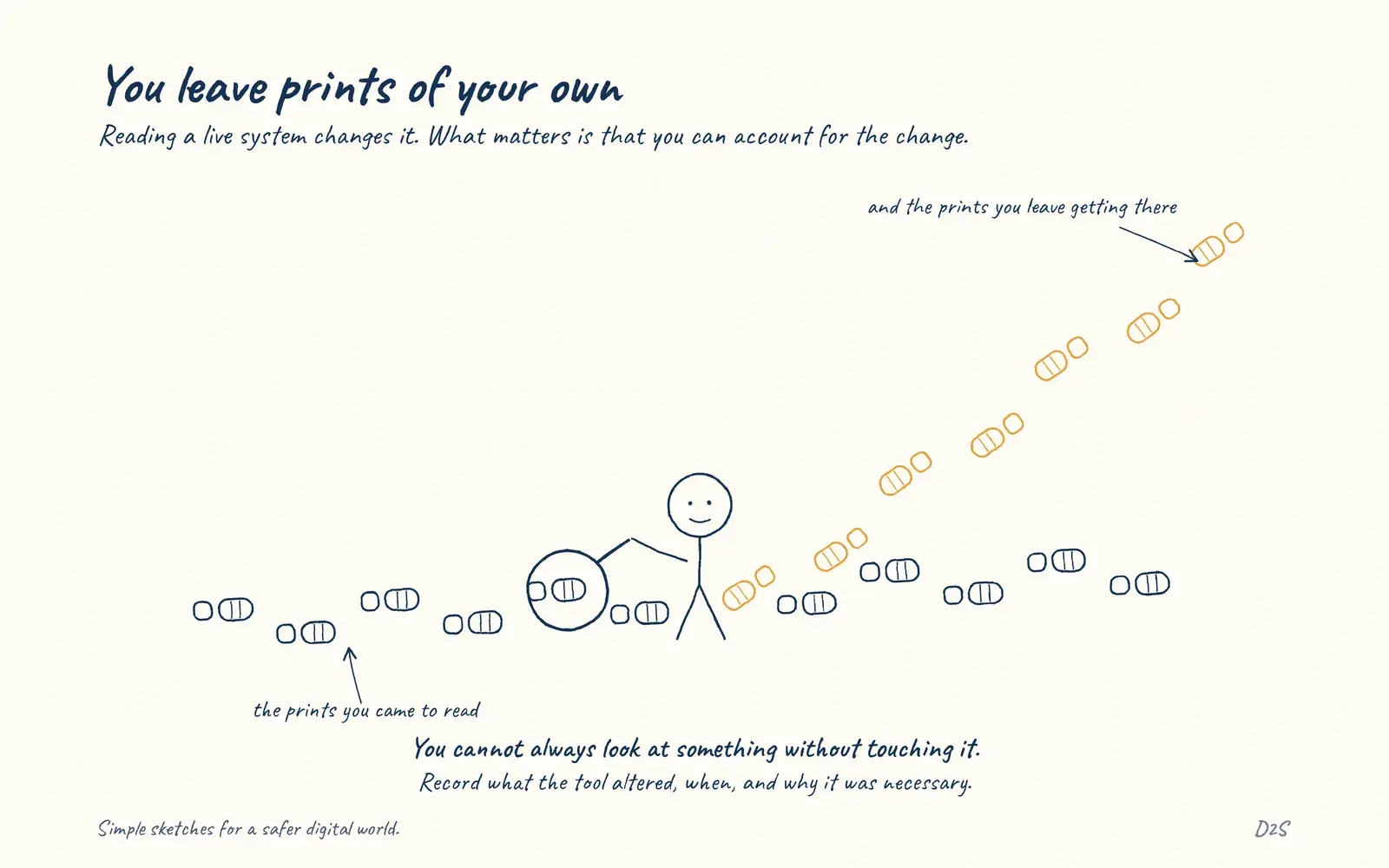 Forensic tooling can change the thing examinedYou leave prints of your own
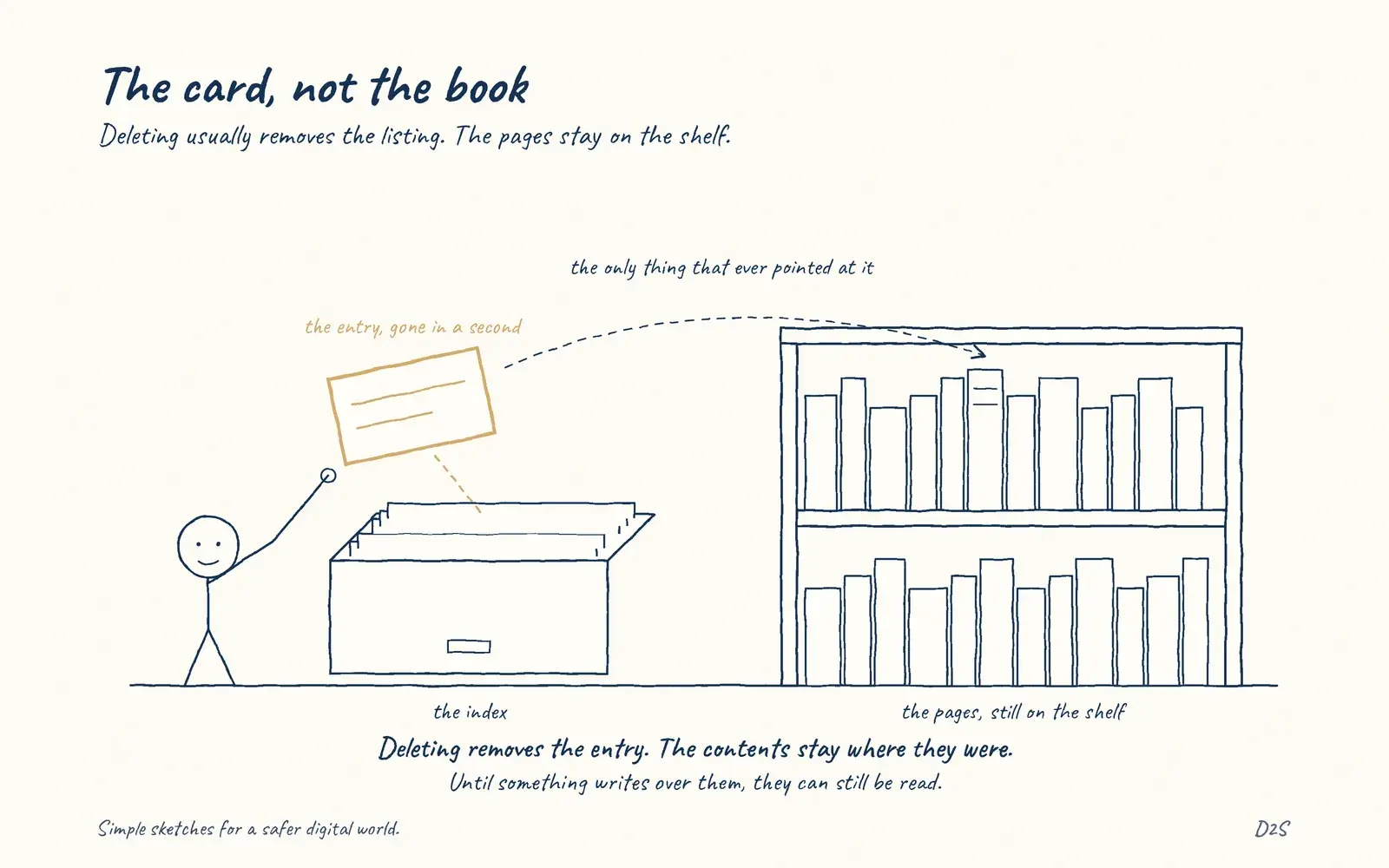 Deleted does not always mean goneThe card, not the book
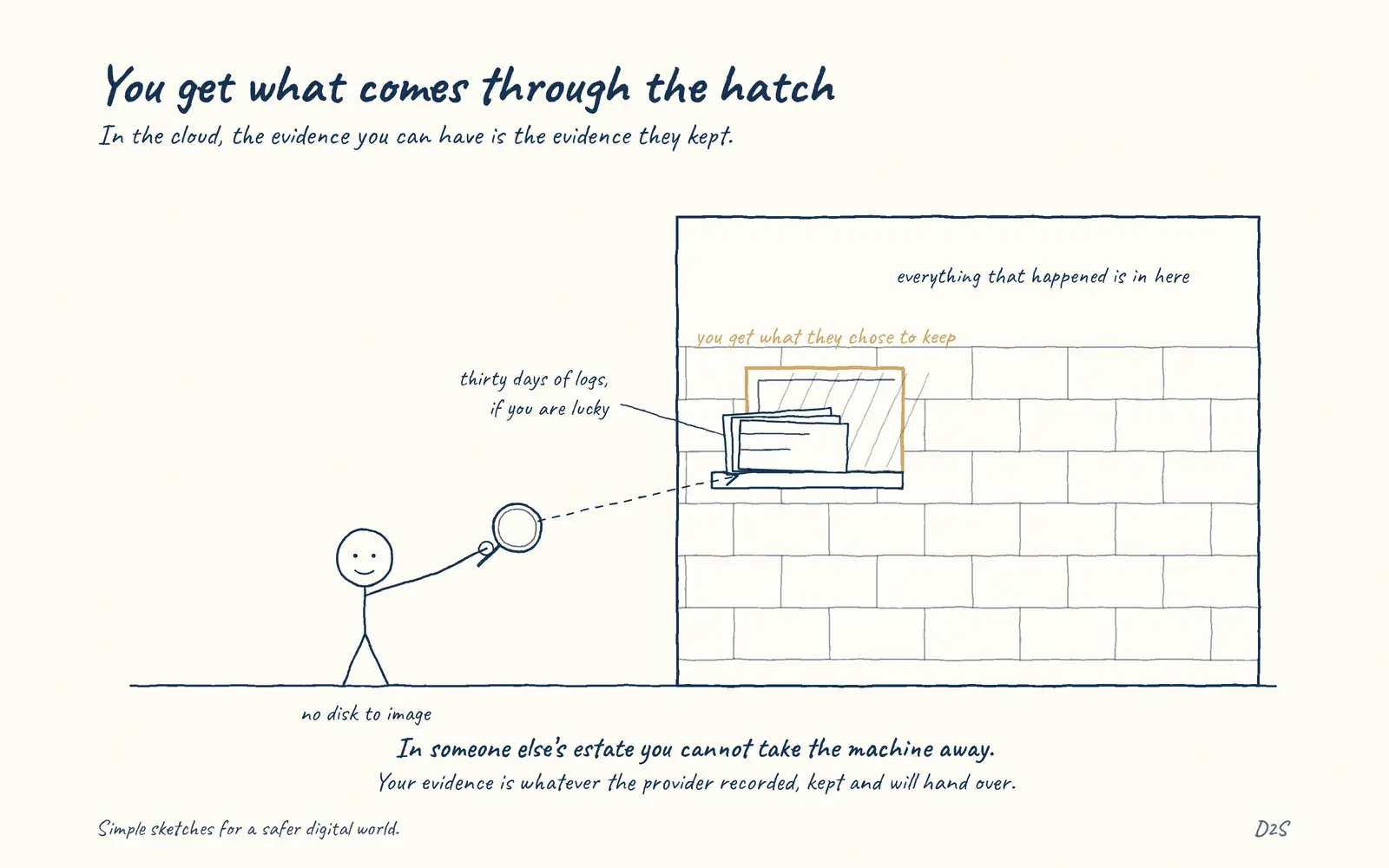 Cloud forensics depends on provider evidenceYou get what comes through the hatch
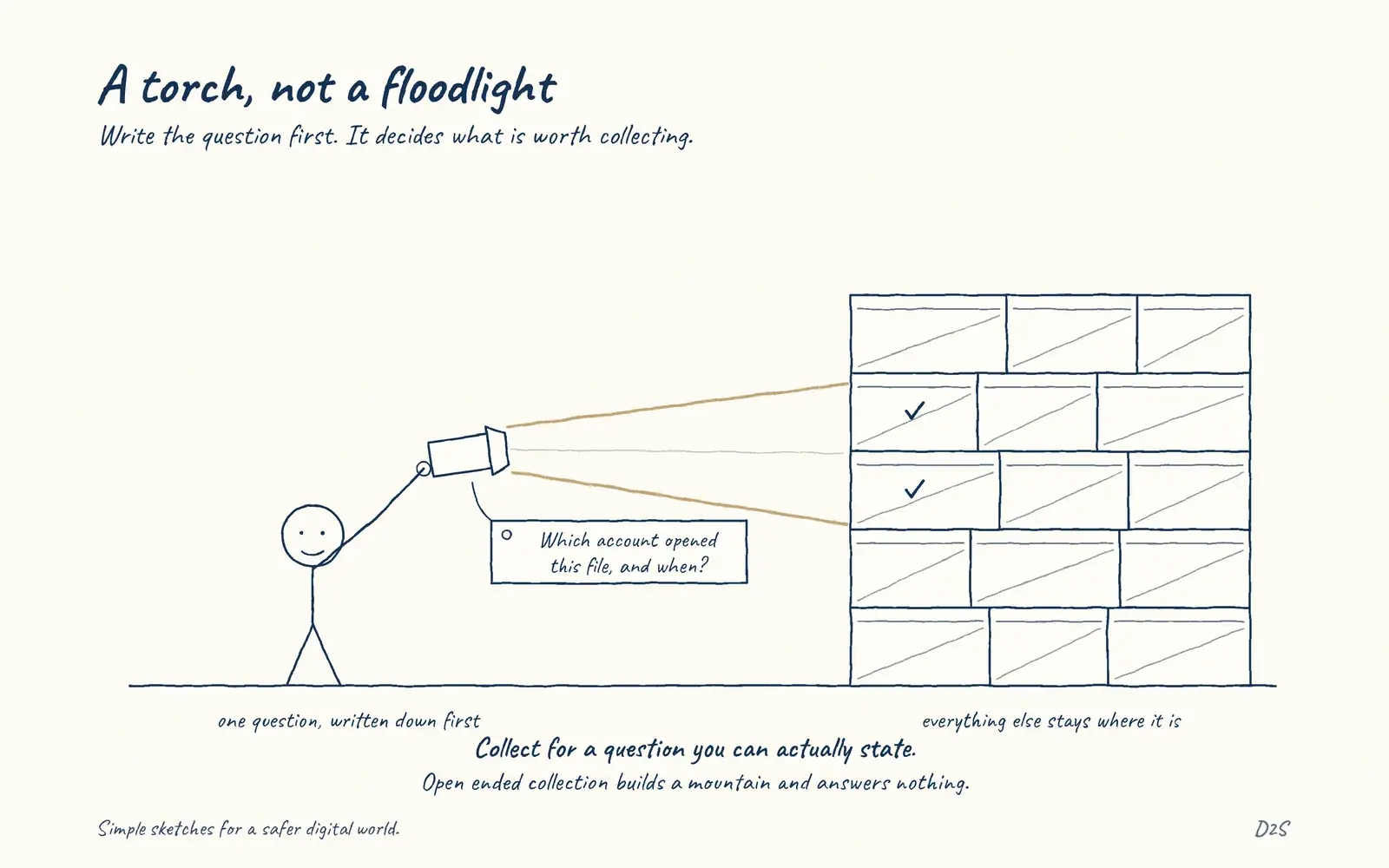 Forensics should answer specific questionsA torch, not a floodlight
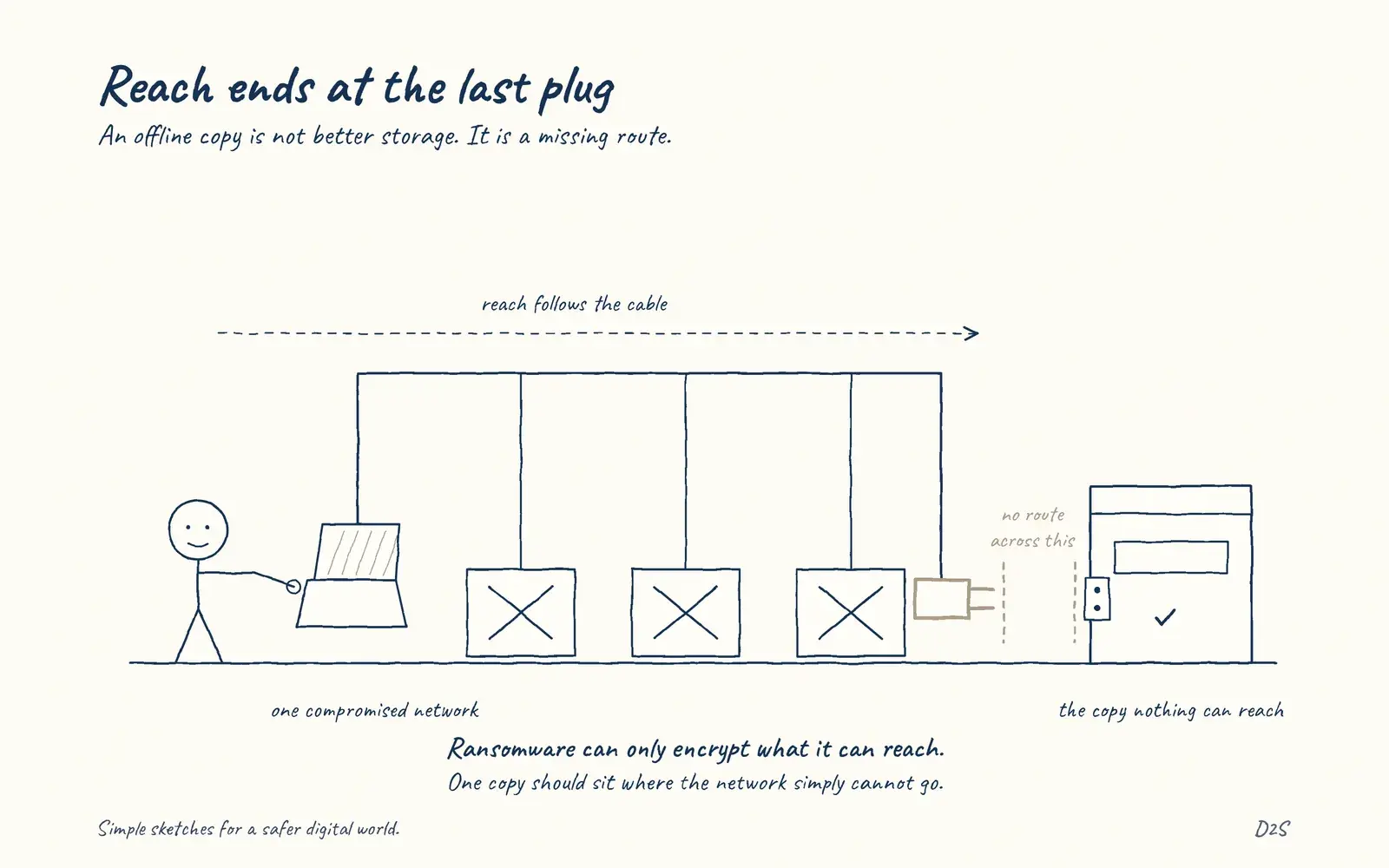 Offline copies break attacker reachabilityReach ends at the last plug
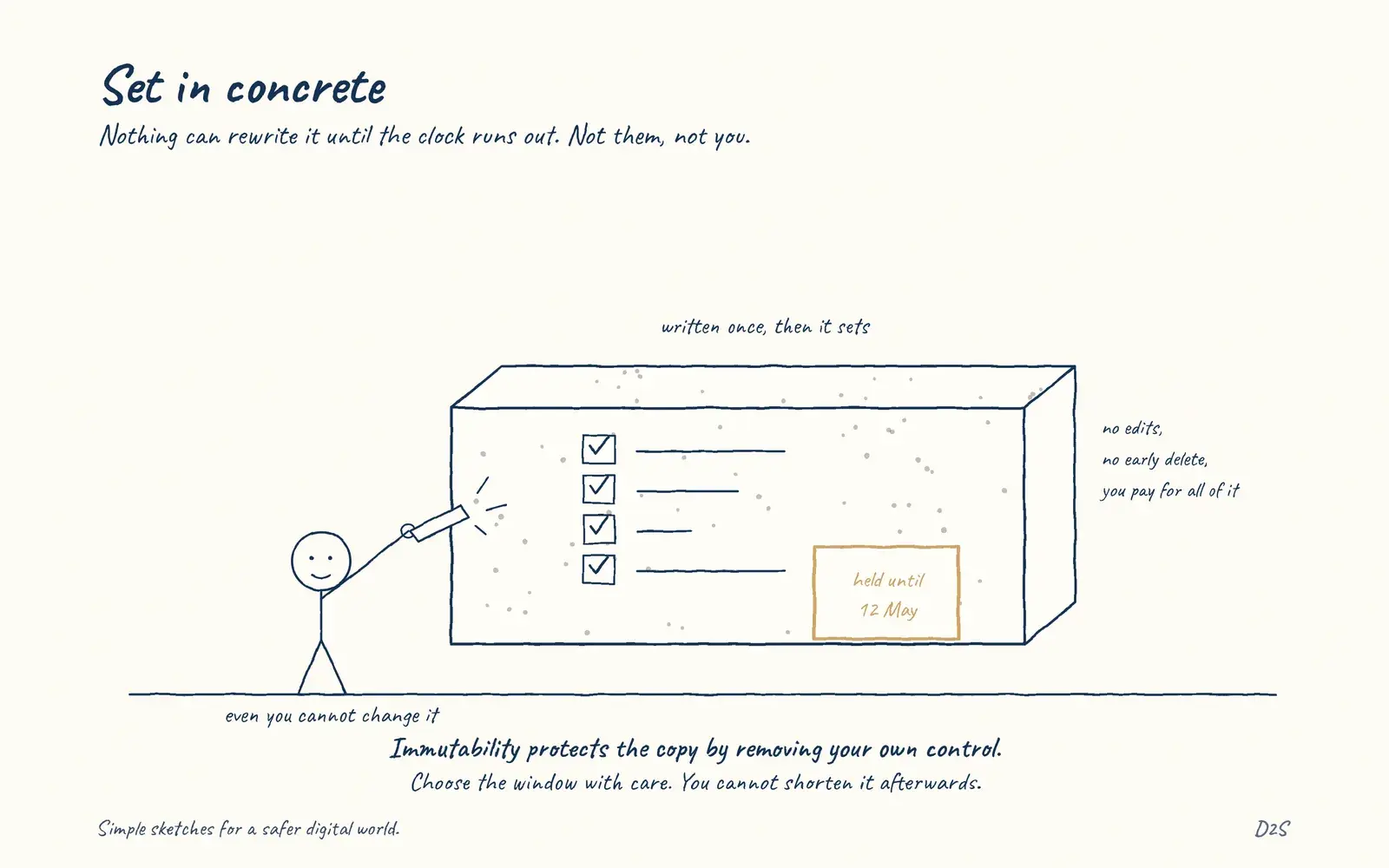 Immutable backups trade flexibility for protectionSet in concrete
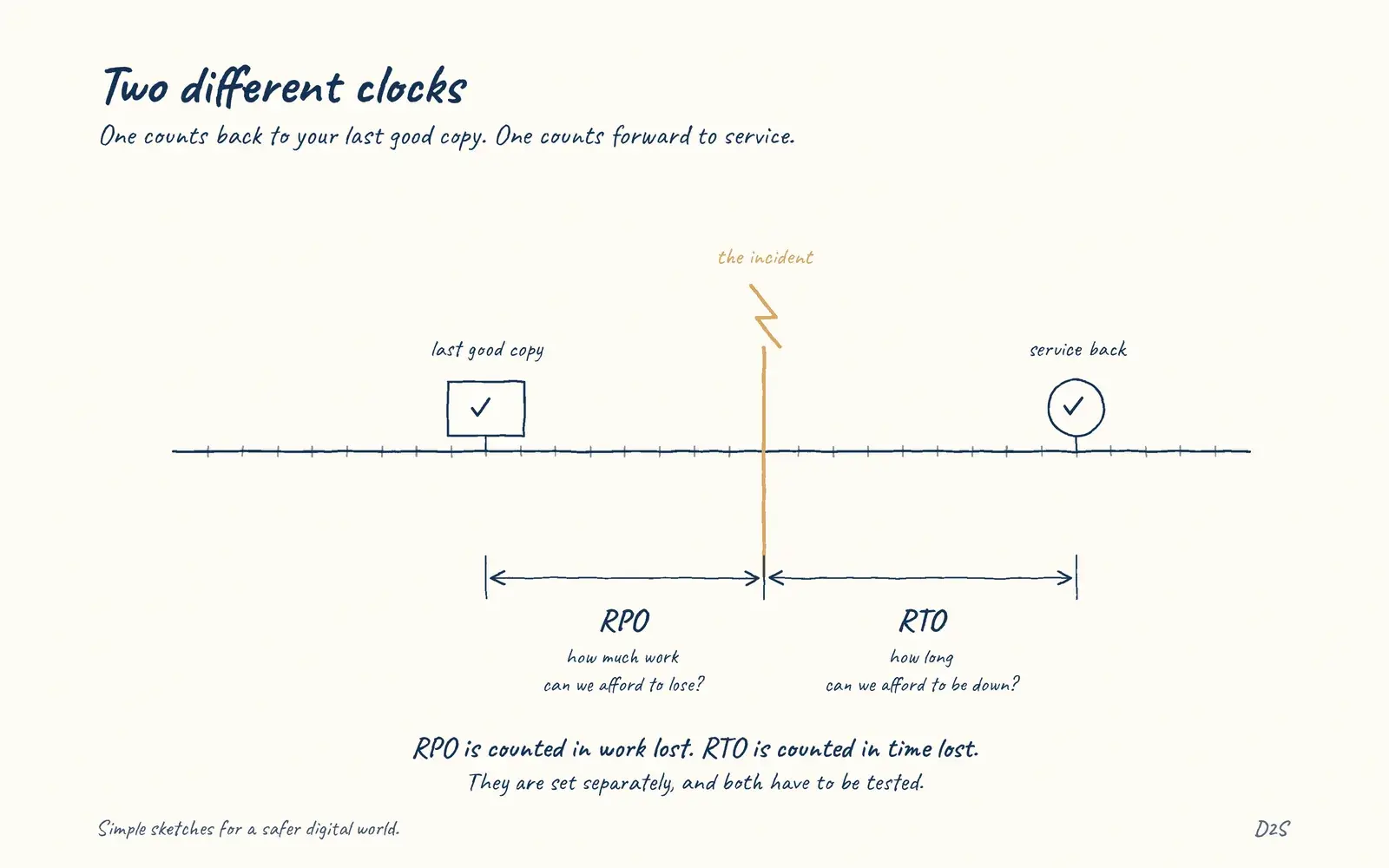 RPO and RTO answer different questionsTwo different clocks
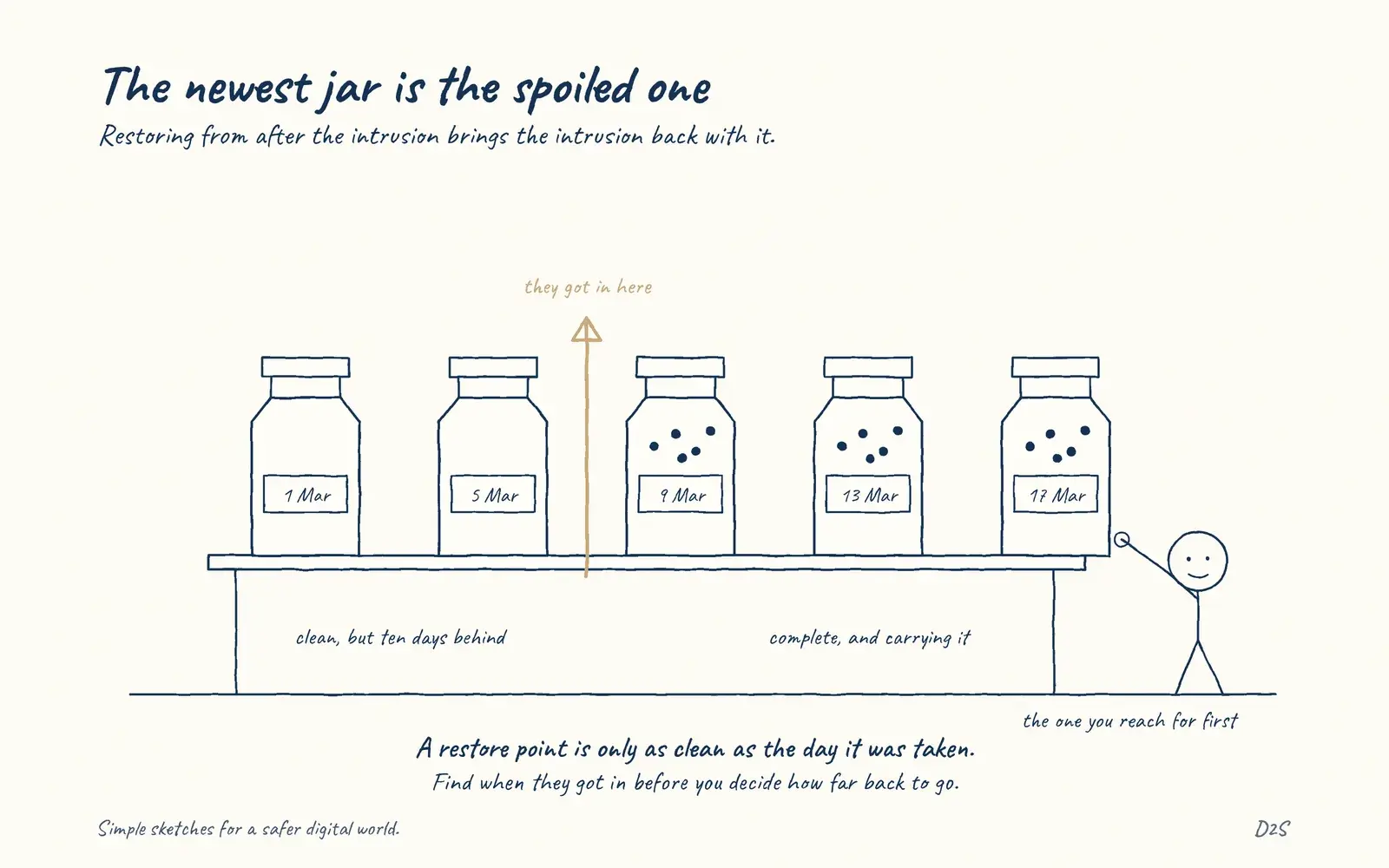 Restoring data can restore malware tooThe newest jar is the spoiled one
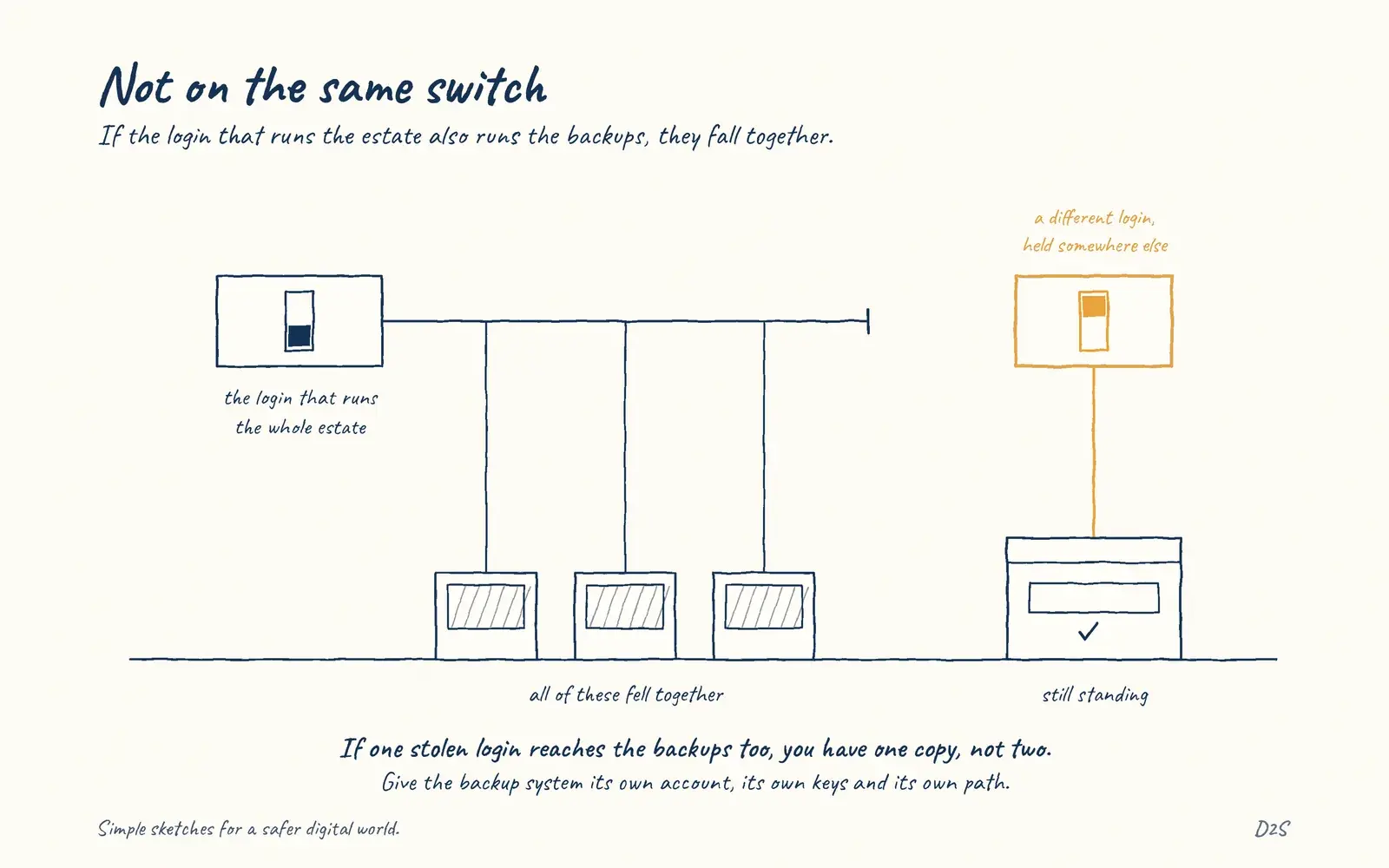 Backup credentials deserve separate protectionNot on the same switch
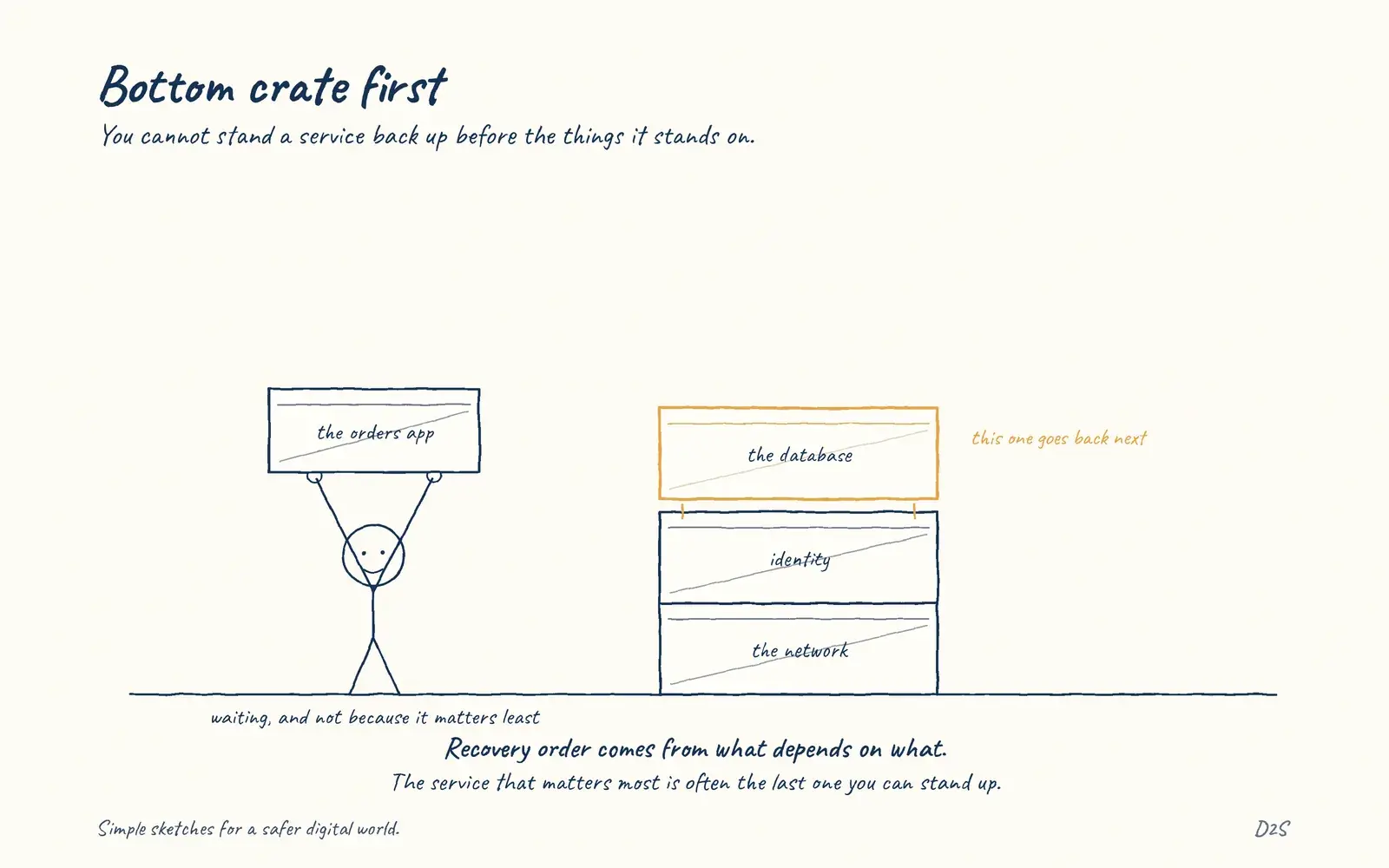 Recovery order follows dependenciesBottom crate first
 Backup retention determines how far back you can restore to escape corruption or compromiseAs far back as the rope goes
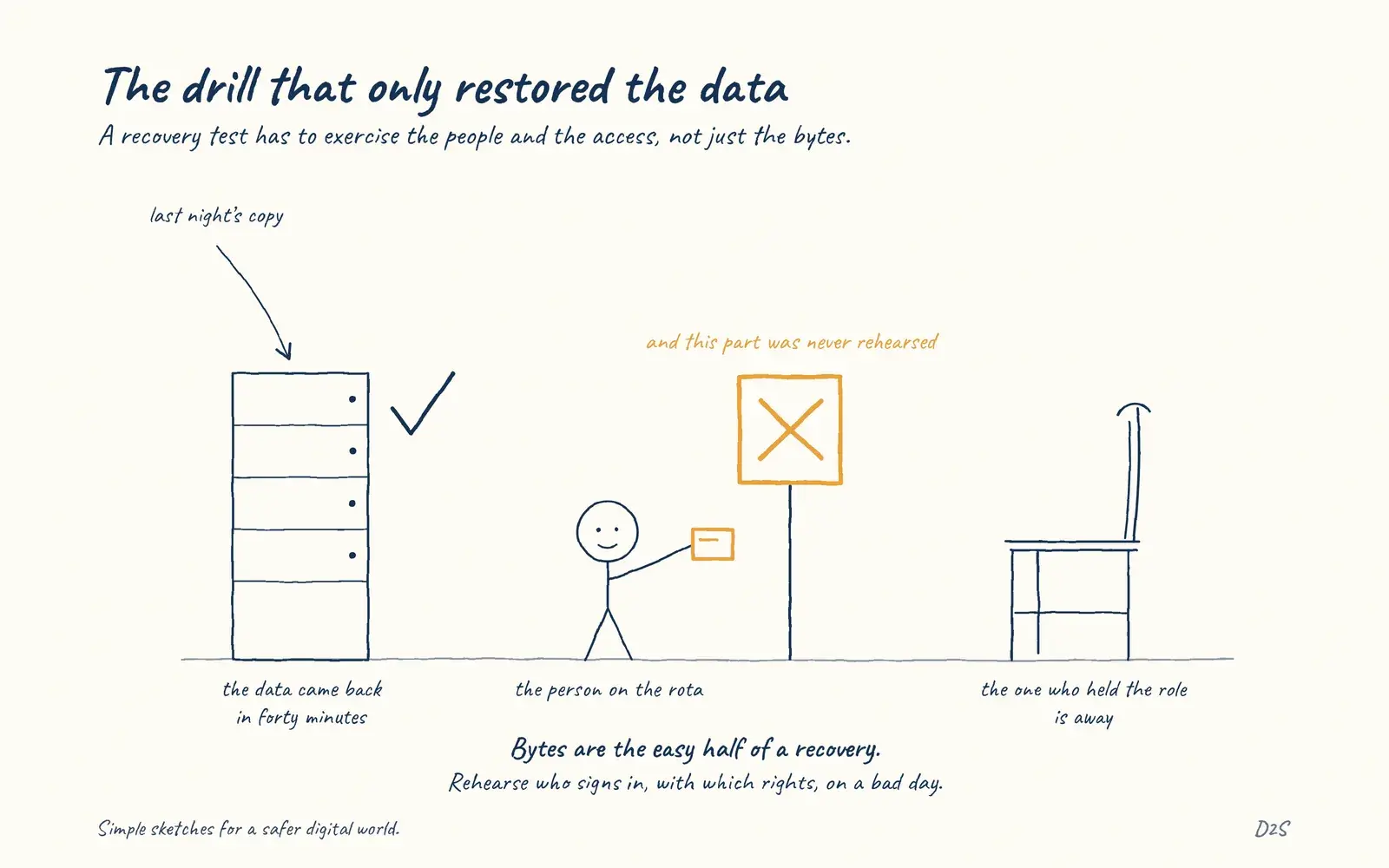 Recovery tests include people and permissionsThe drill that only restored the data
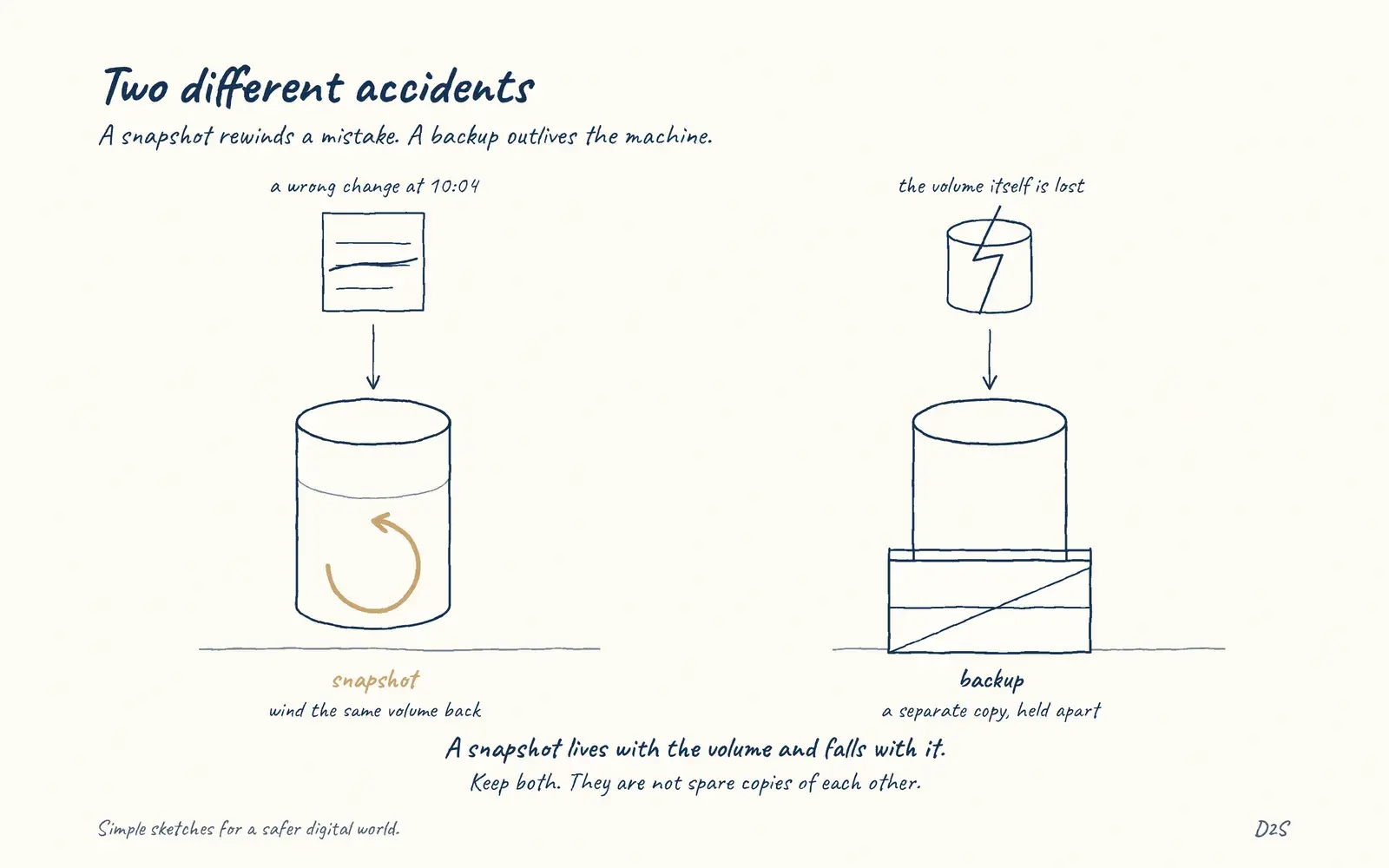 Snapshots and backups solve different failure modesTwo different accidents
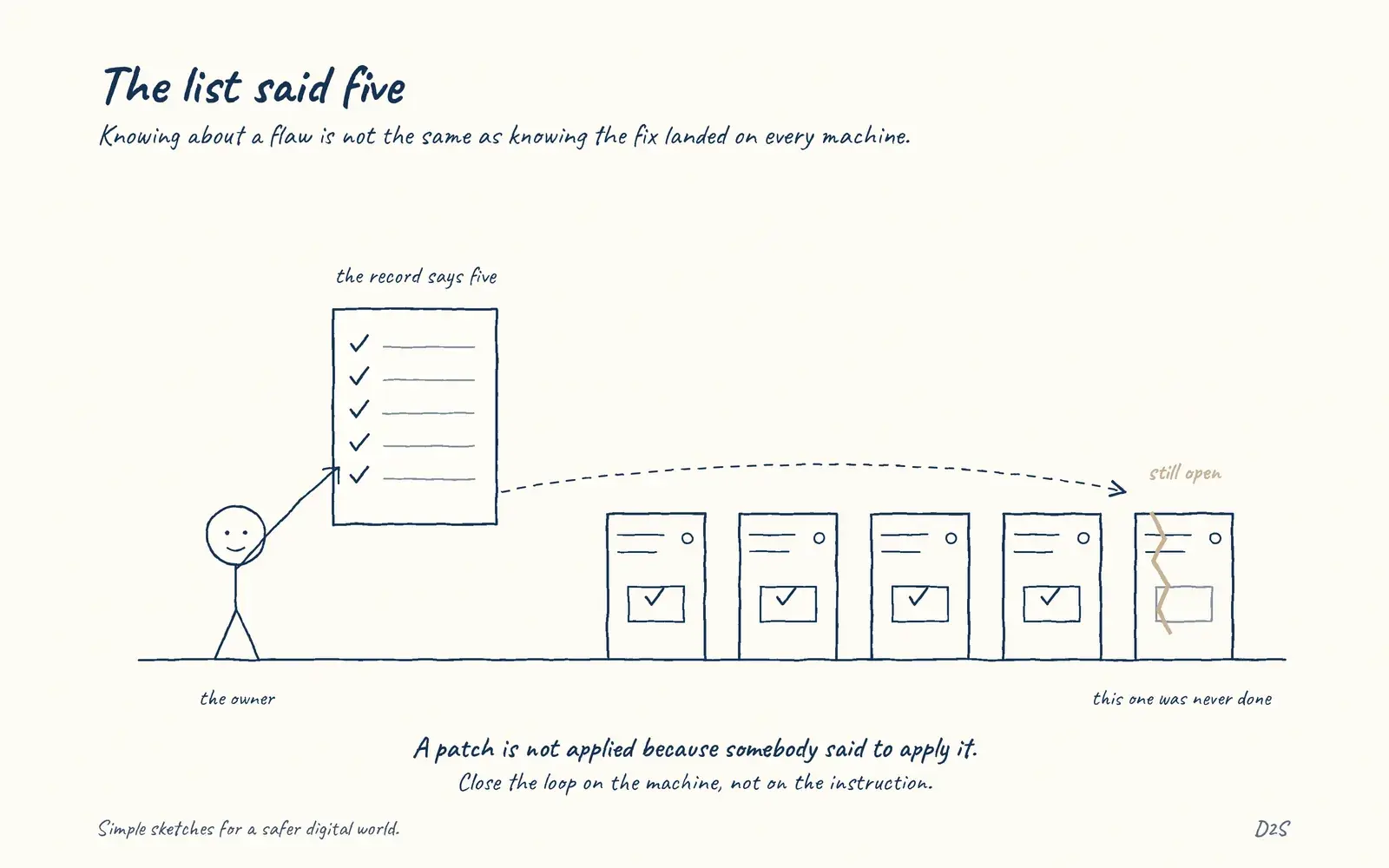 Equifax: knowing about a vulnerability is not knowing it is patchedThe list said five
 Target: supplier access showed why third-party portals need strong segmentation from sensitive systemsThe partitions stop short
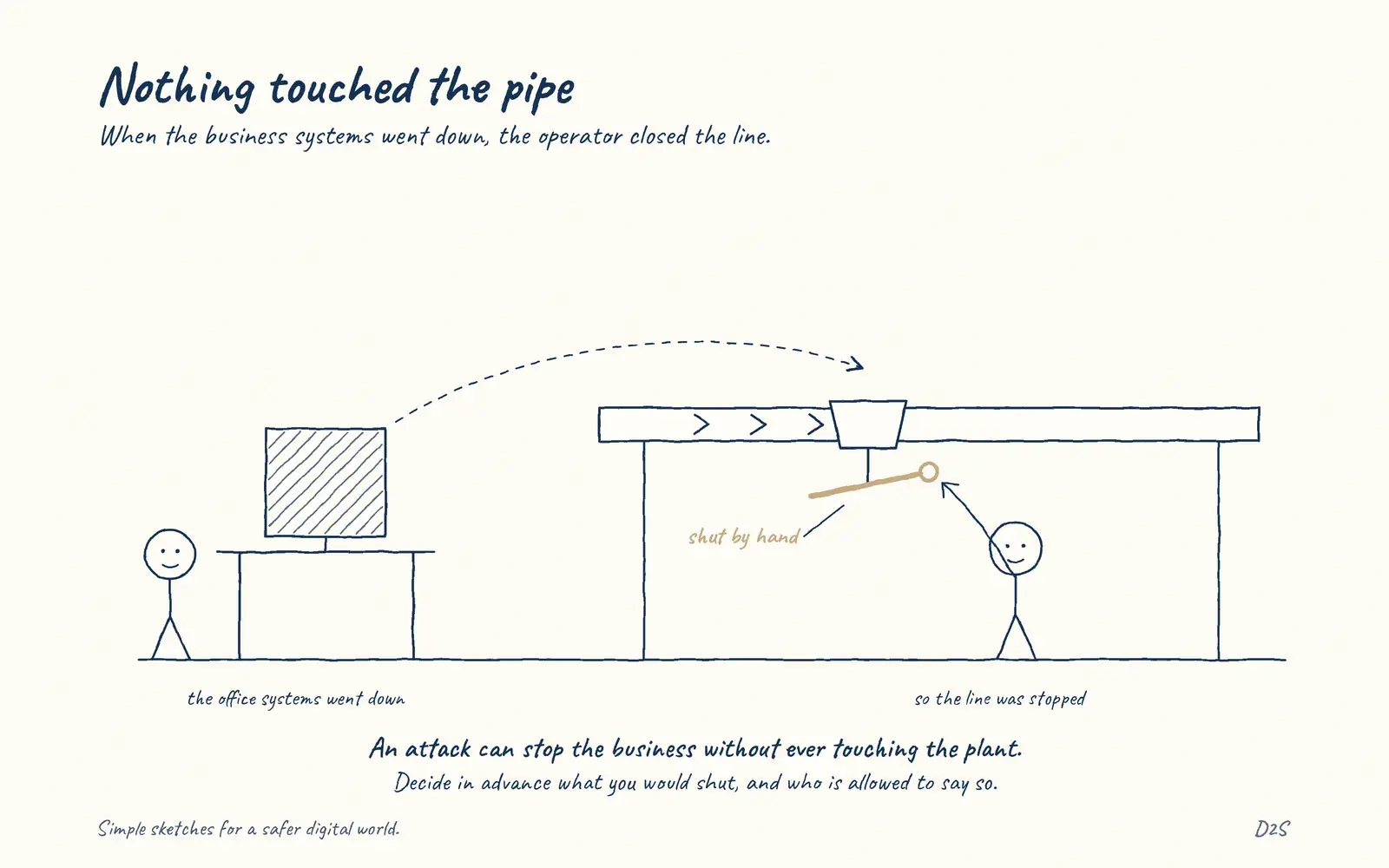 Colonial Pipeline: business shutdown can follow IT compromiseNothing touched the pipe
 Help-desk identity processes are attack surfaces when social engineering can trigger password resets or MFA transferThree answers, and it moves
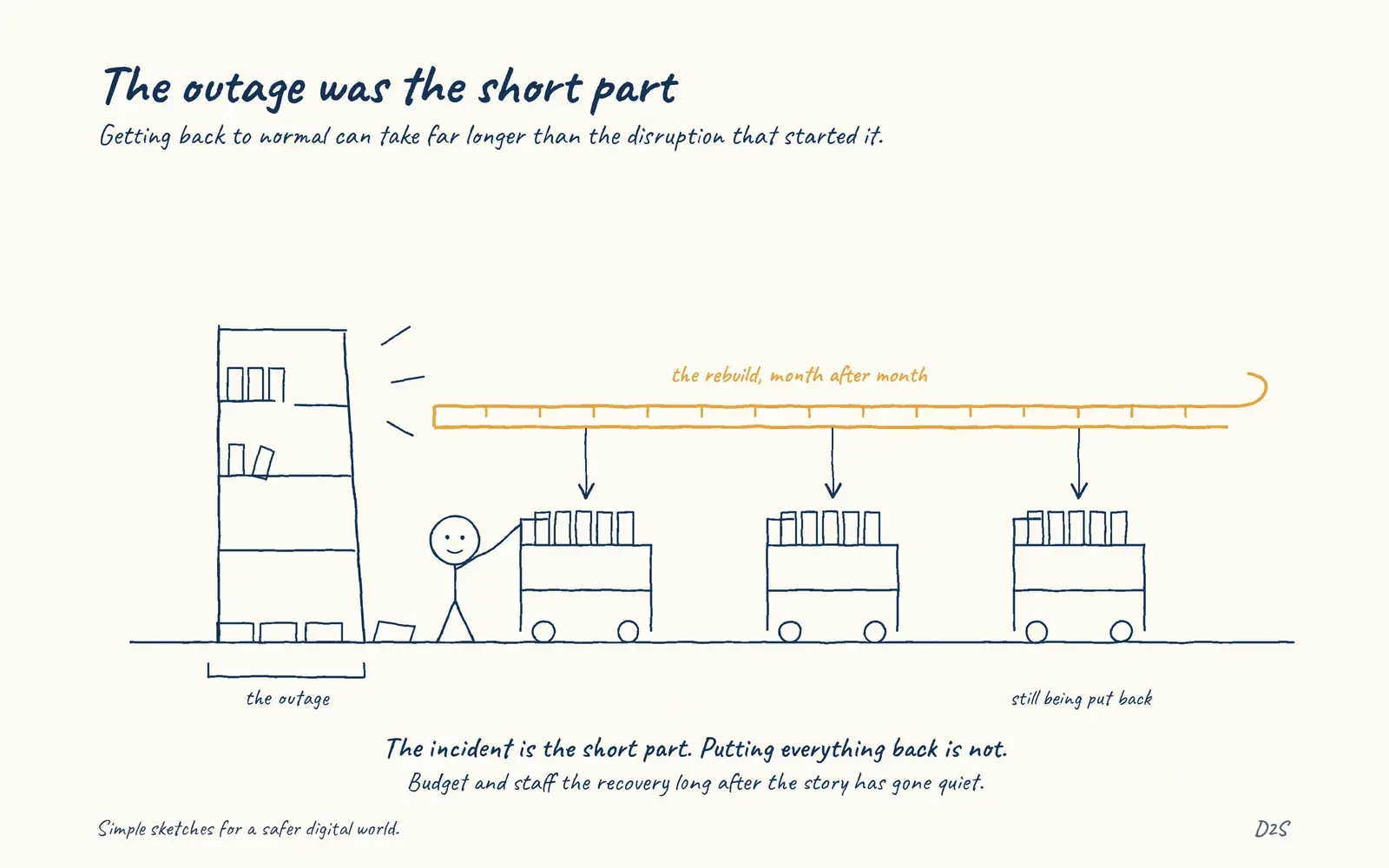 British Library: recovery can outlast initial disruptionThe outage was the short part
 Hawaii false missile alert: test and live alert paths need separation because confirmation prompts cannot correct a convinced operatorA hand apart
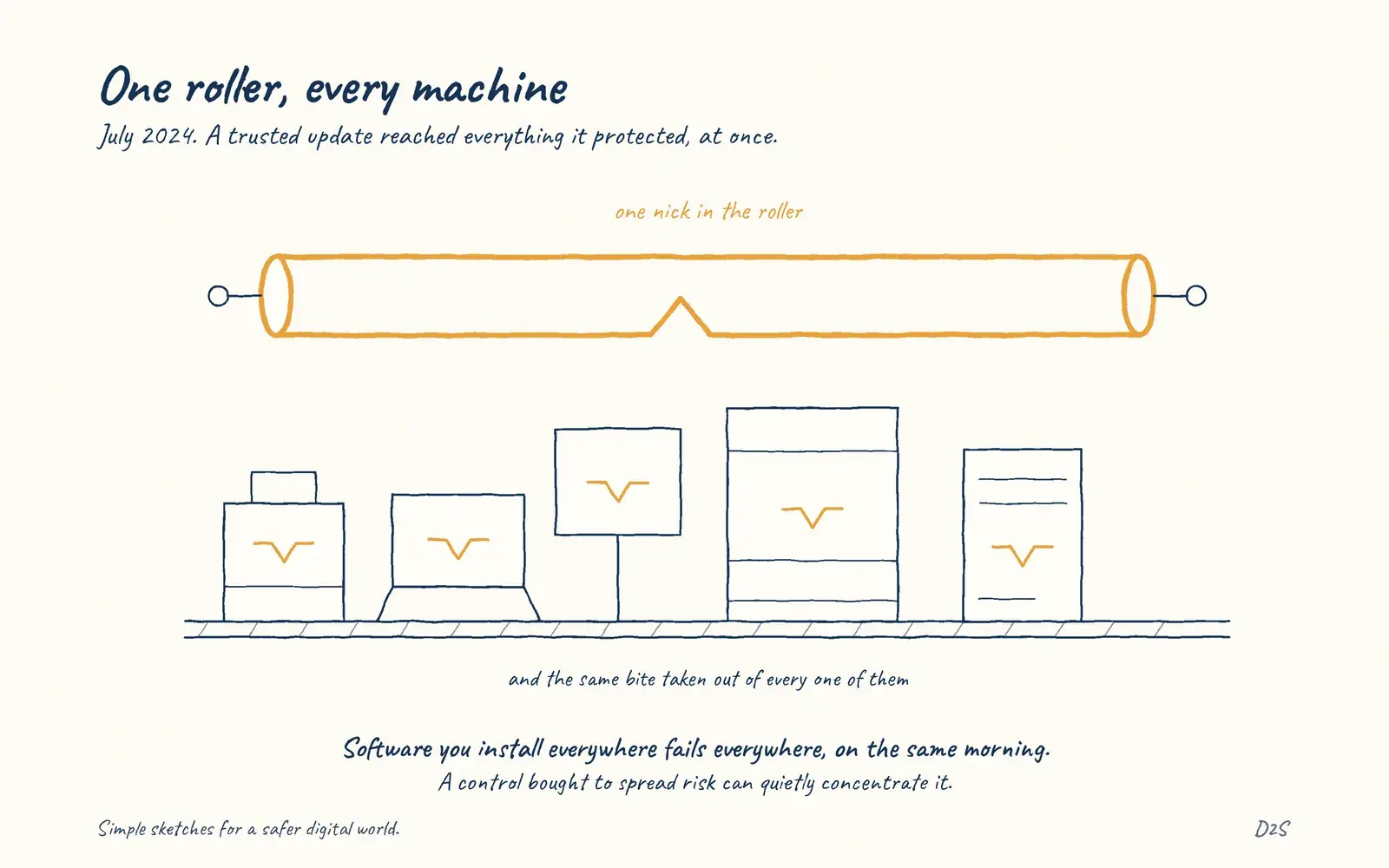 CrowdStrike 2024: trusted security software can be concentration riskOne roller, every machine
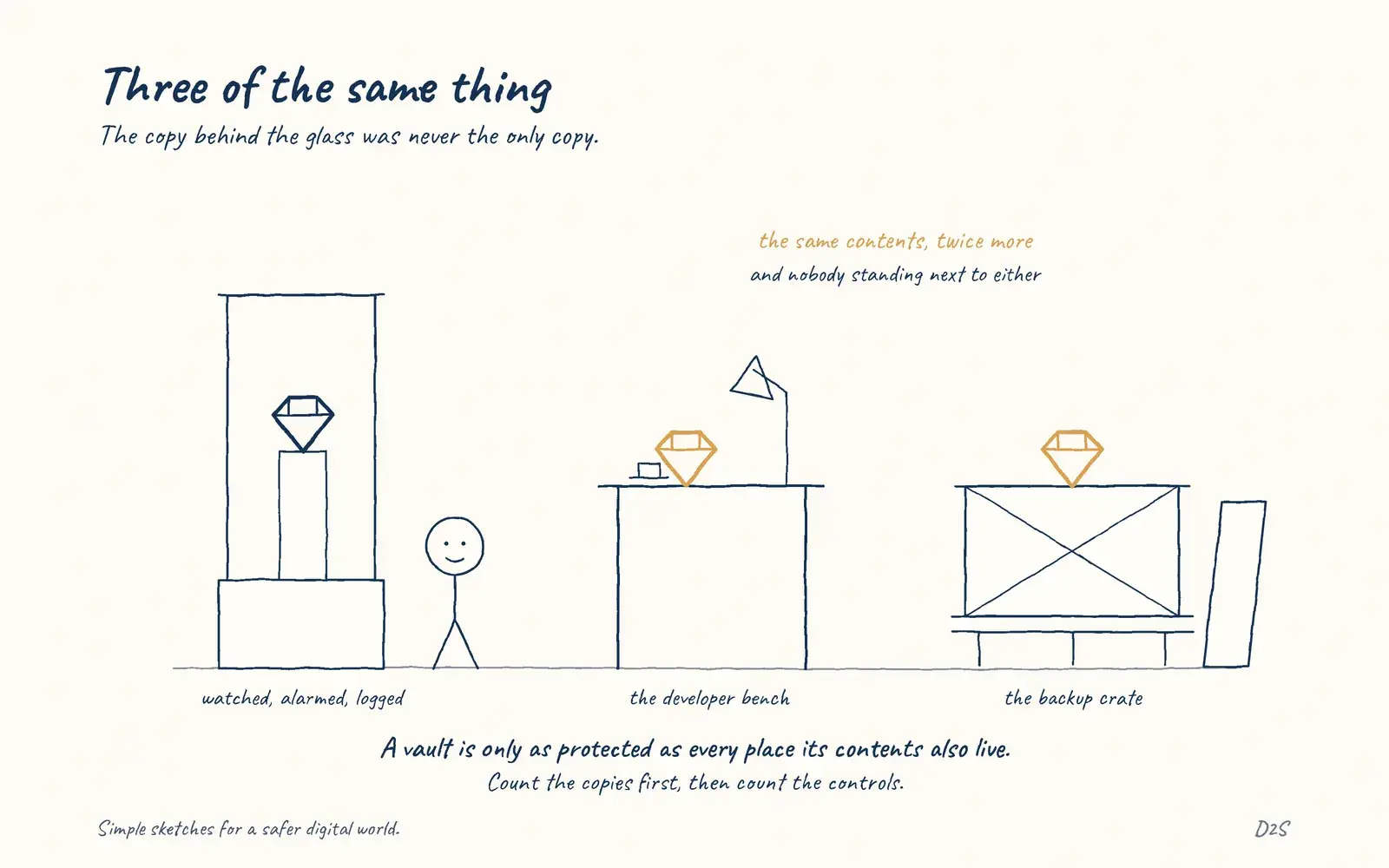 LastPass: protecting vaults includes developer and backup pathsThree of the same thing
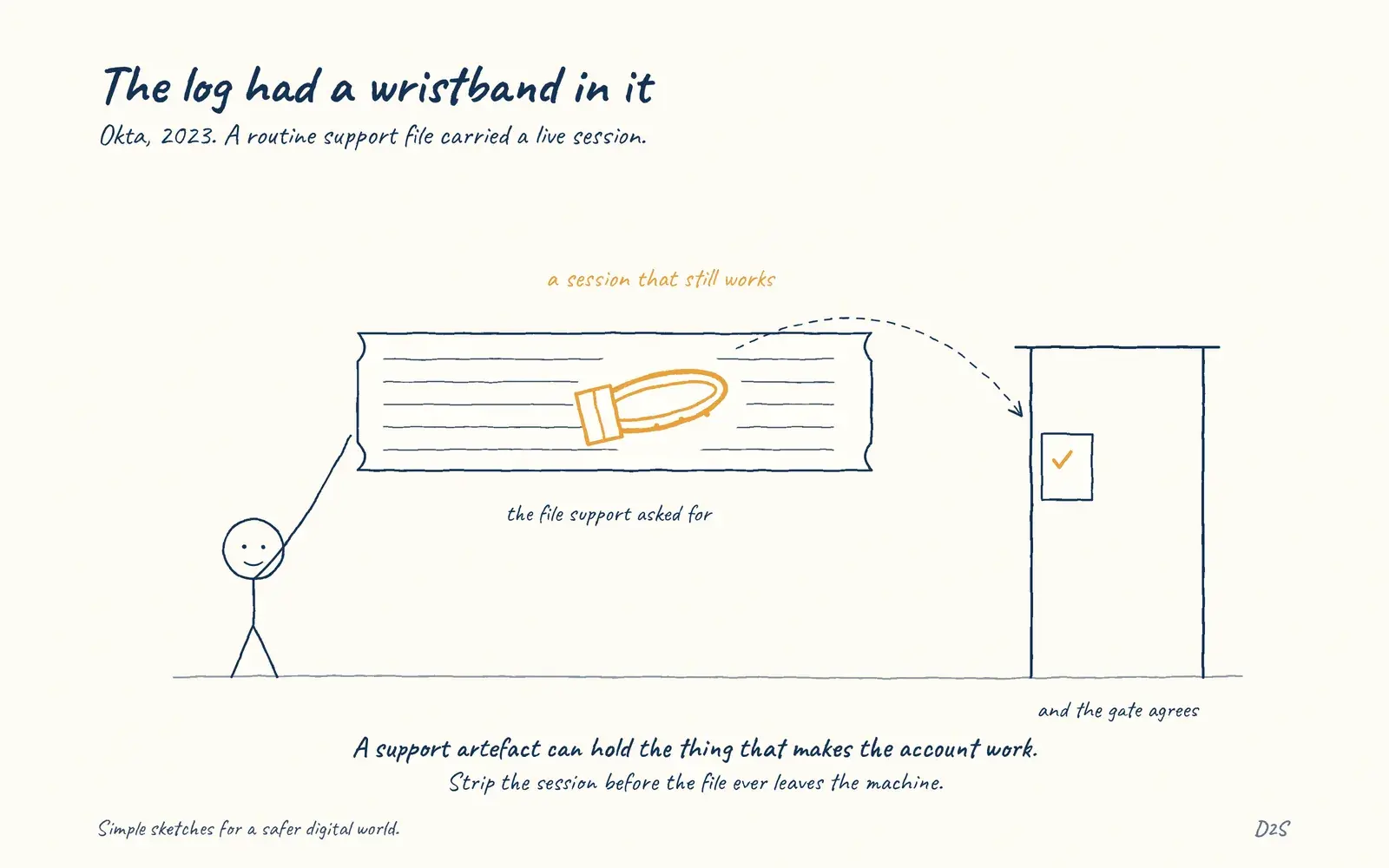 Okta support compromise: support artefacts can contain session powerThe log had a wristband in it