
Data protection & privacy
Where data lives, who can read it, and what the law expects of you.
45 sketches
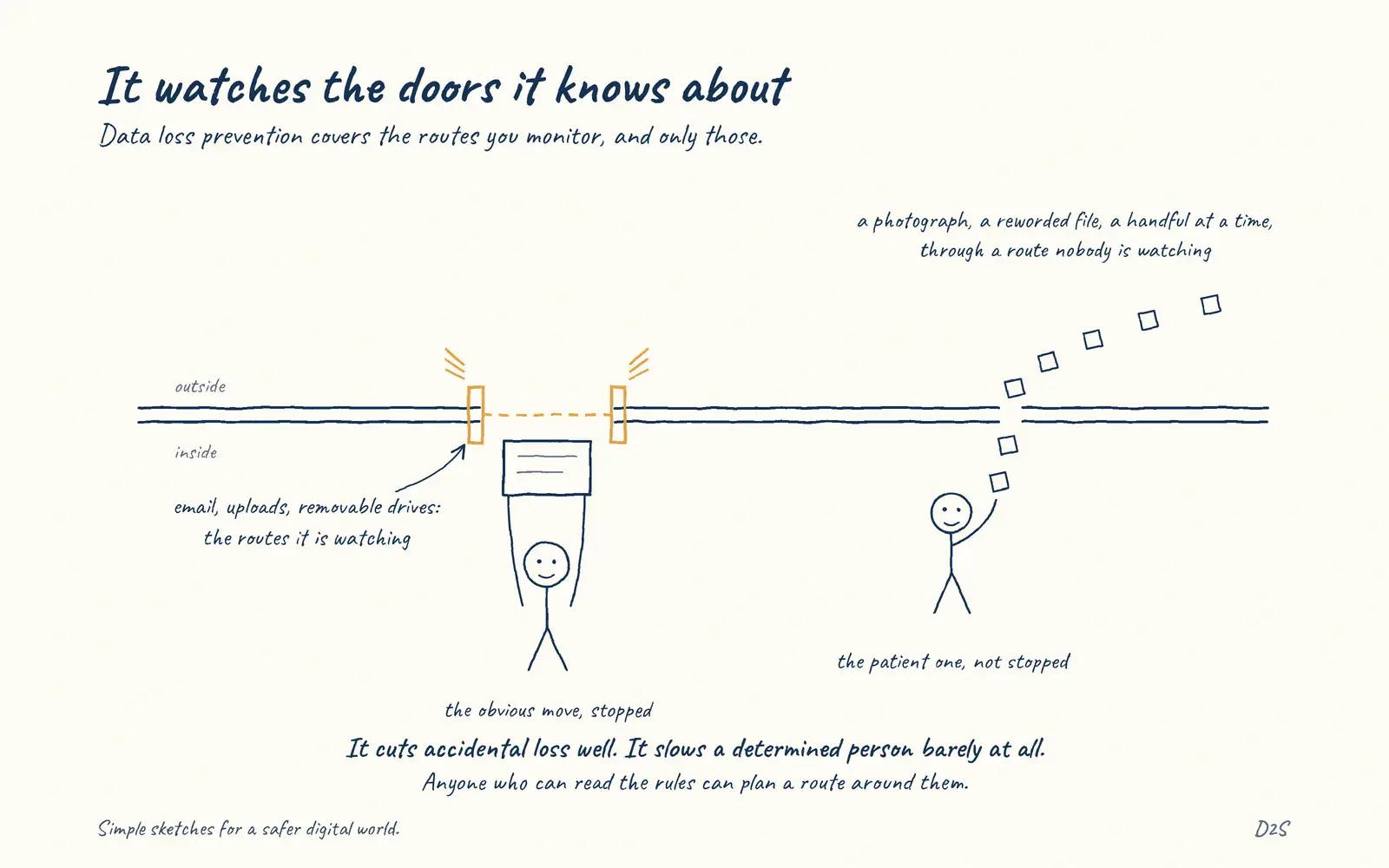 DLPIt watches the doors it knows about
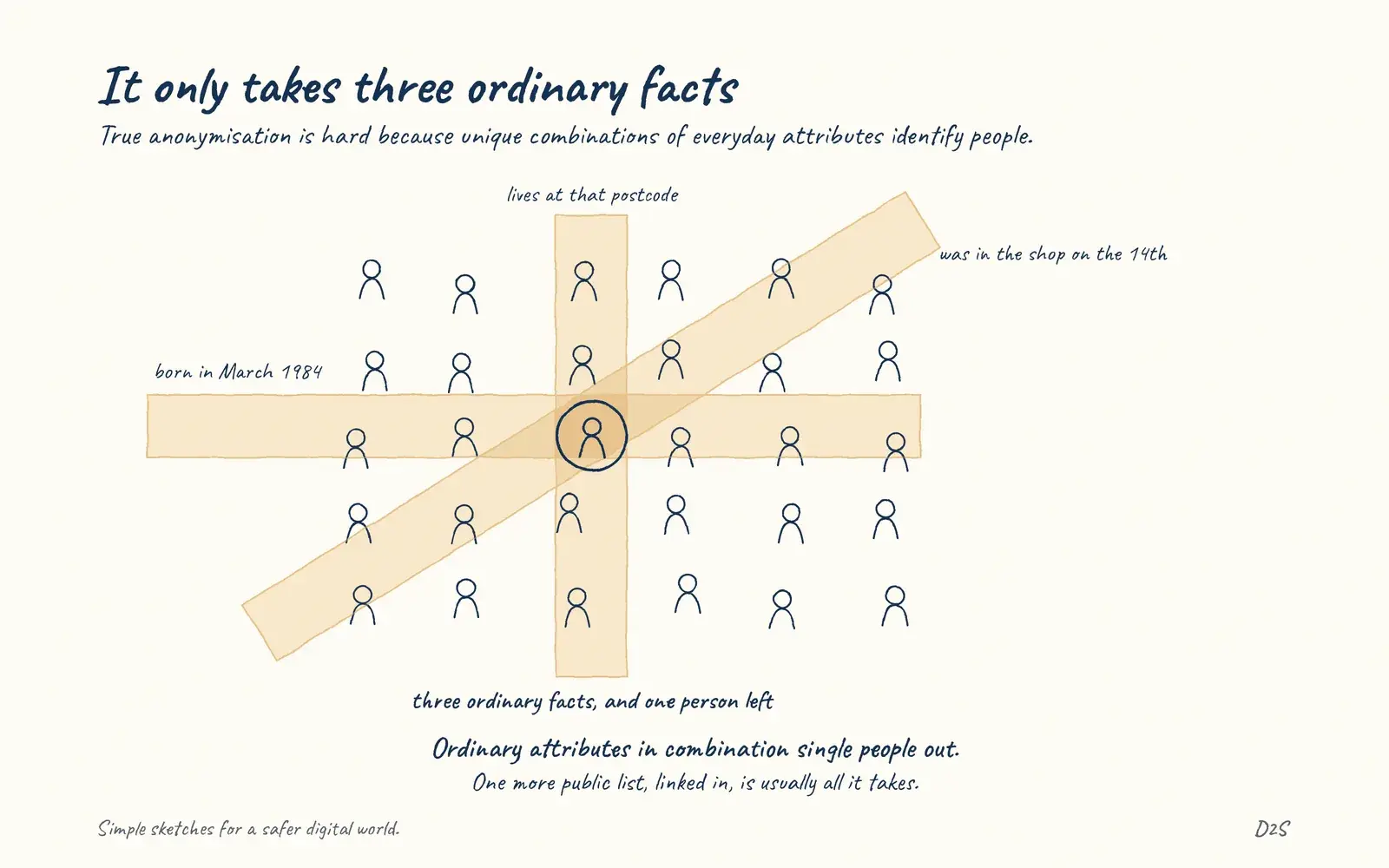 AnonymisationIt only takes three ordinary facts
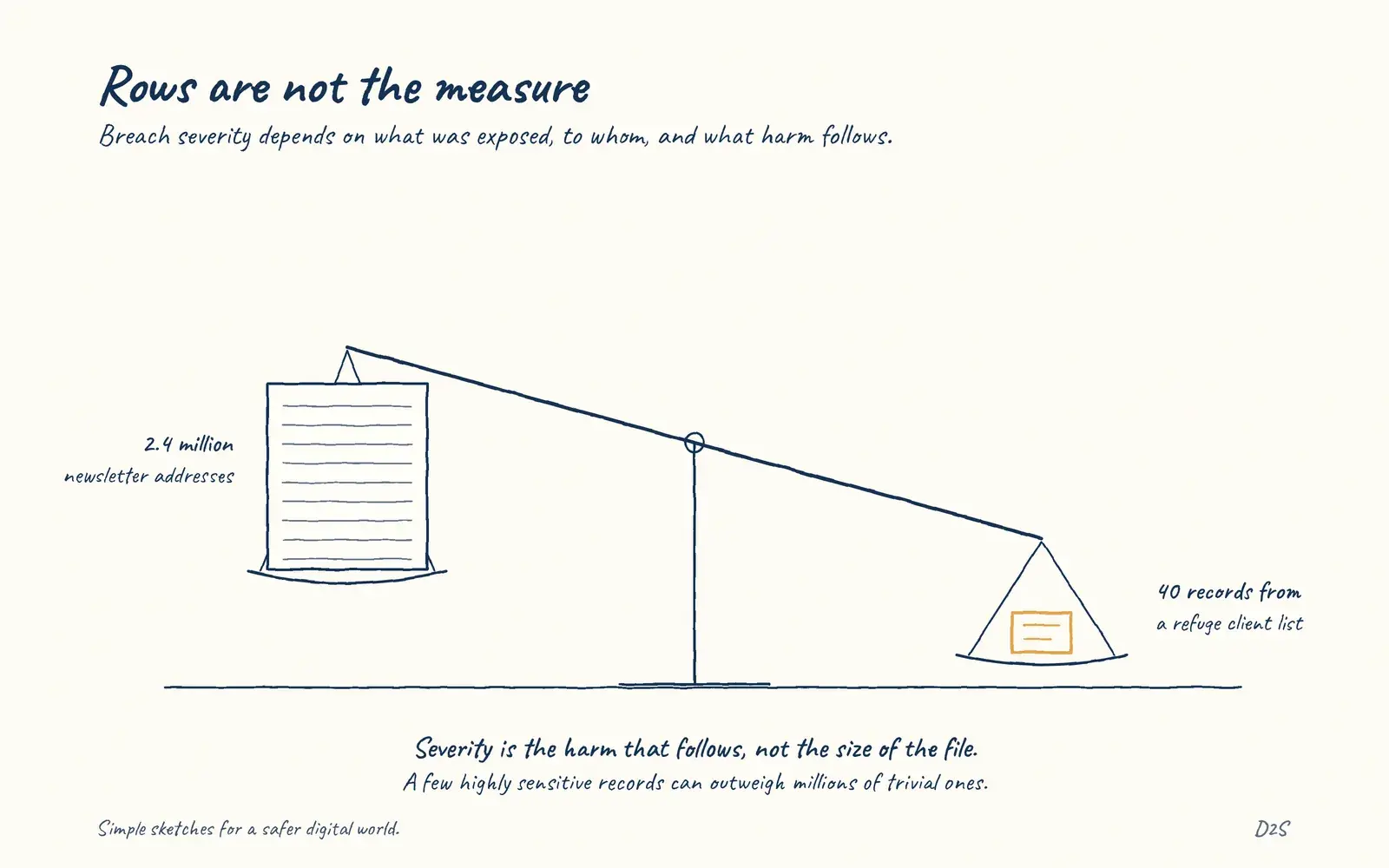 Data breach impactRows are not the measure
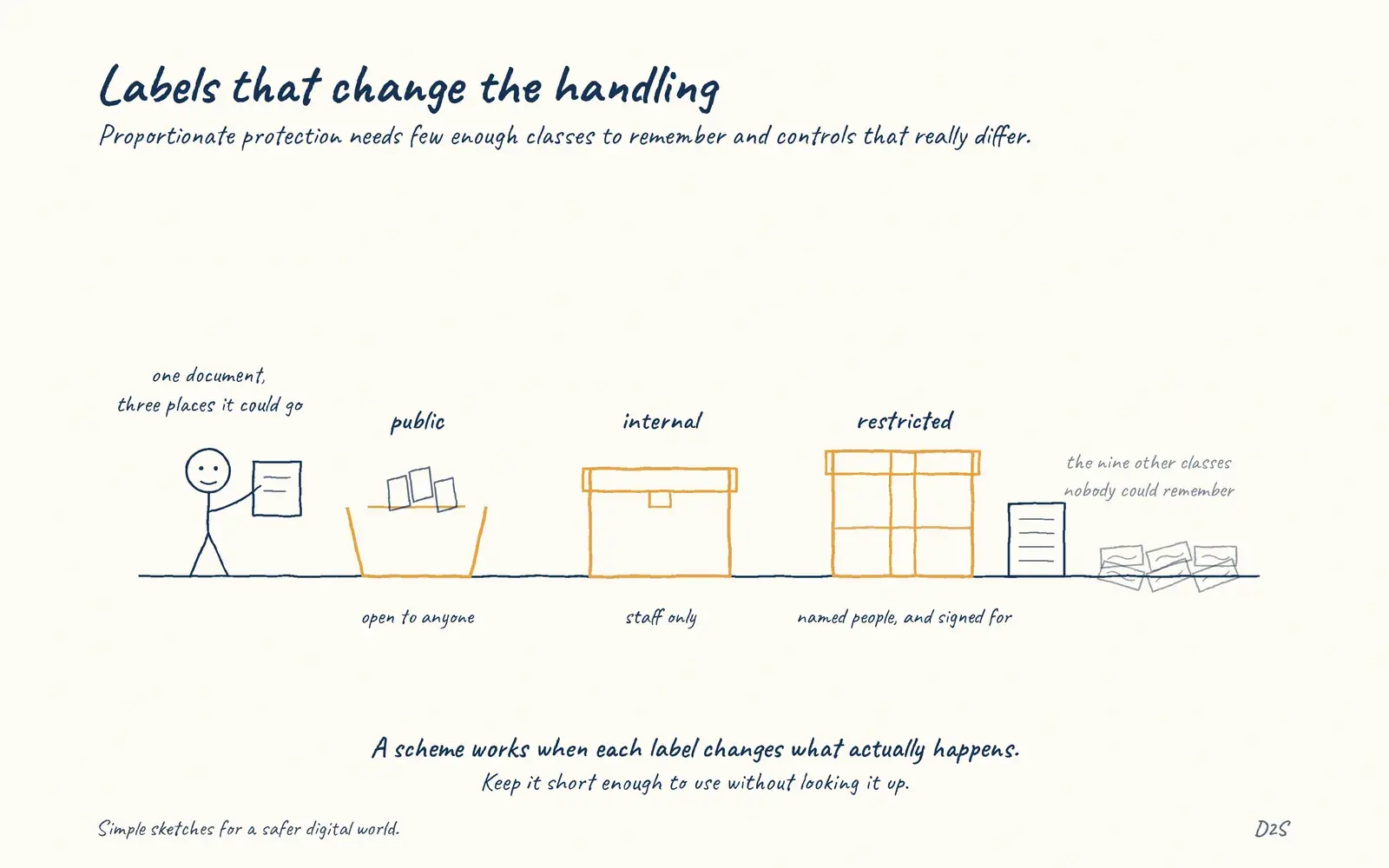 Data classificationLabels that change the handling
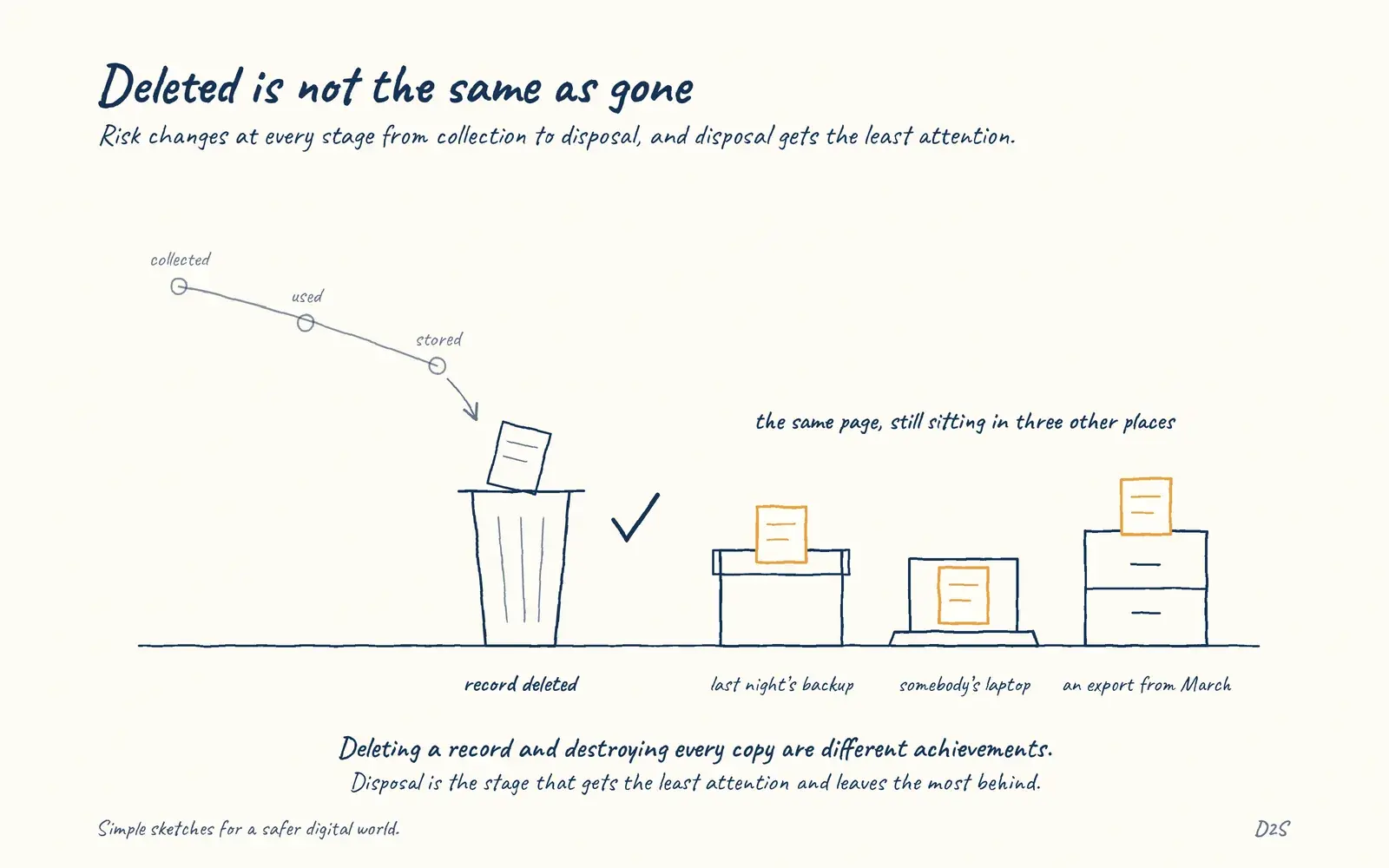 Data lifecycleDeleted is not the same as gone
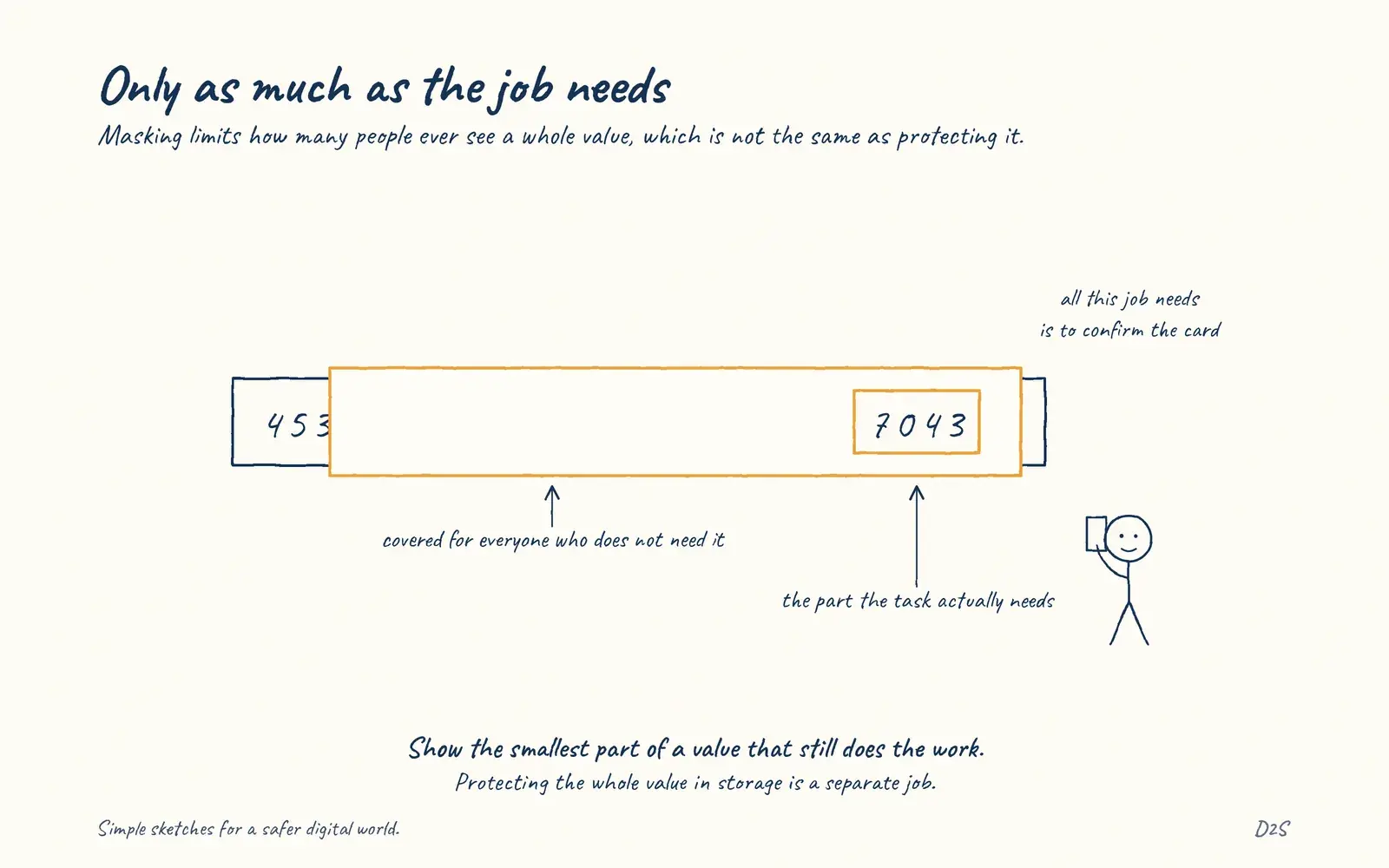 Data maskingOnly as much as the job needs
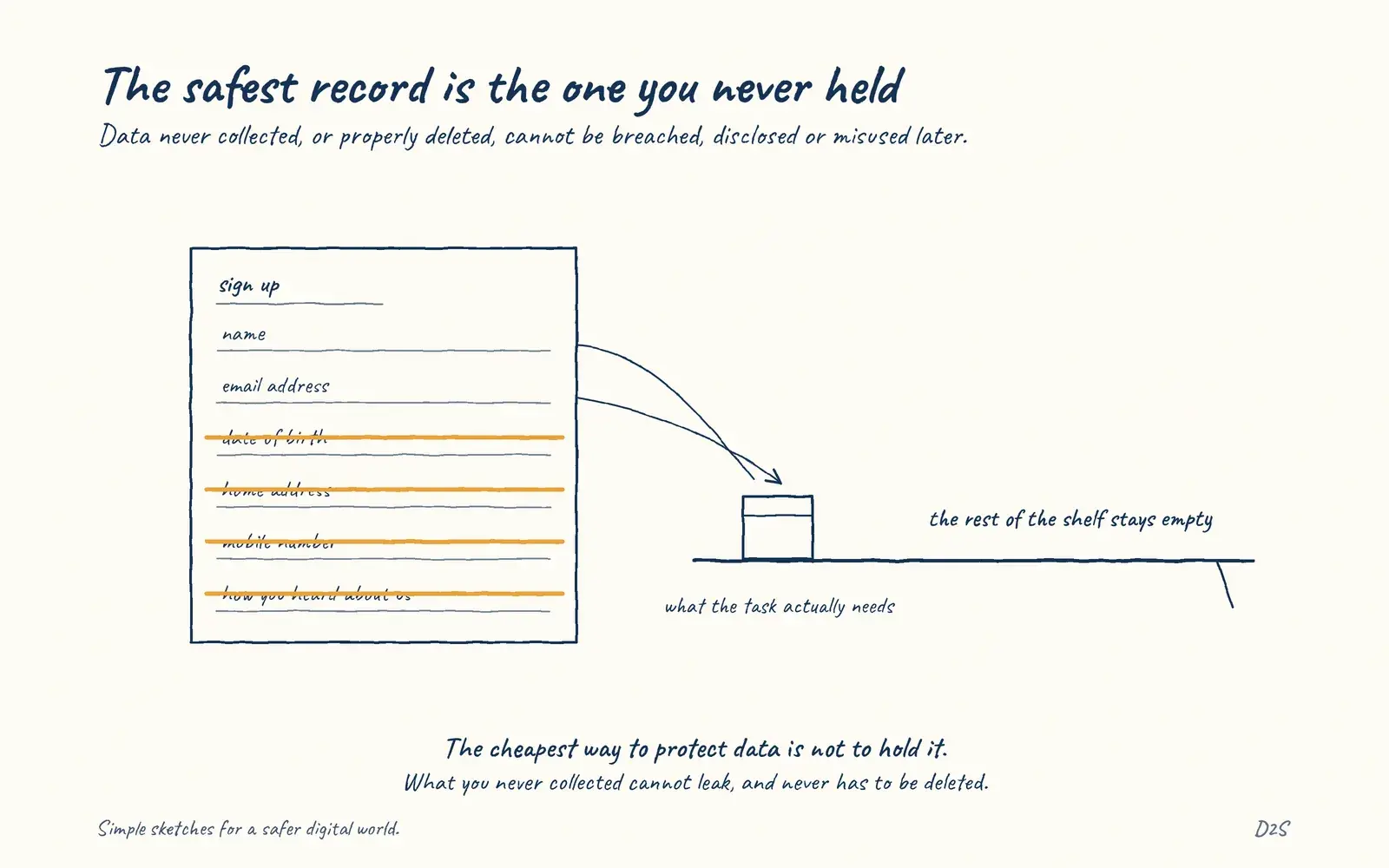 Data minimisationThe safest record is the one you never held
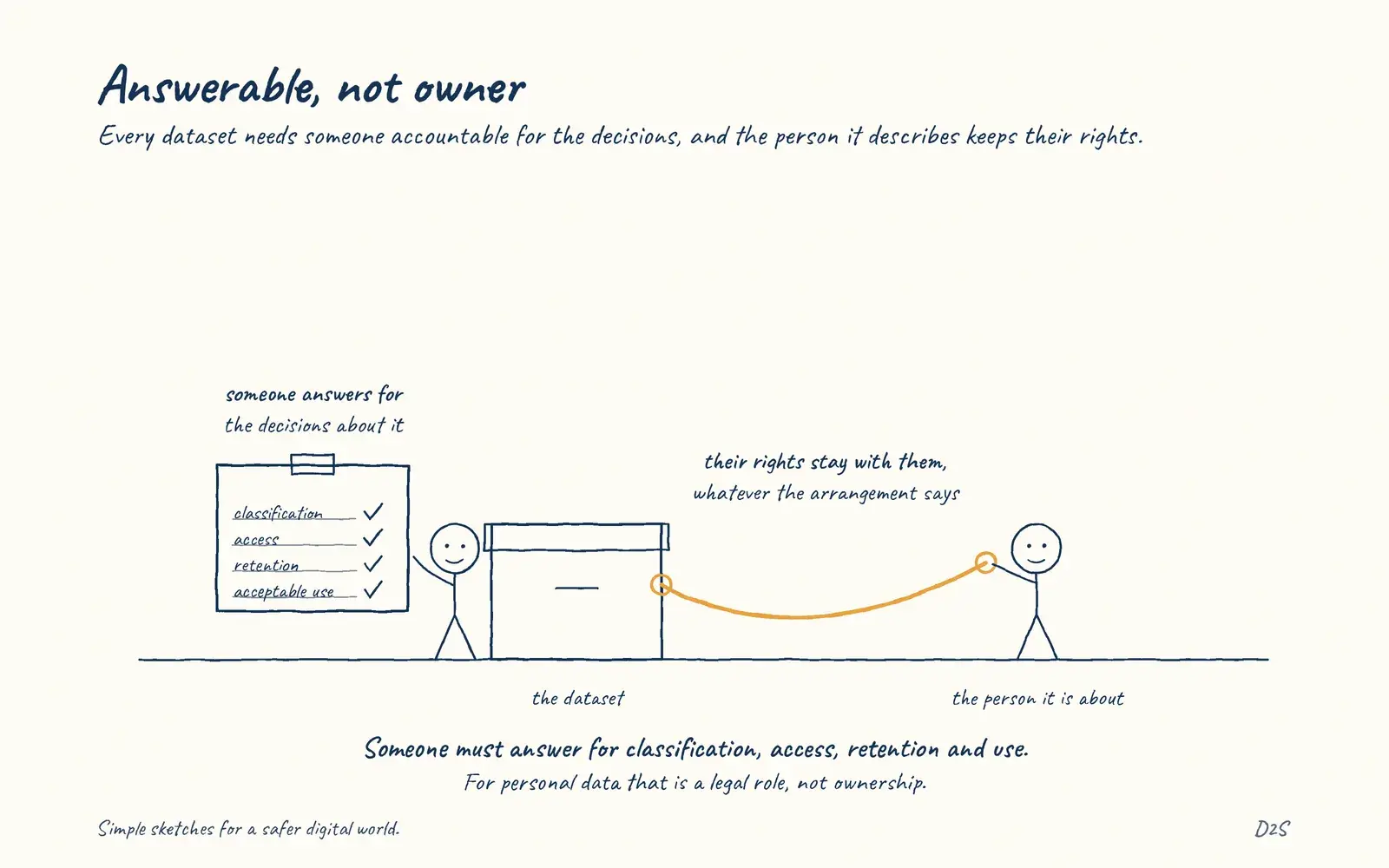 Data ownershipAnswerable, not owner
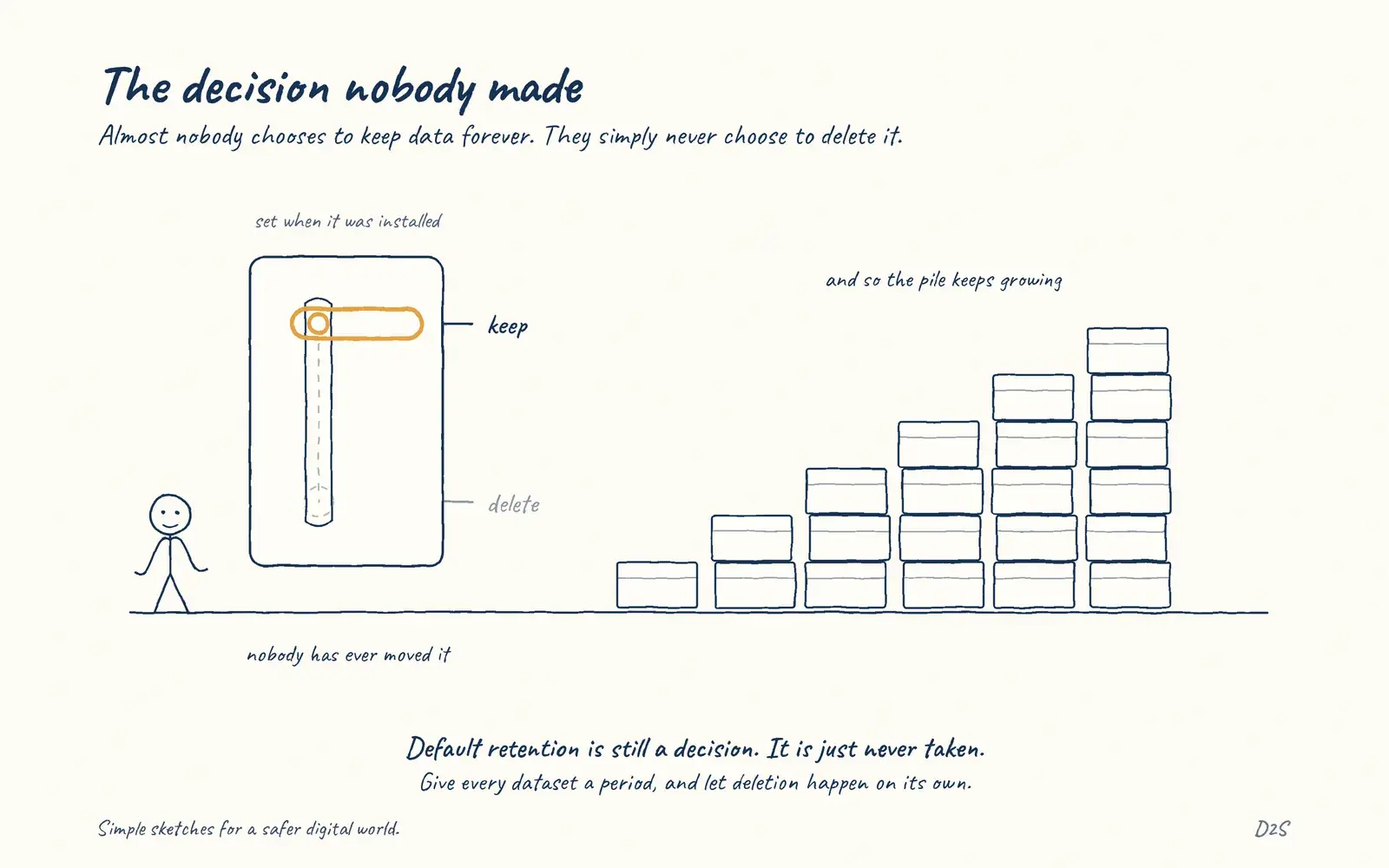 Data retentionThe decision nobody made
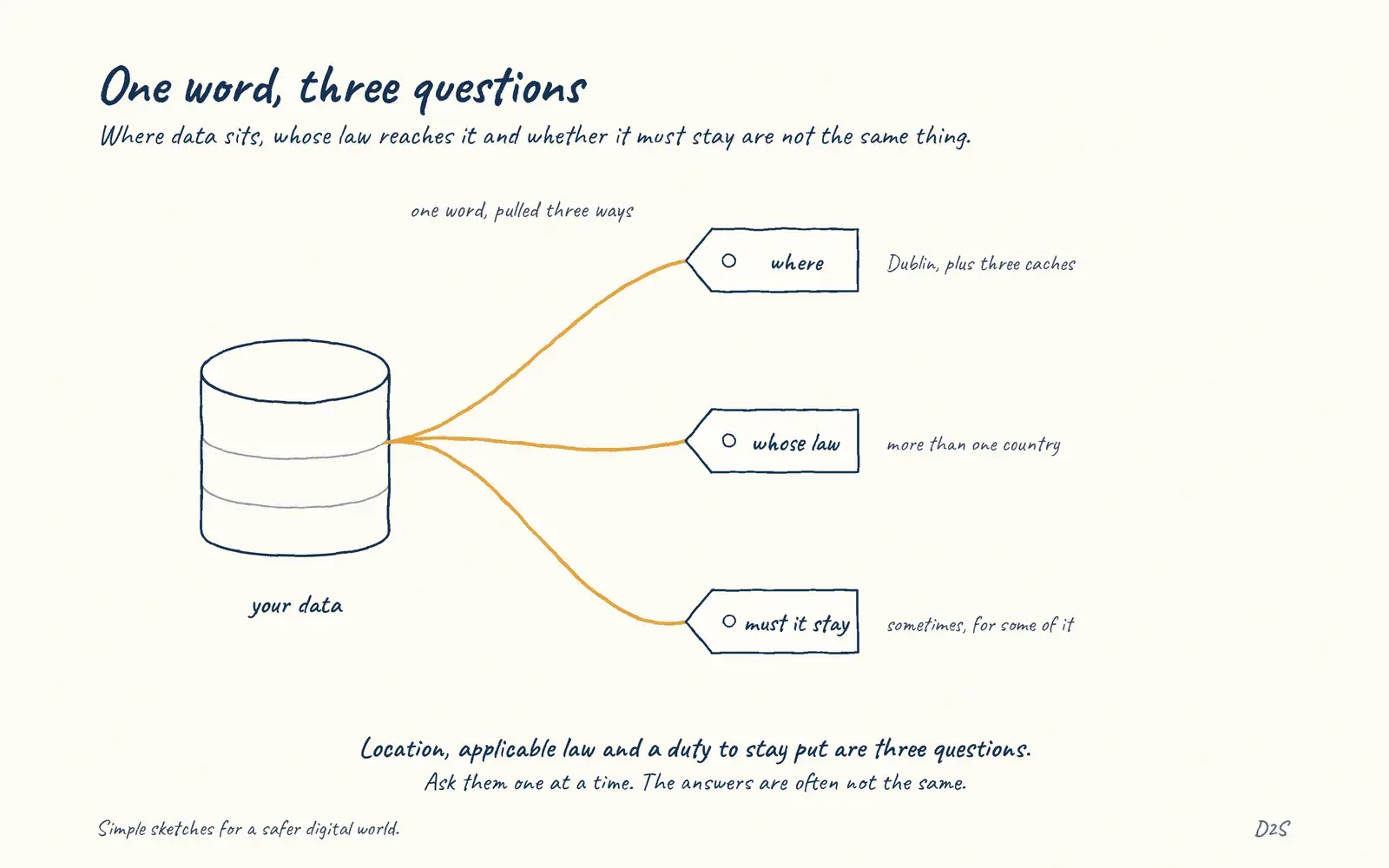 Data sovereigntyOne word, three questions
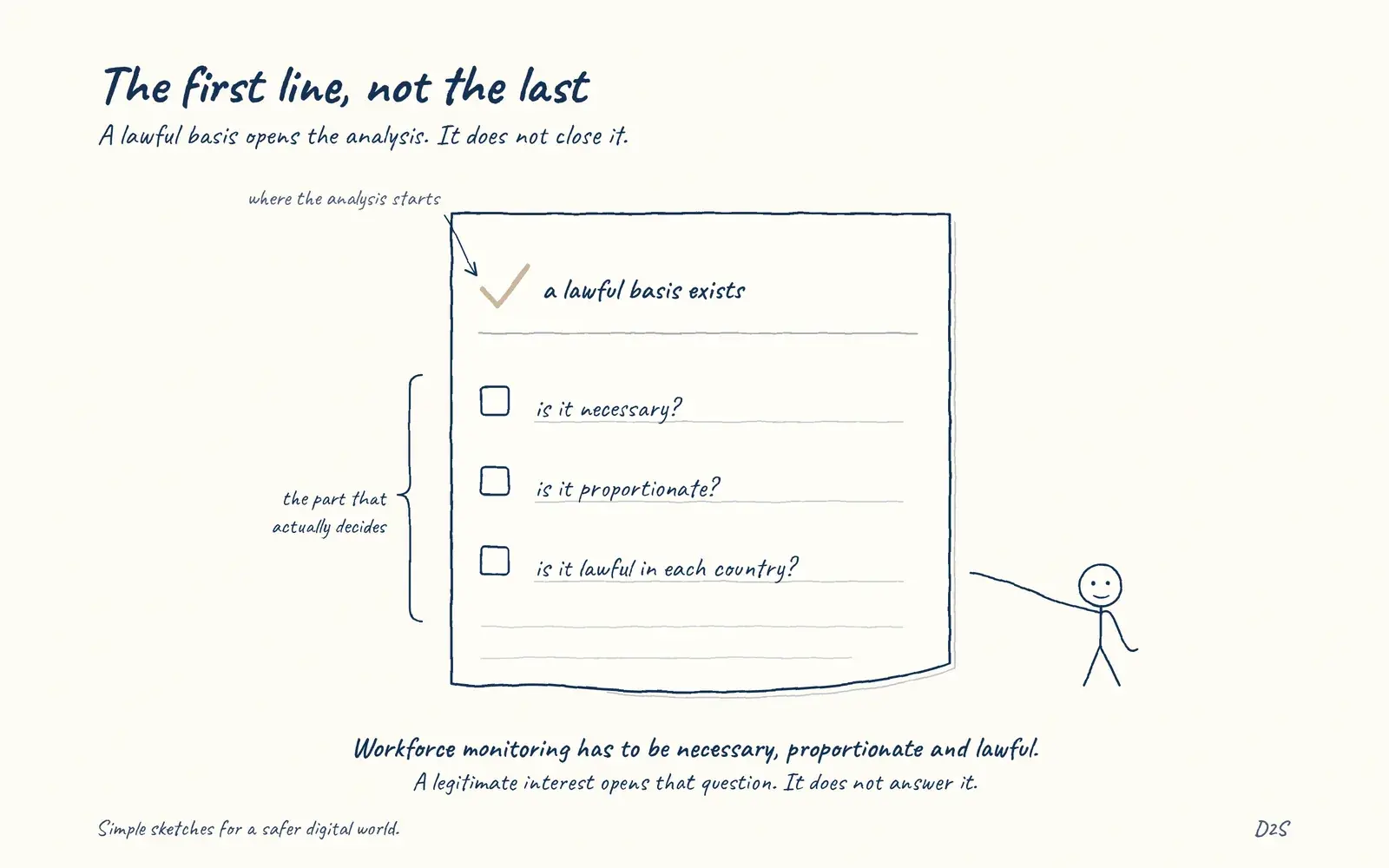 Employee monitoringThe first line, not the last
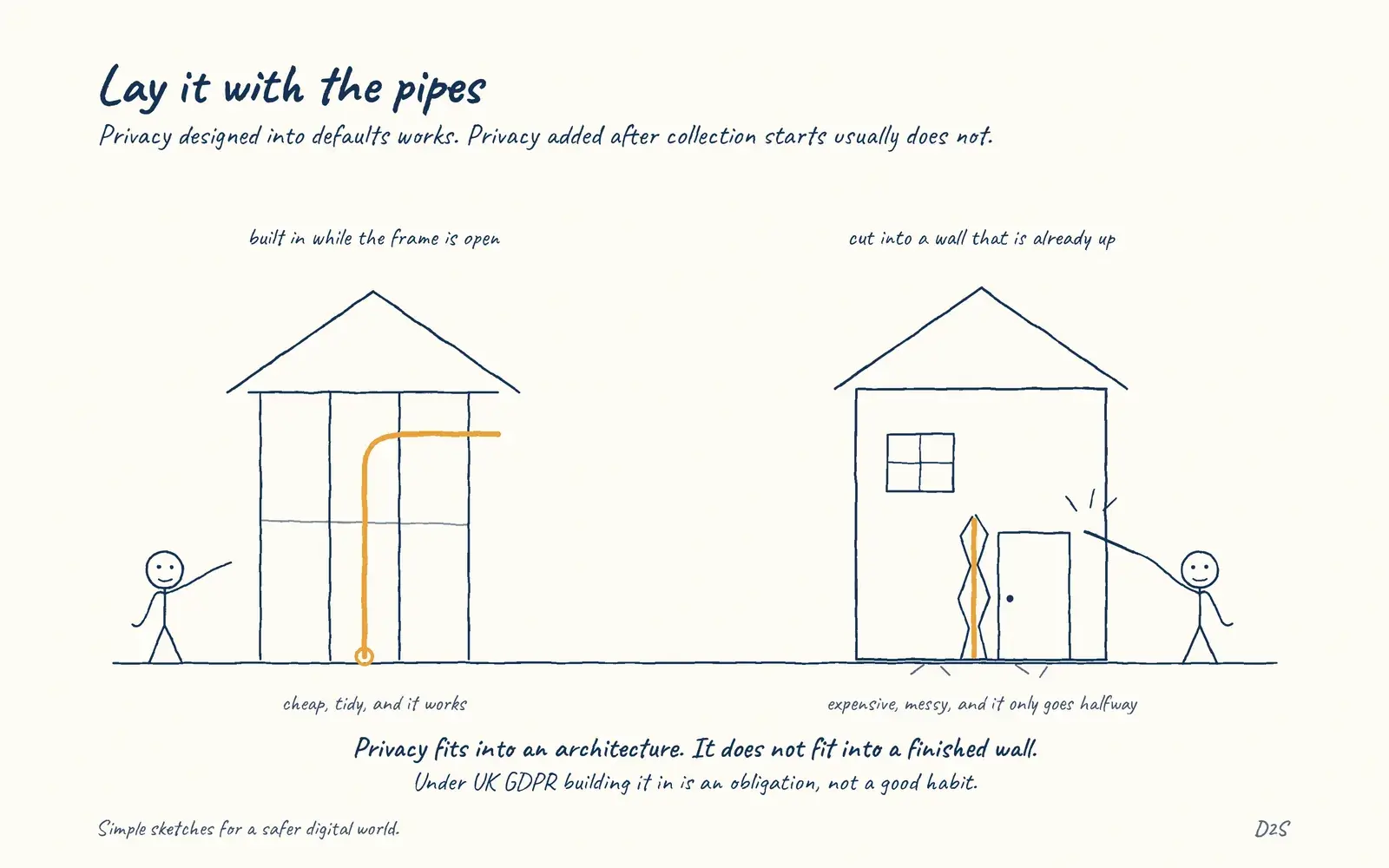 Privacy by designLay it with the pipes
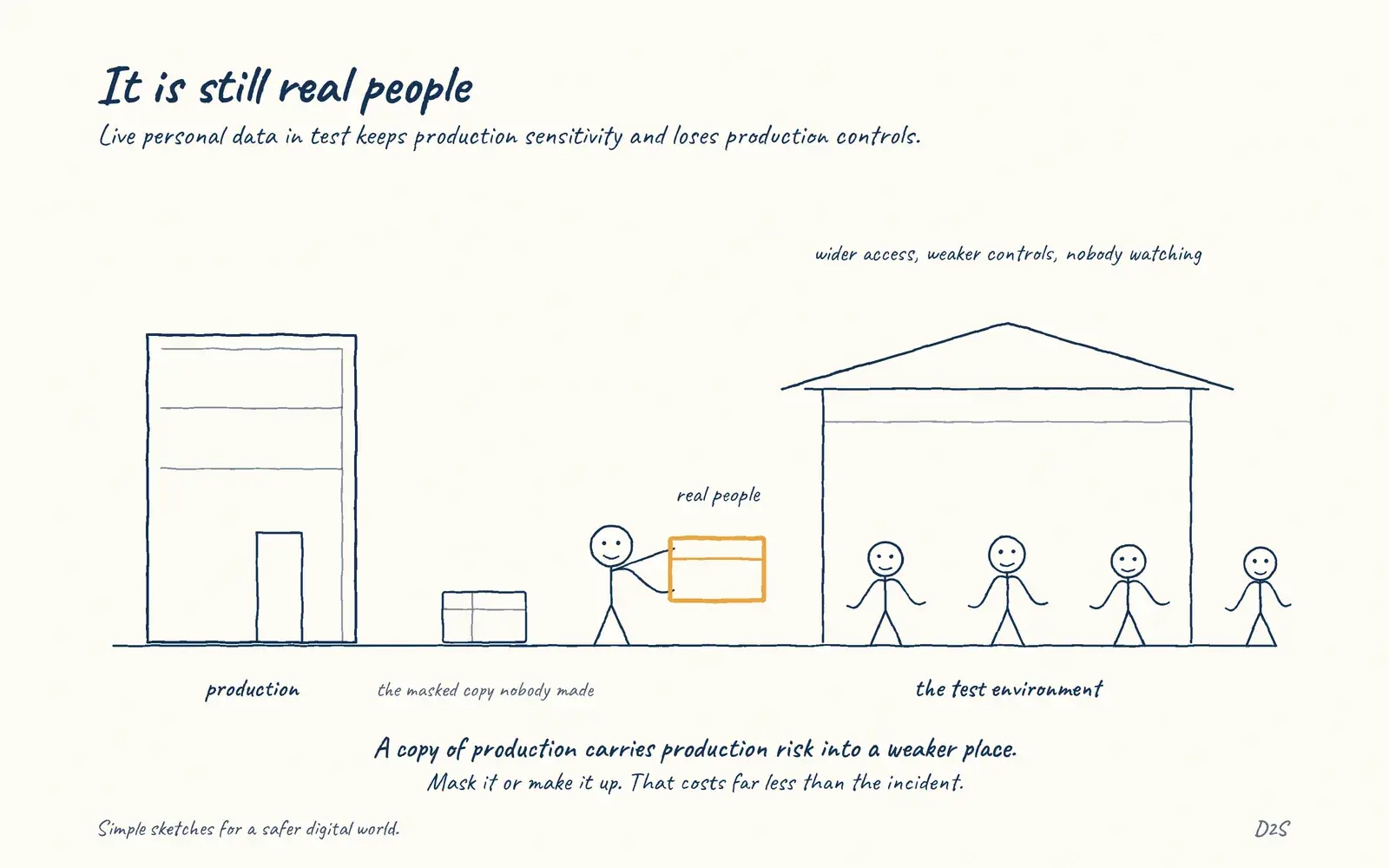 Production data in testingIt is still real people
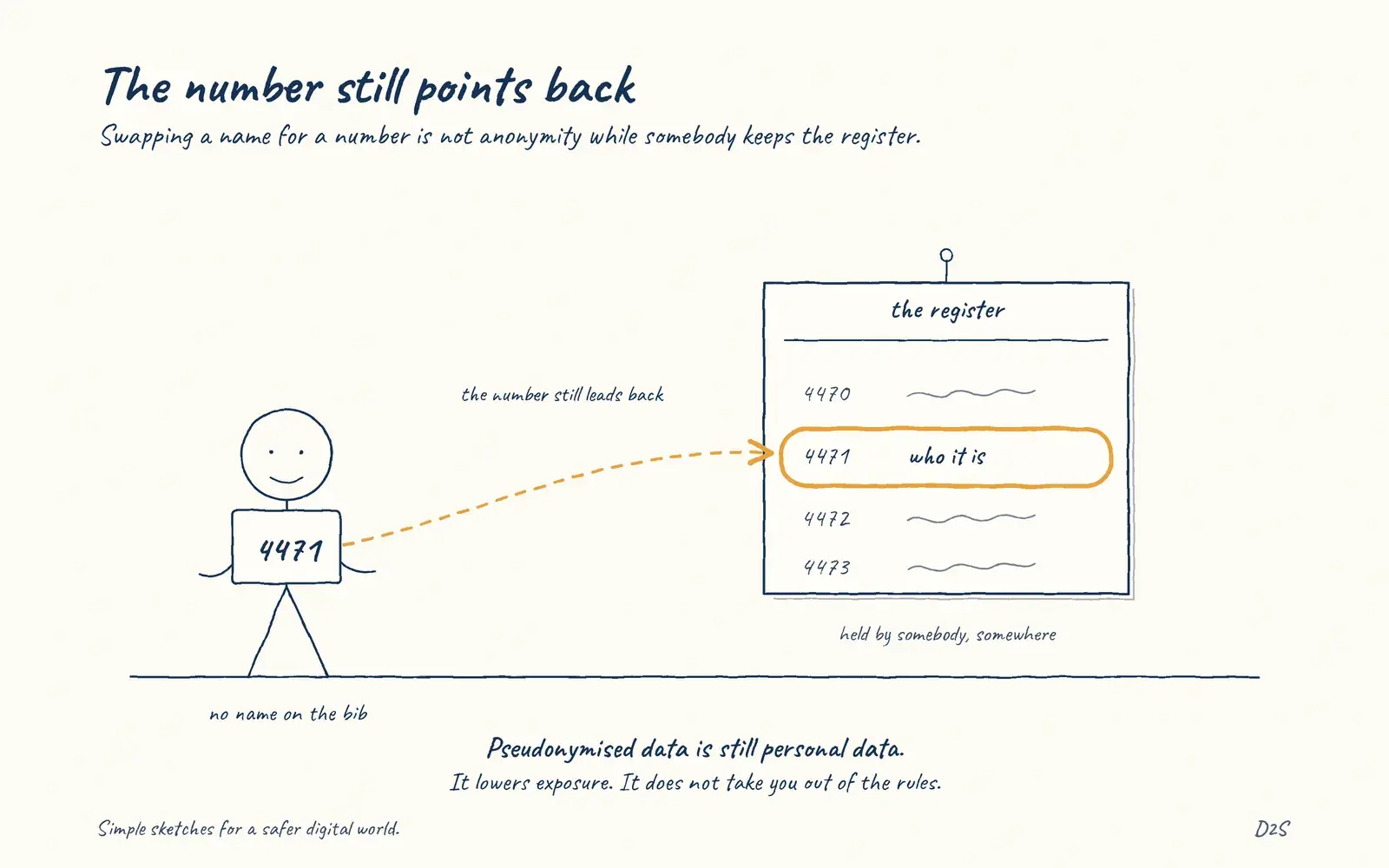 PseudonymisationThe number still points back
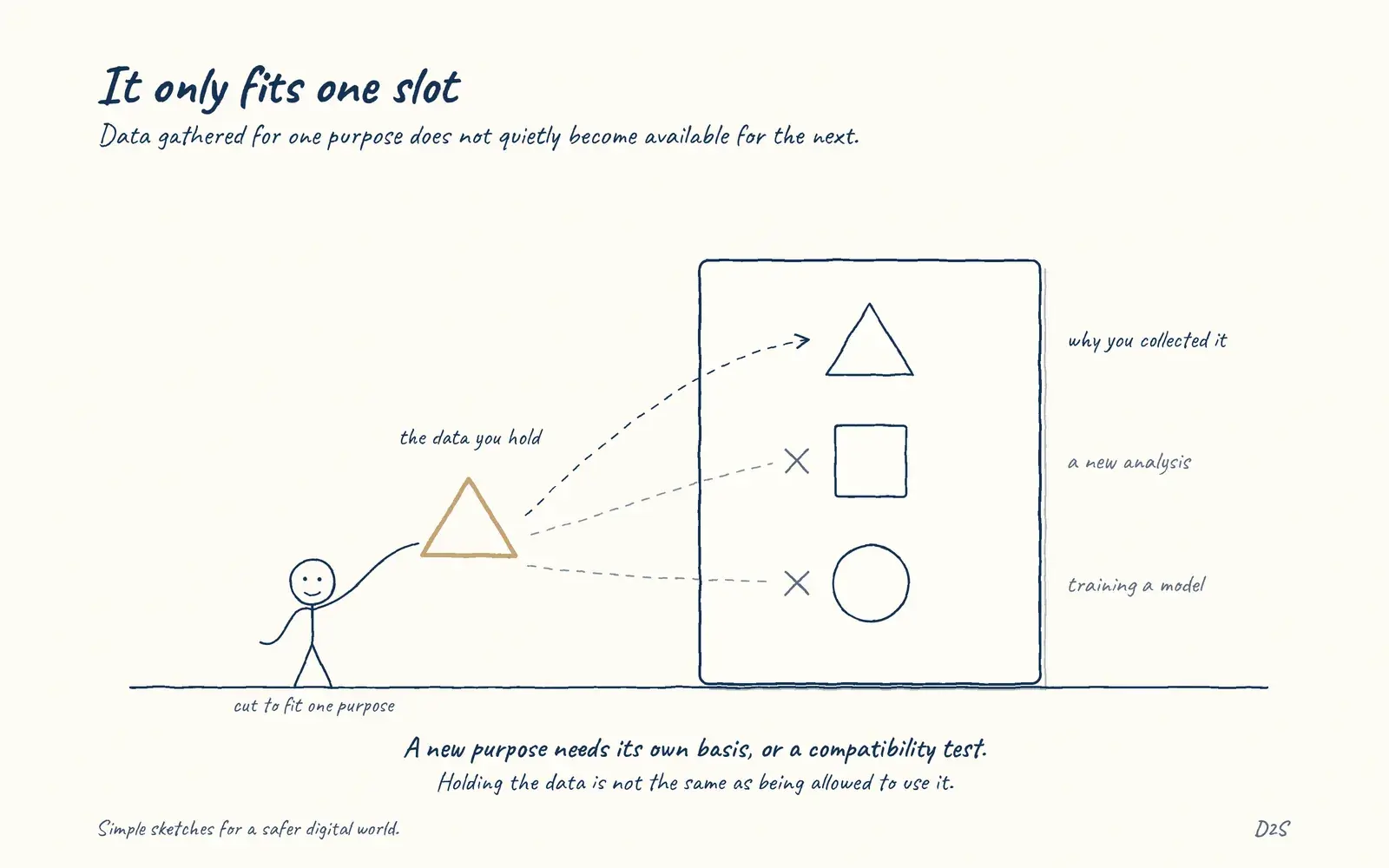 Purpose limitationIt only fits one slot
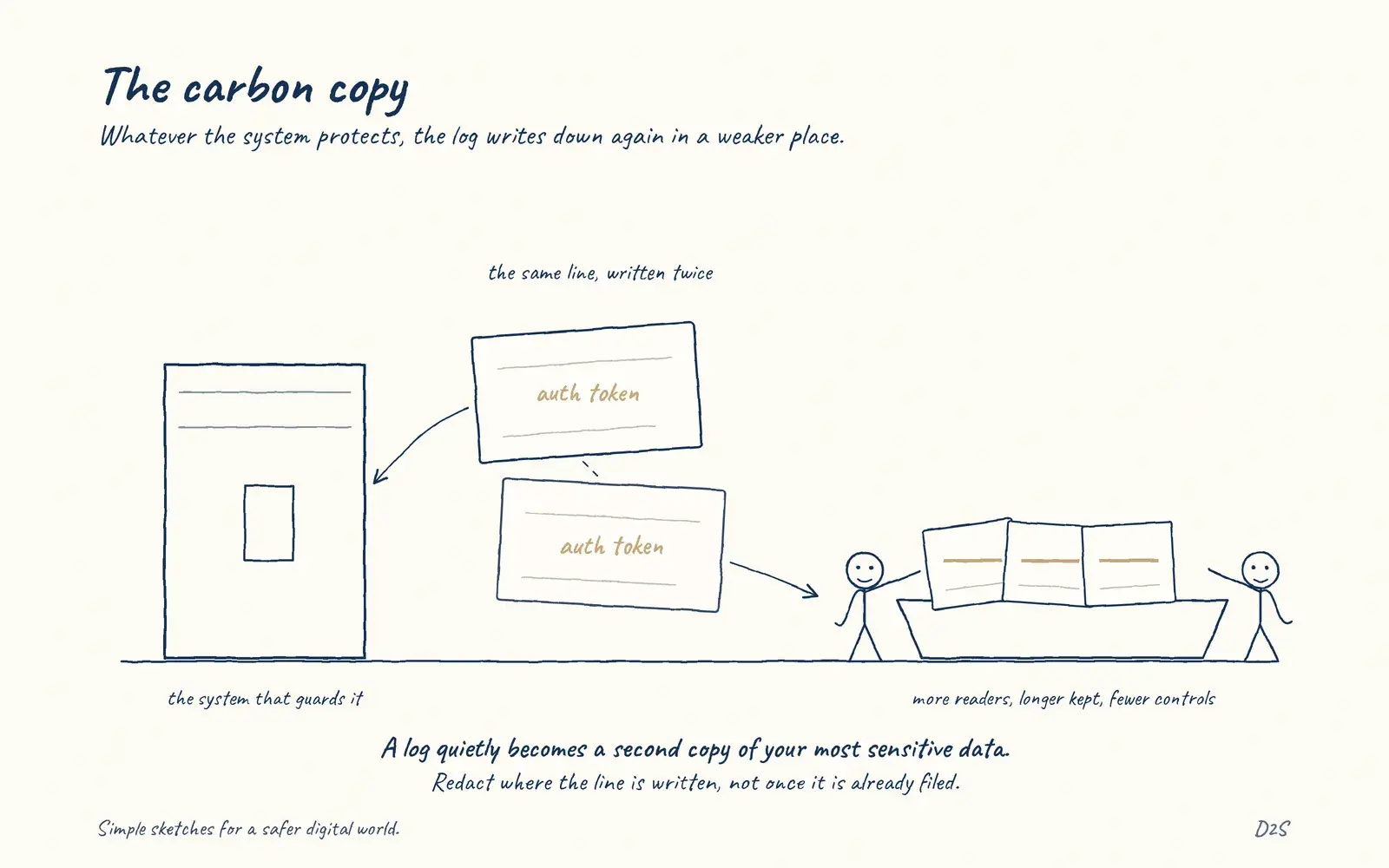 Secrets in logsThe carbon copy
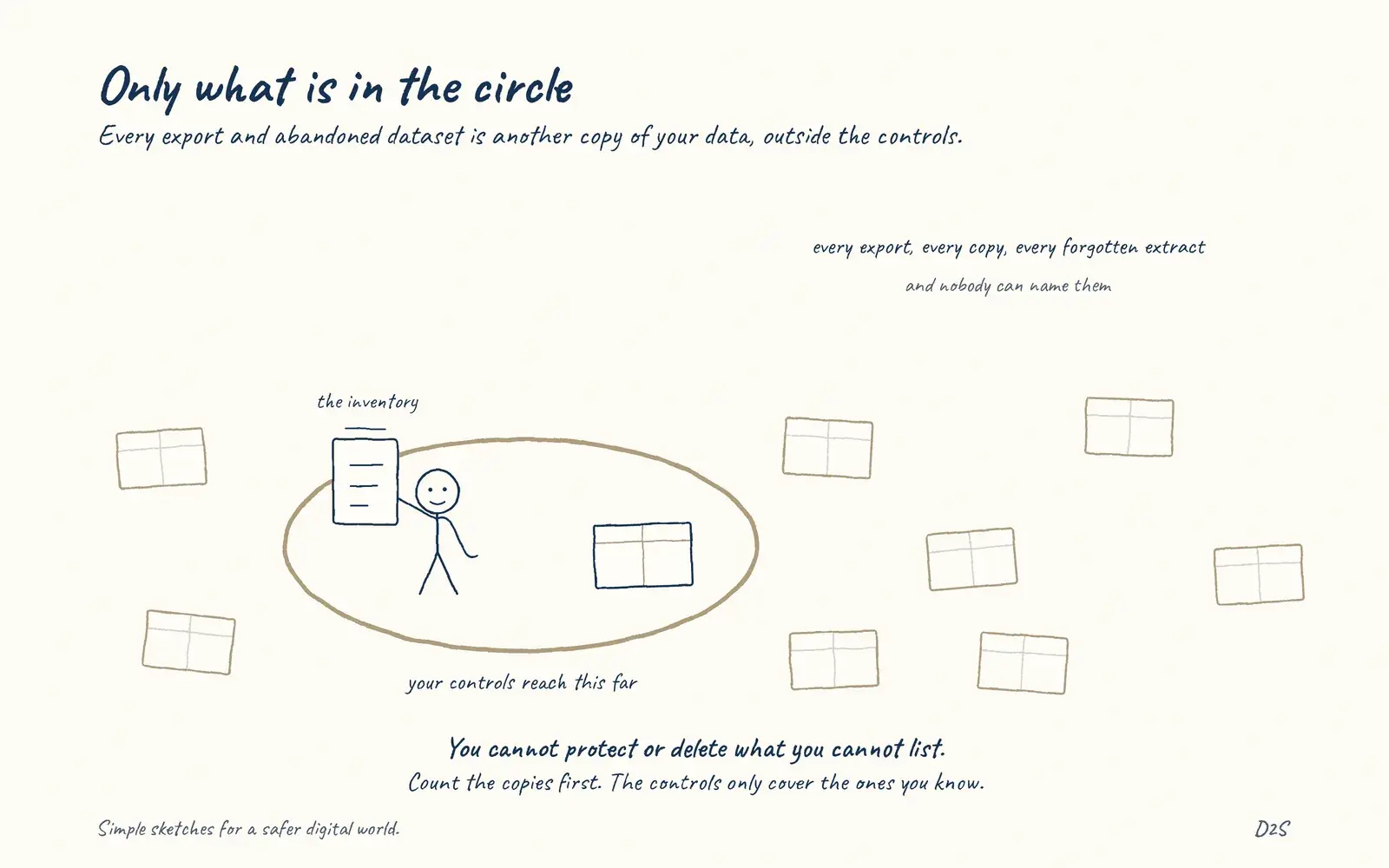 Shadow dataOnly what is in the circle
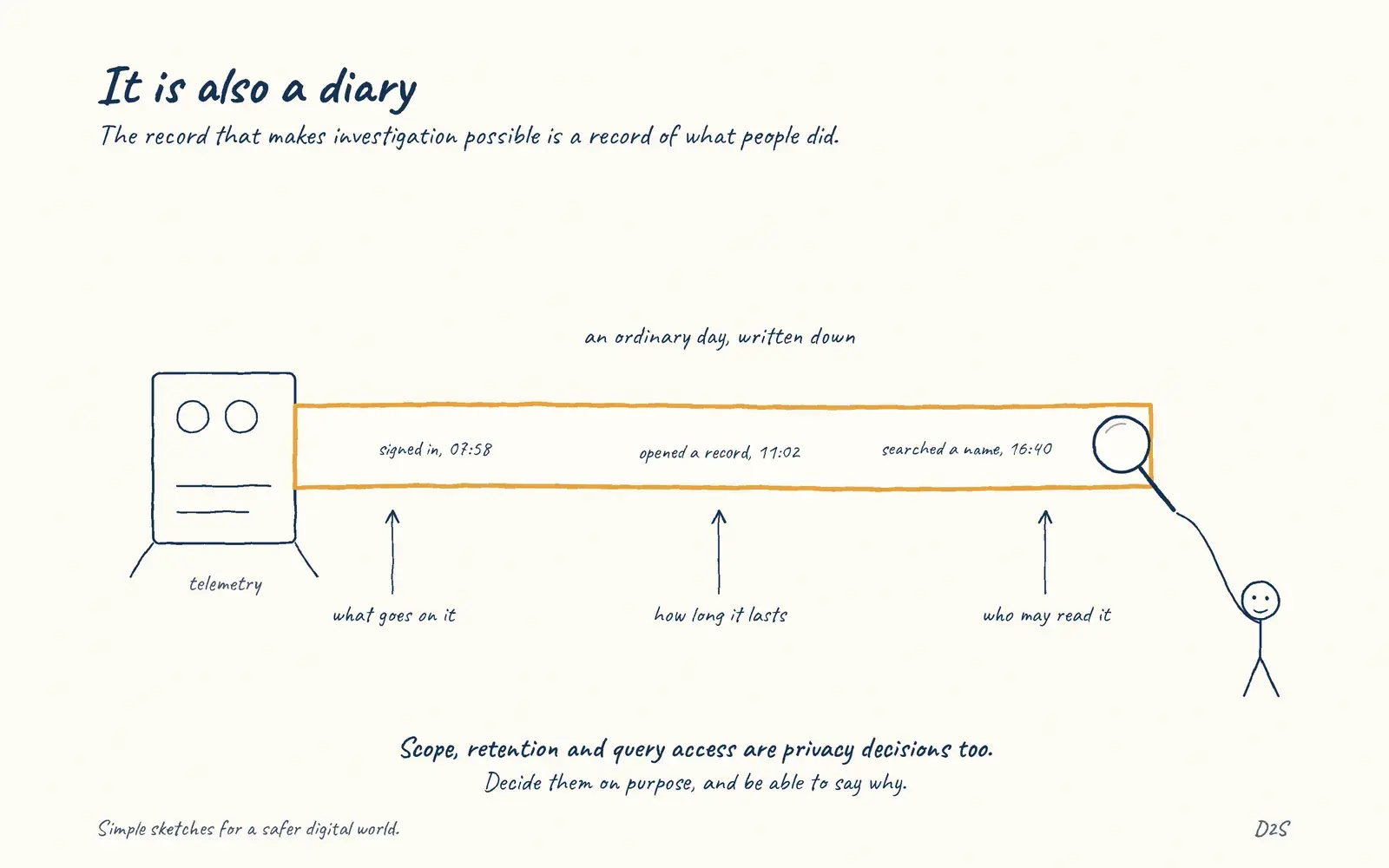 Telemetry privacyIt is also a diary
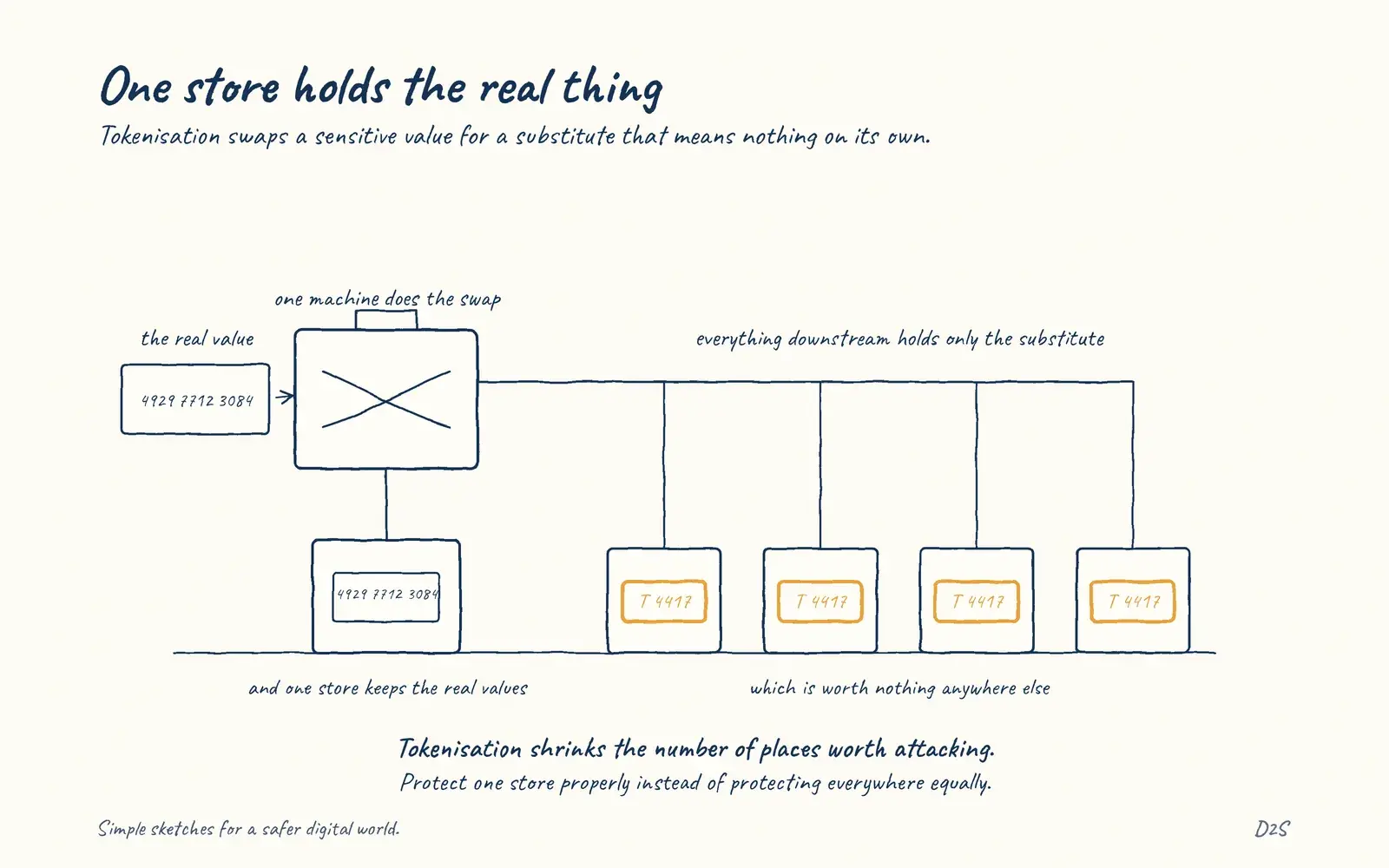 TokenisationOne store holds the real thing
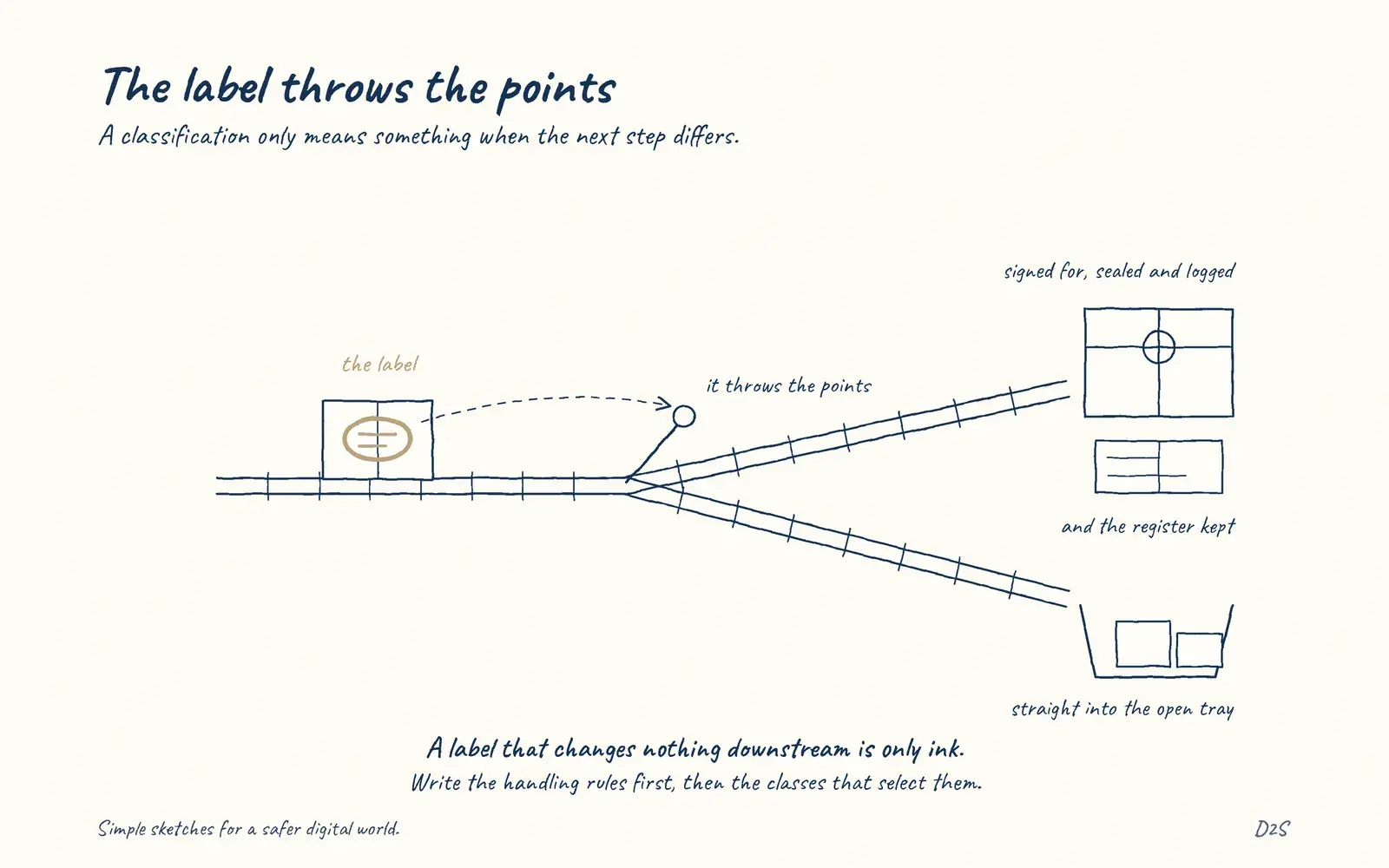 Classification should change handlingThe label throws the points
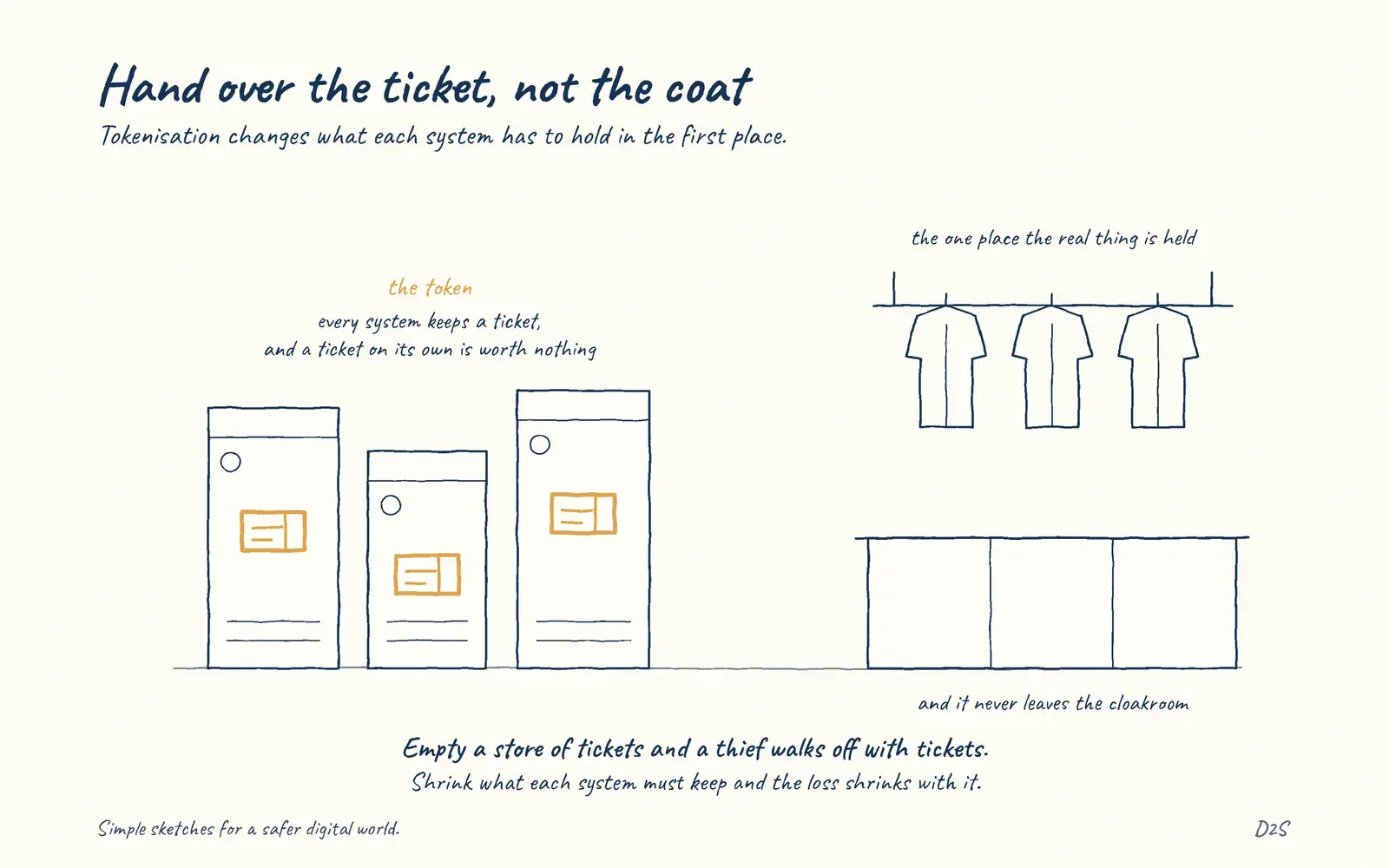 Tokenisation changes what systems need to holdHand over the ticket, not the coat
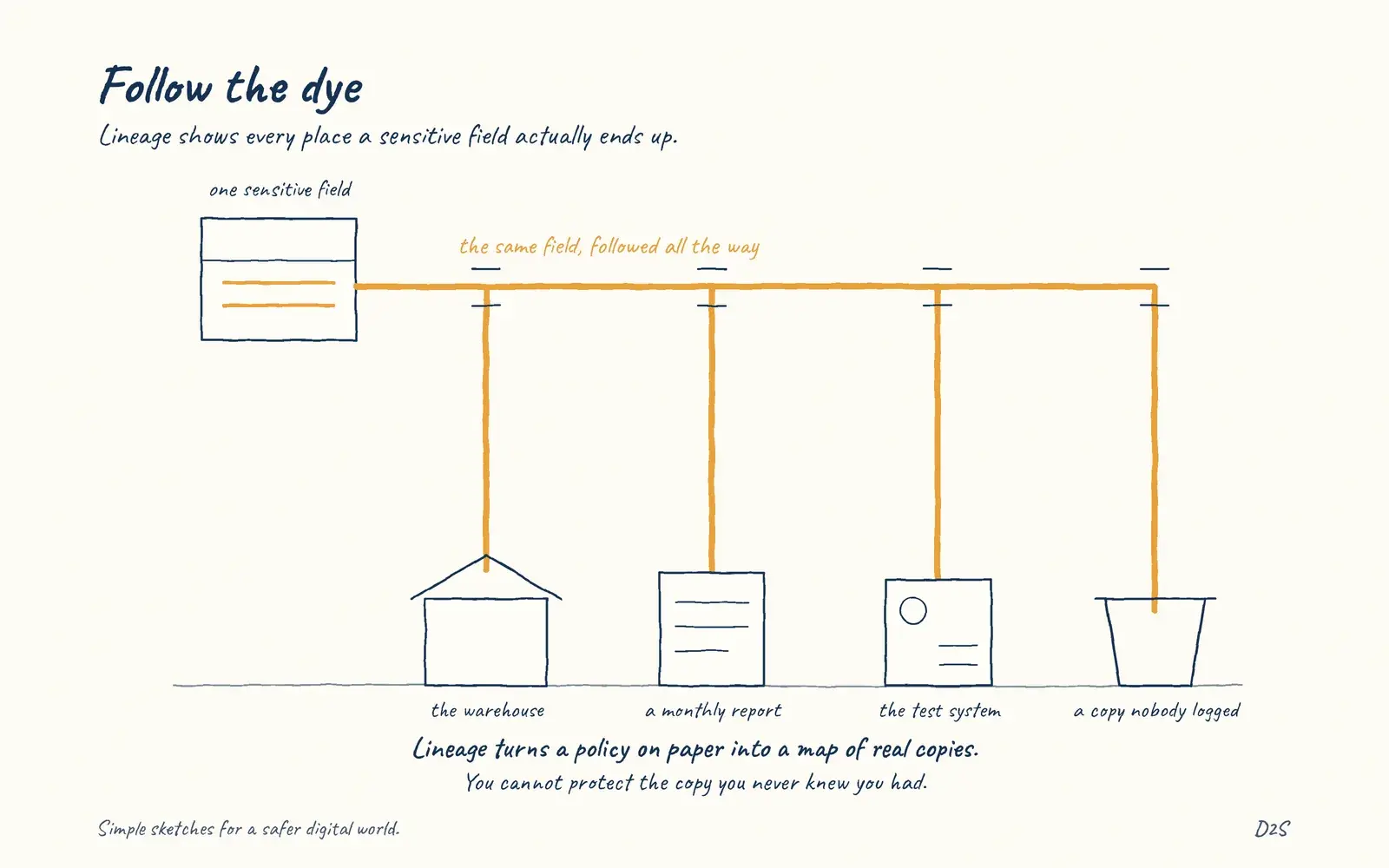 Data lineage explains where sensitive data travelsFollow the dye
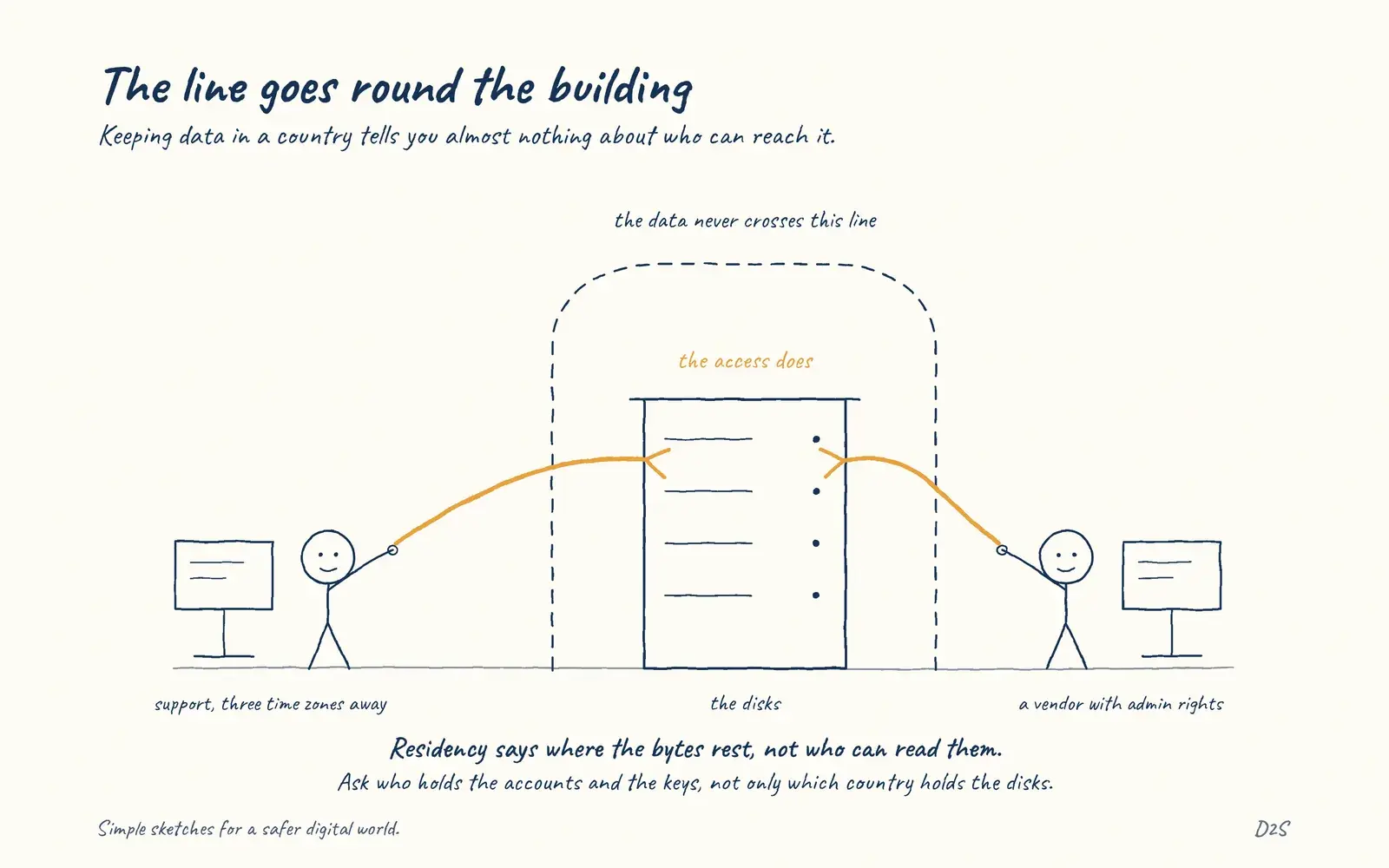 Data residency is not automatic securityThe line goes round the building
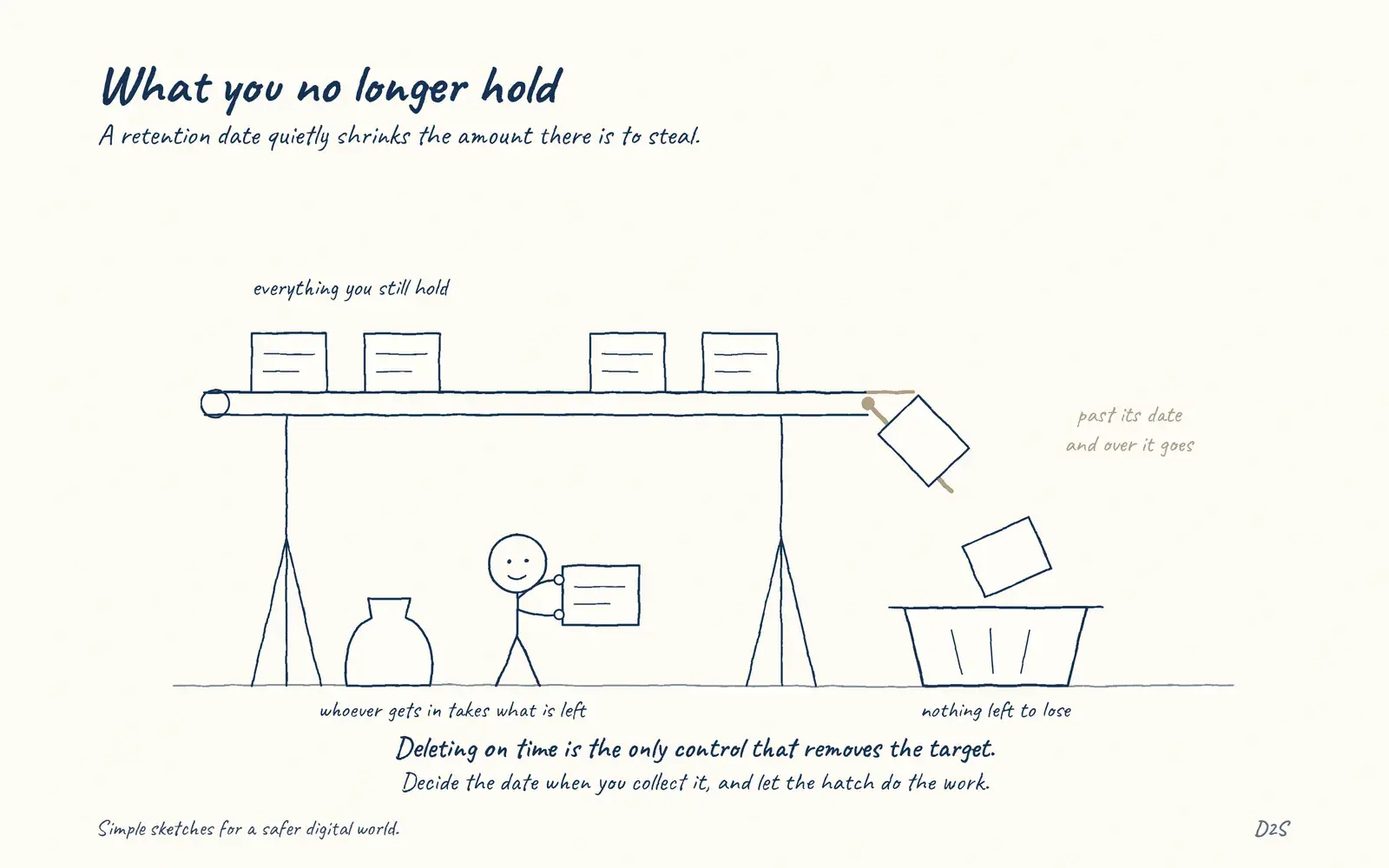 Retention is a security controlWhat you no longer hold
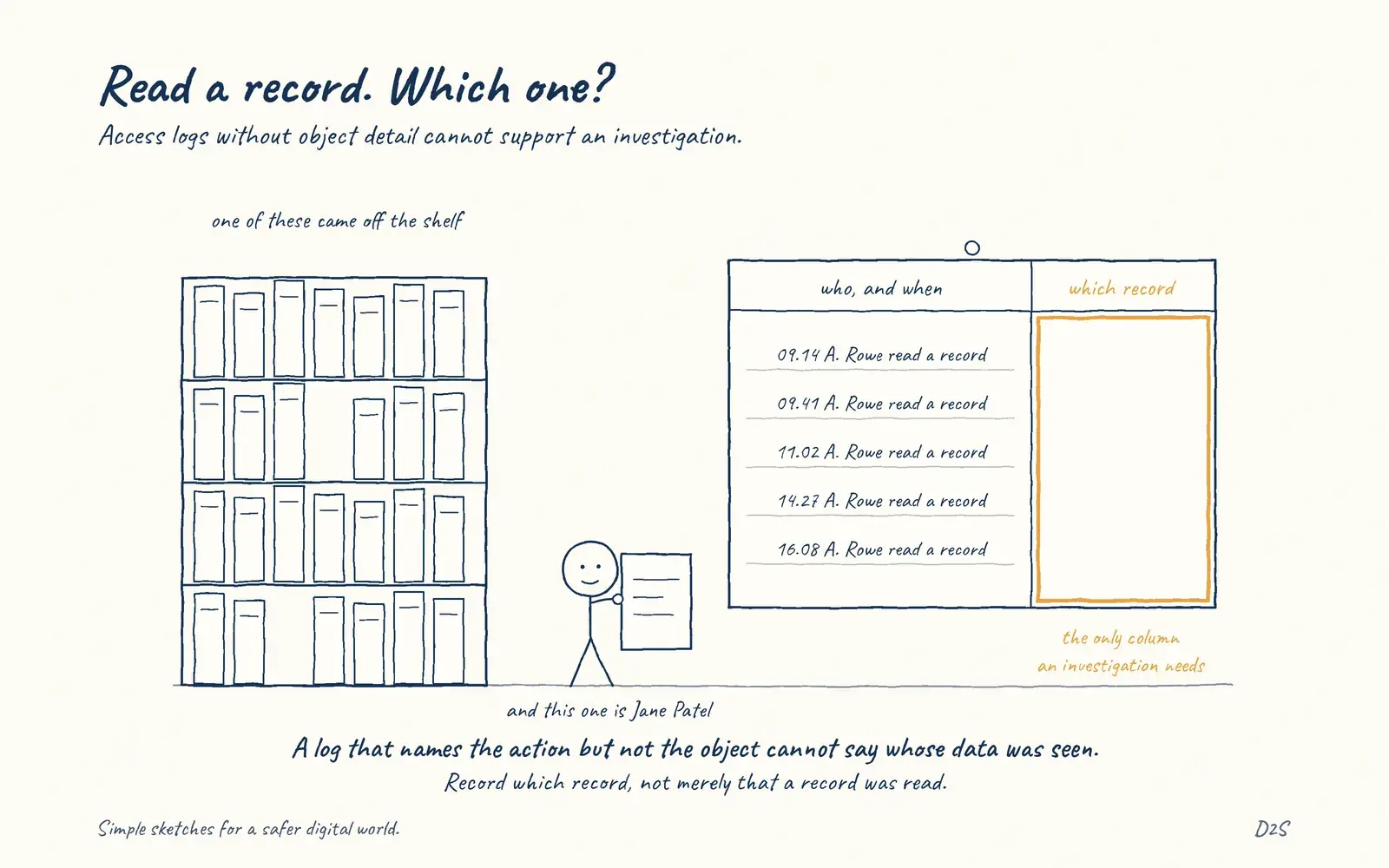 Data access logs need object contextRead a record. Which one?
 DLP can match data patterns but cannot reliably infer the business purpose of a transferIt reads the shape, not the reason
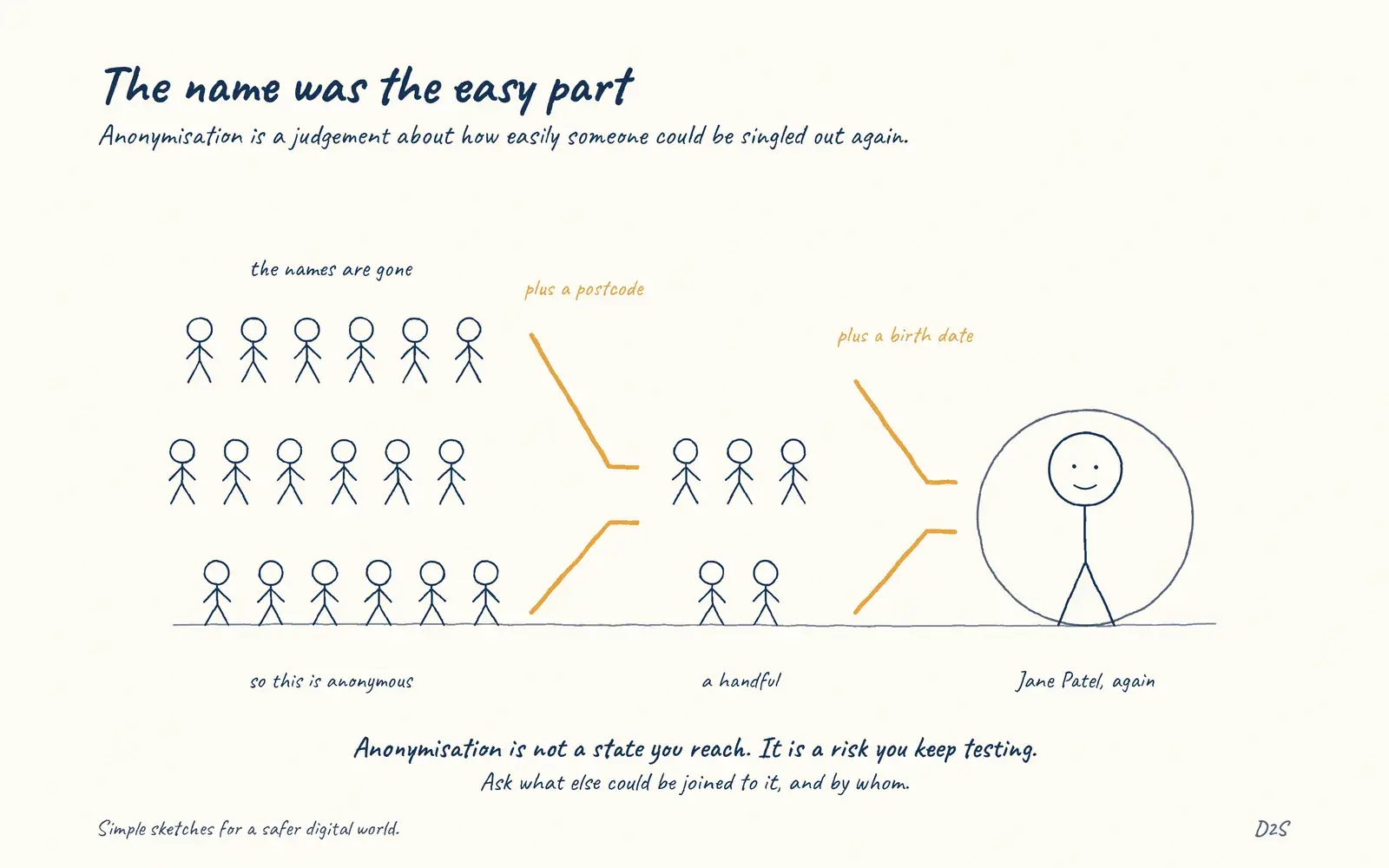 Anonymisation is about re-identification riskThe name was the easy part
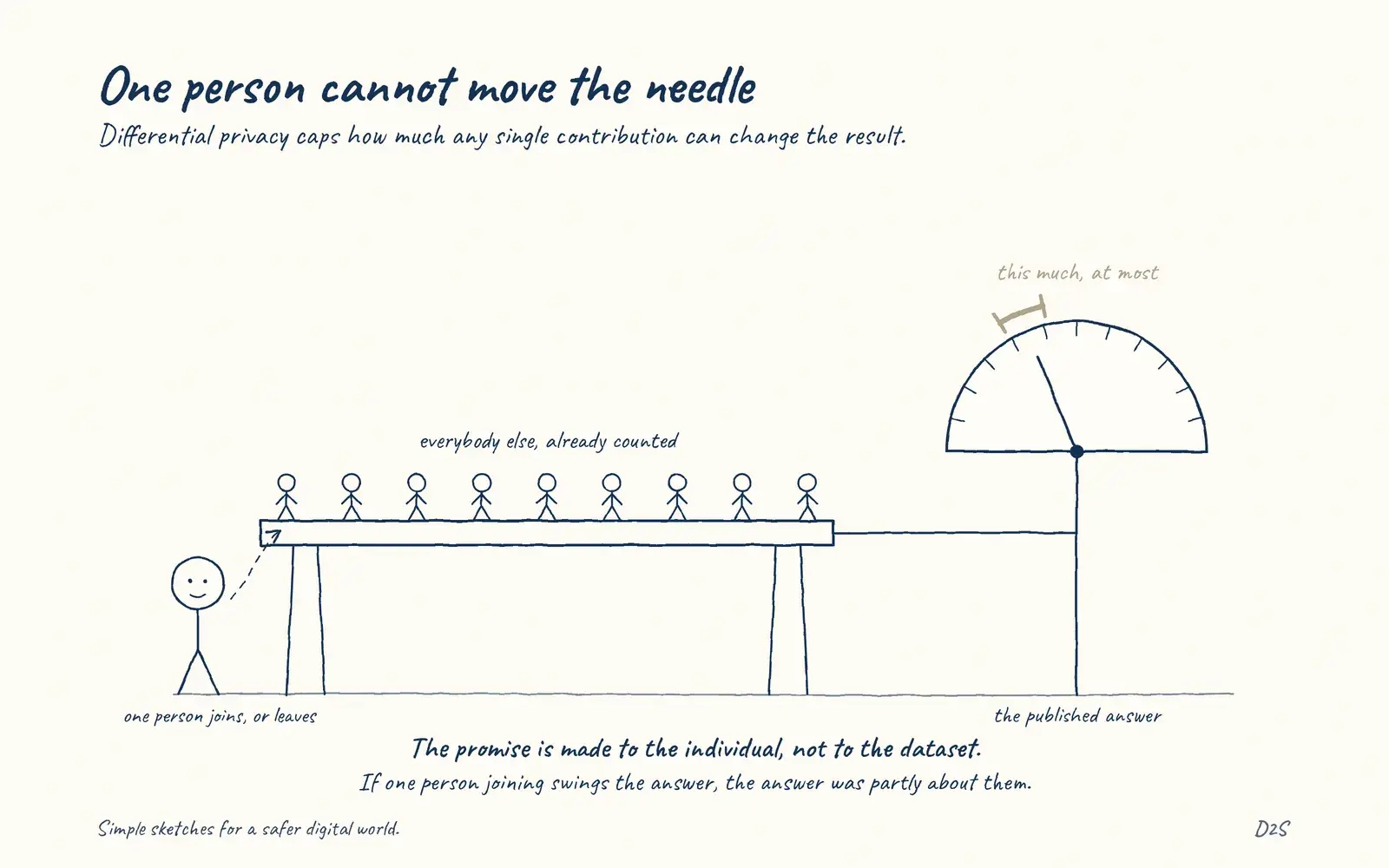 Differential privacy limits one person's influenceOne person cannot move the needle
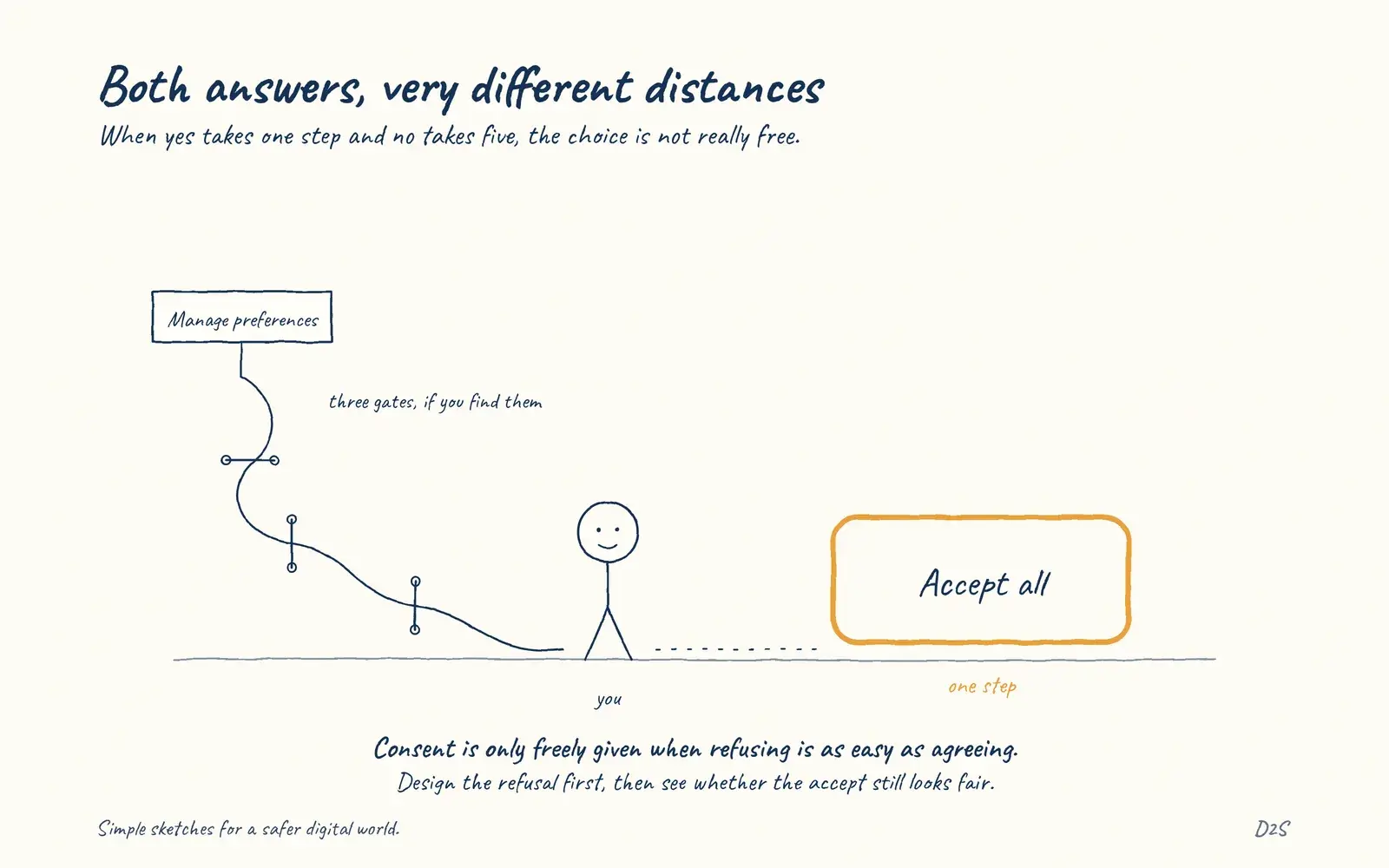 Consent interfaces can undermine genuine choiceBoth answers, very different distances
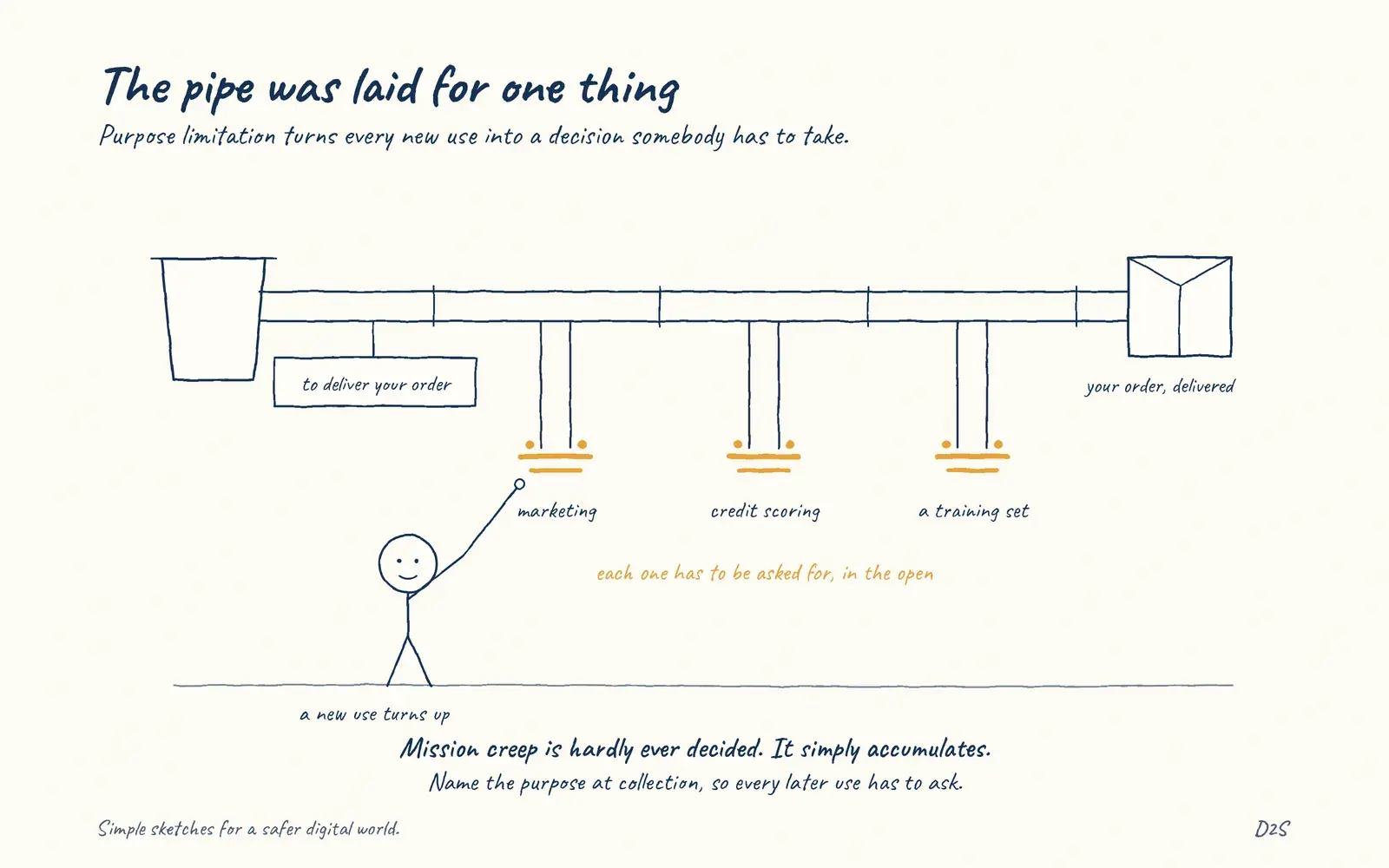 Purpose limitation prevents silent mission creepThe pipe was laid for one thing
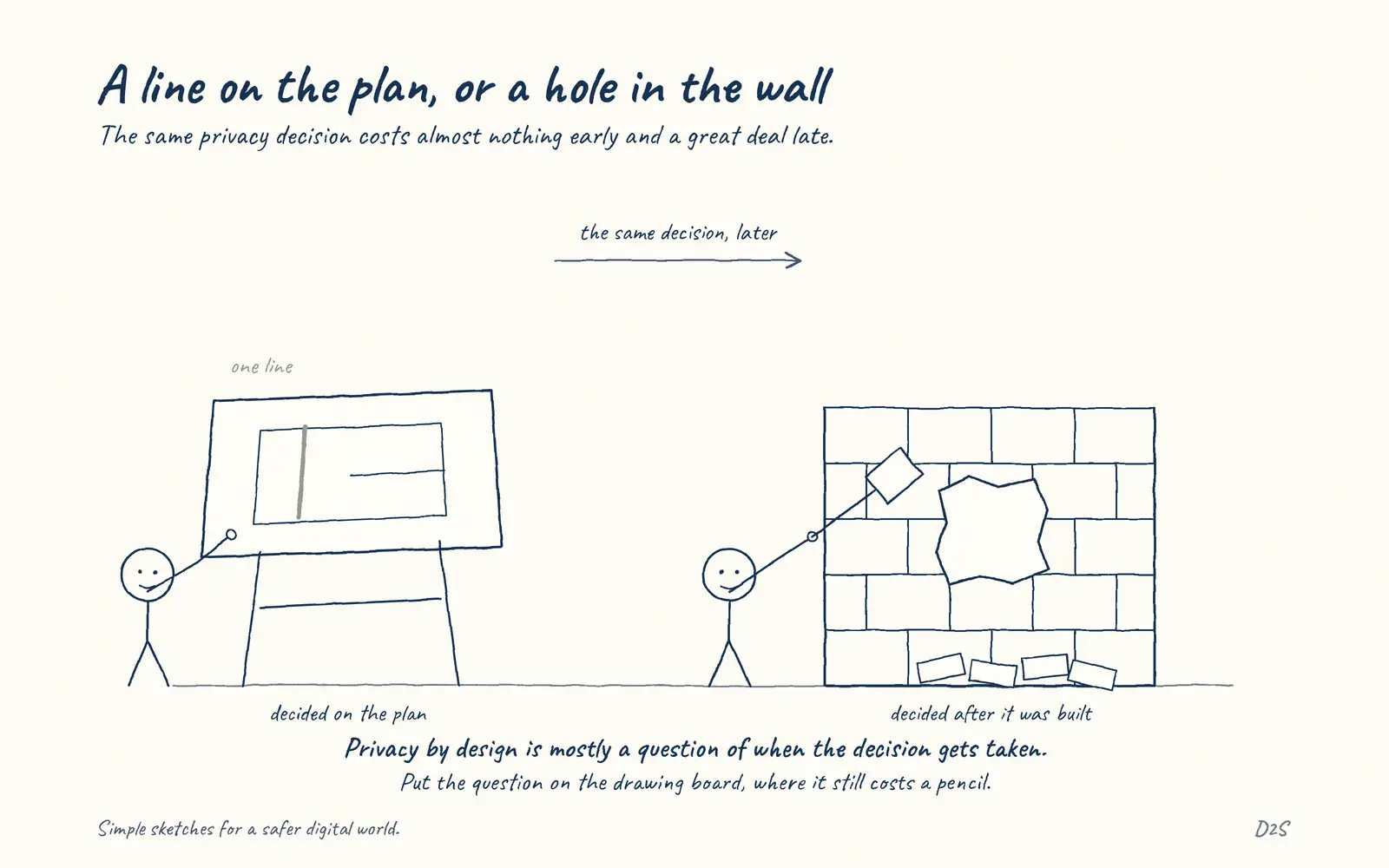 Privacy by design moves decisions earlierA line on the plan, or a hole in the wall
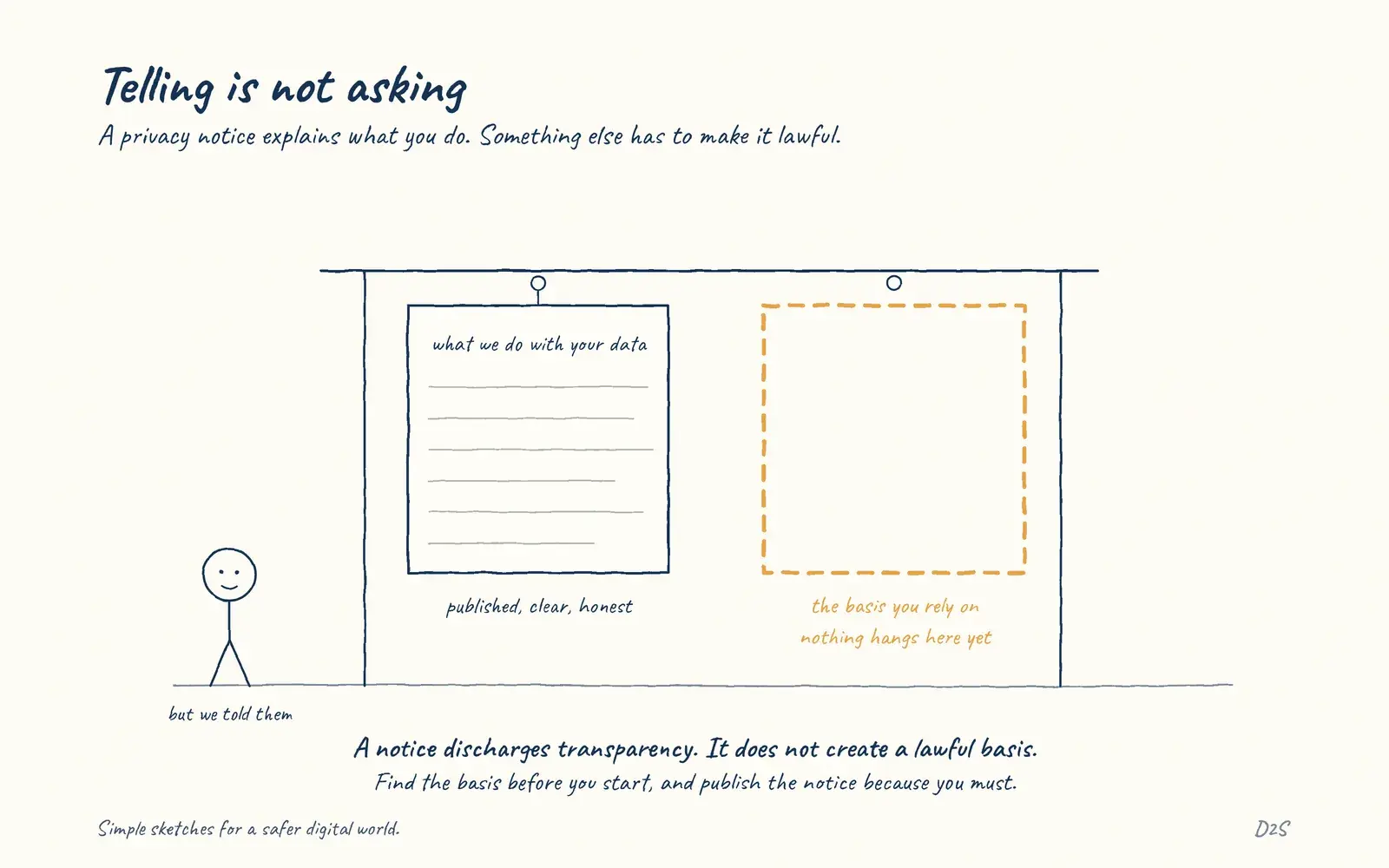 A privacy notice does not create permissionTelling is not asking
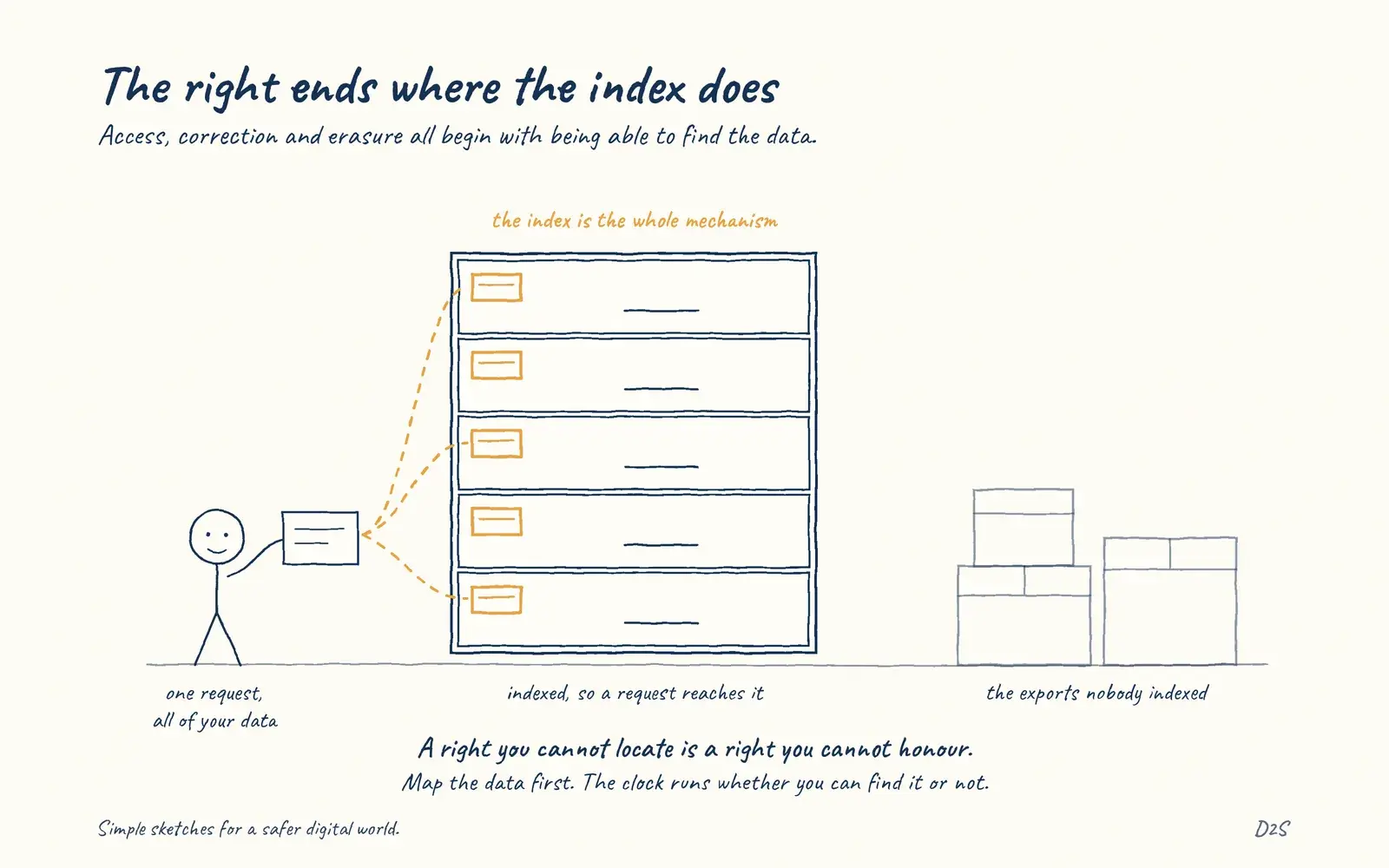 Data subject rights depend on finding the dataThe right ends where the index does
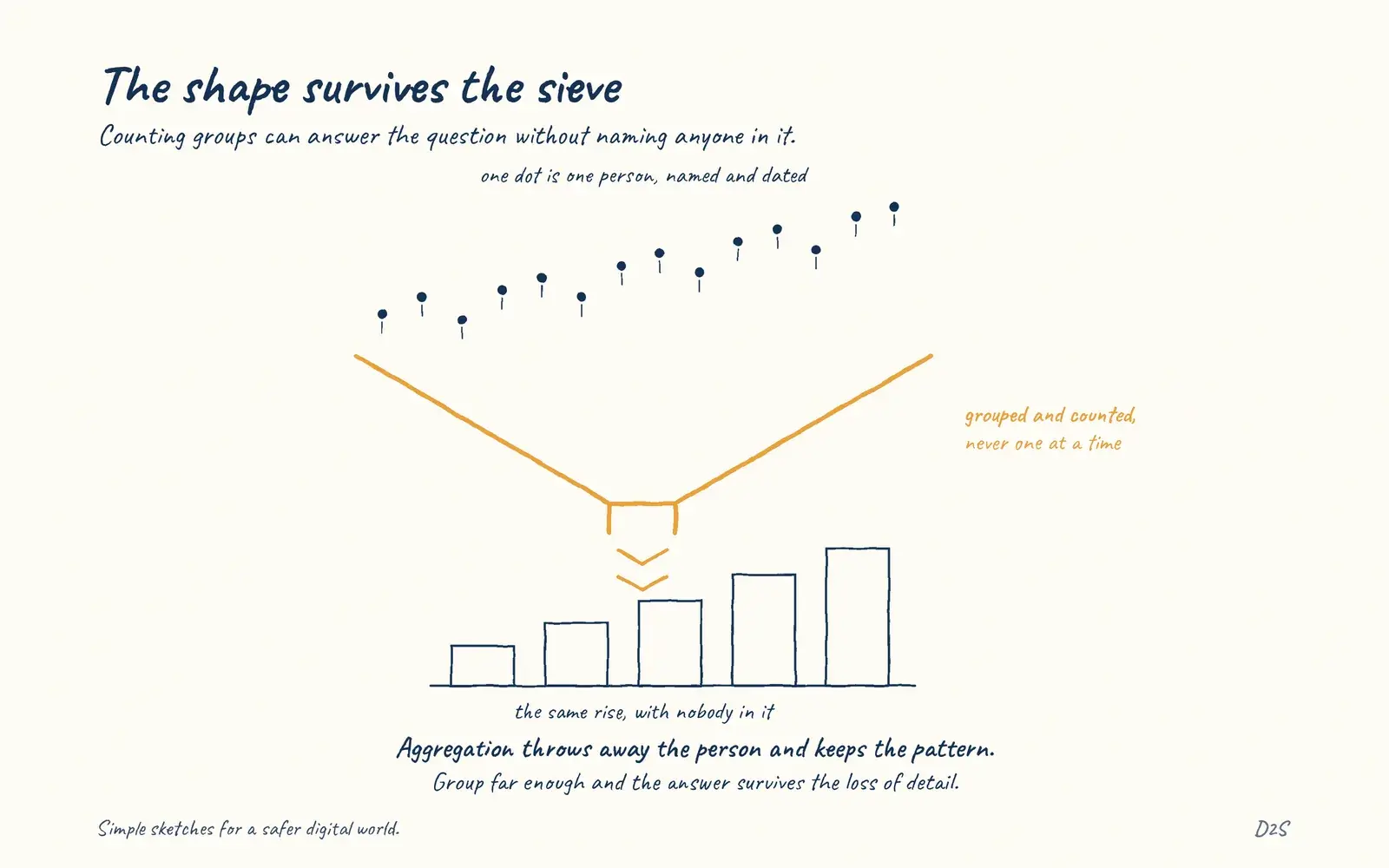 Aggregation can reduce detail while preserving insightThe shape survives the sieve
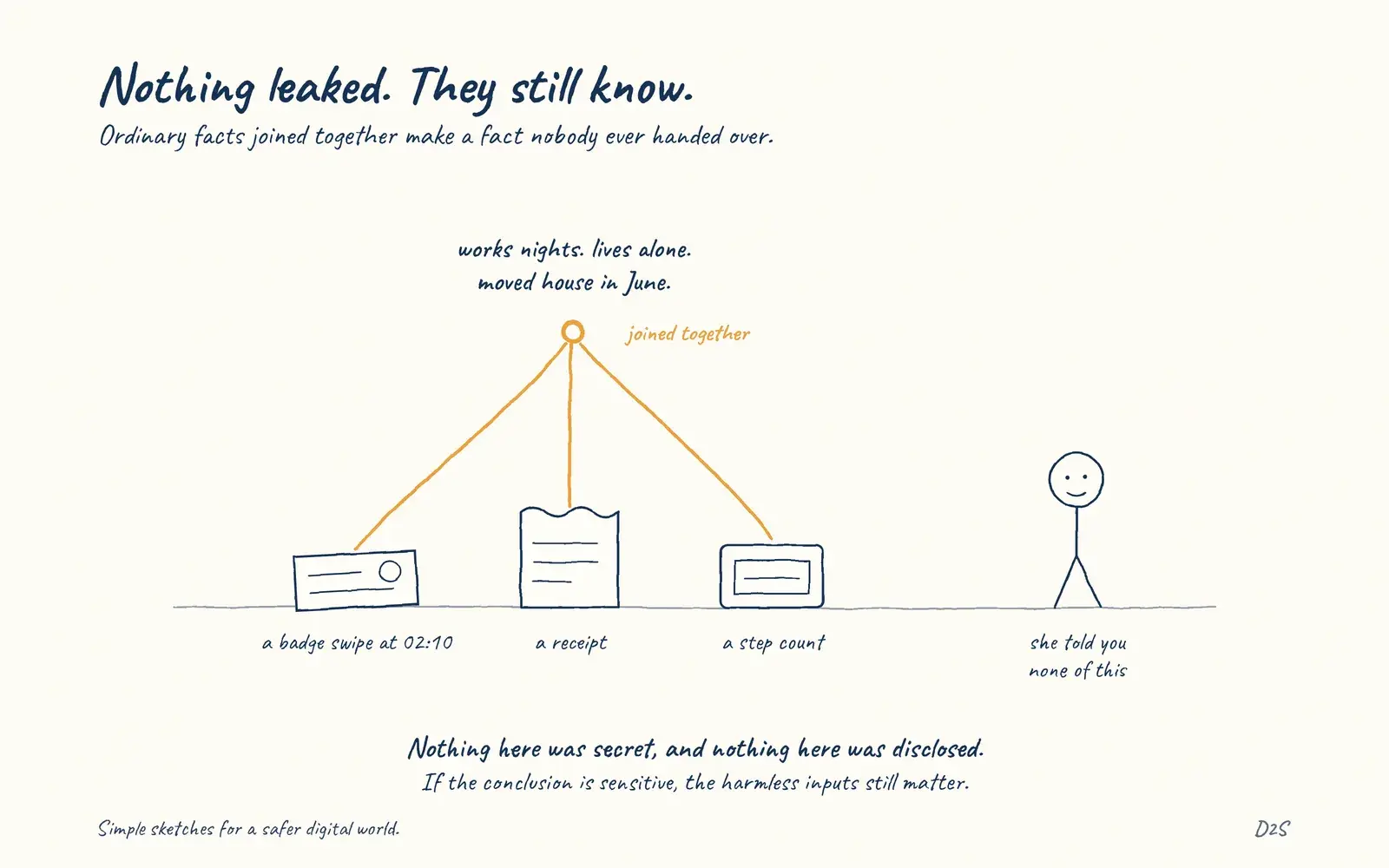 Privacy risk includes inference, not just disclosureNothing leaked. They still know
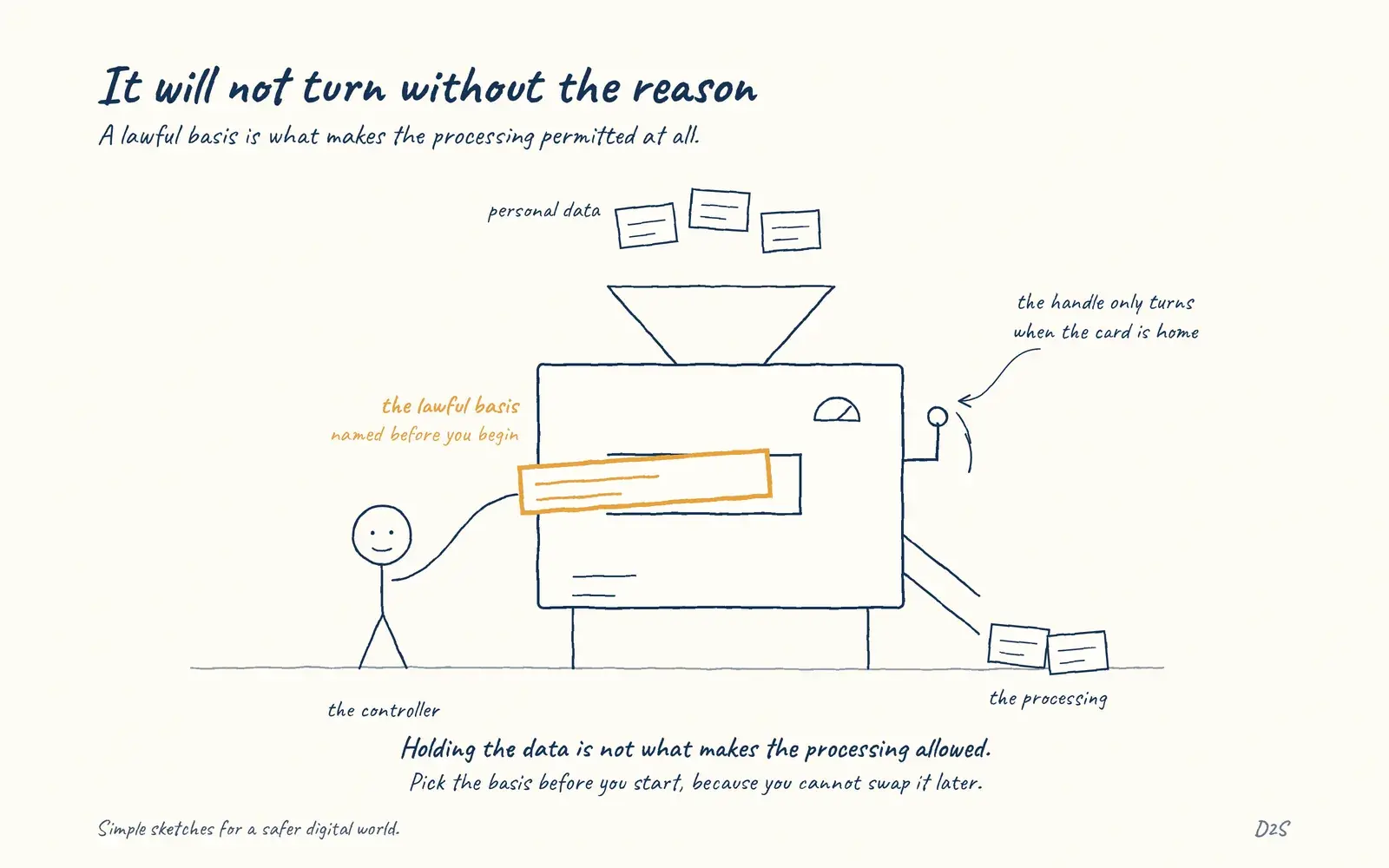 Lawful basis is the reason processing is permittedIt will not turn without the reason
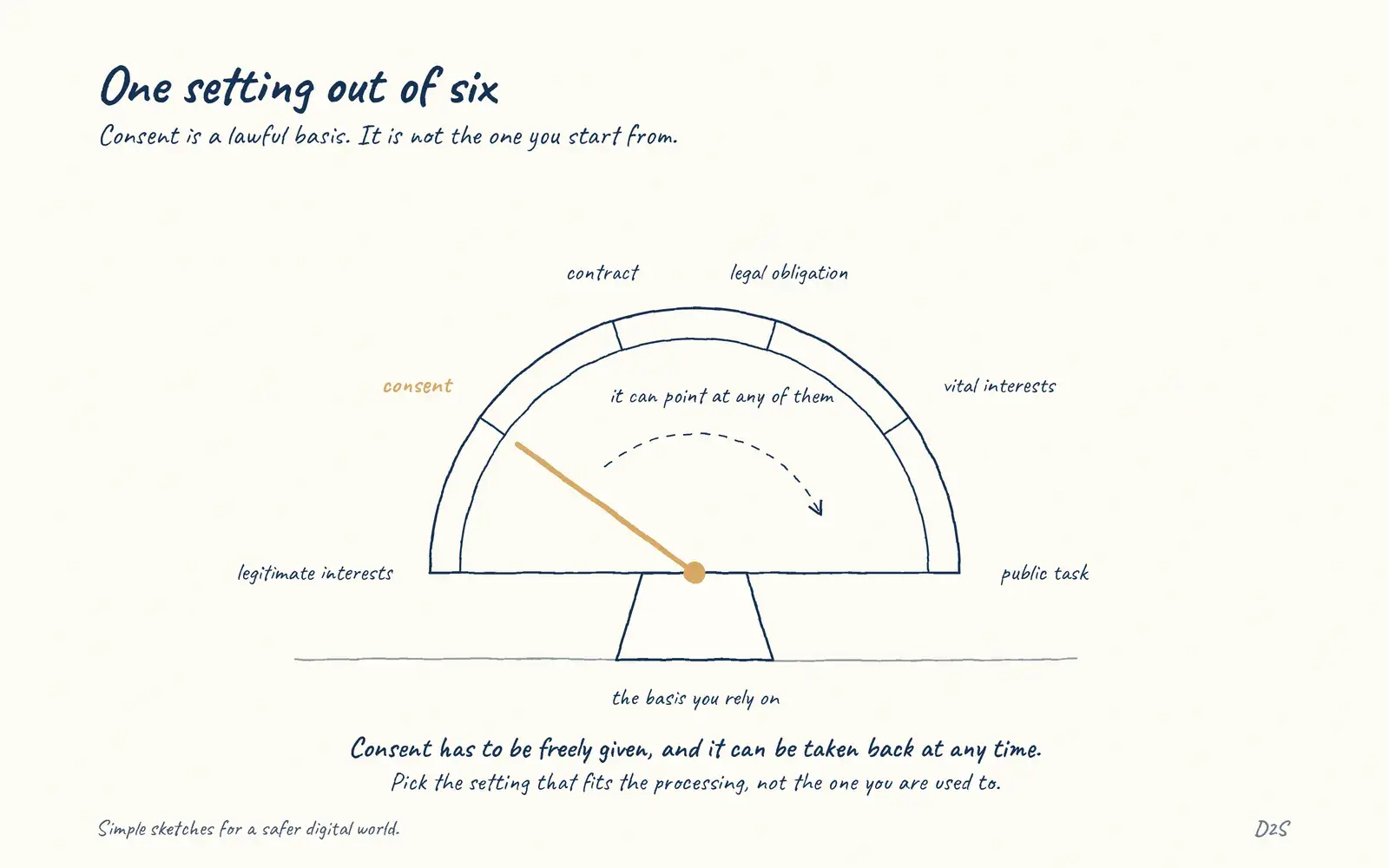 Consent is one lawful basis, not the default answerOne setting out of six
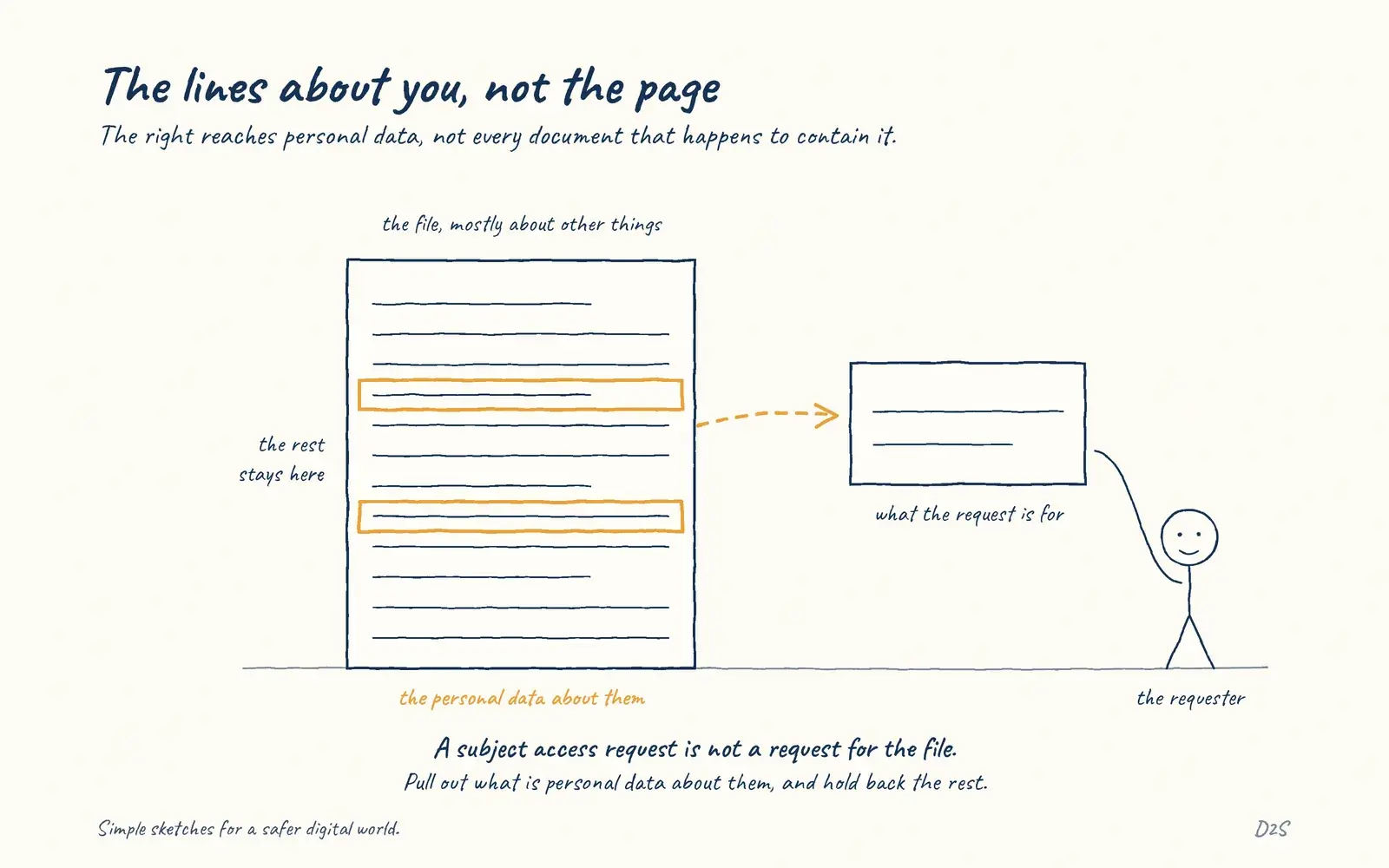 Access rights concern personal data, not every documentThe lines about you, not the page
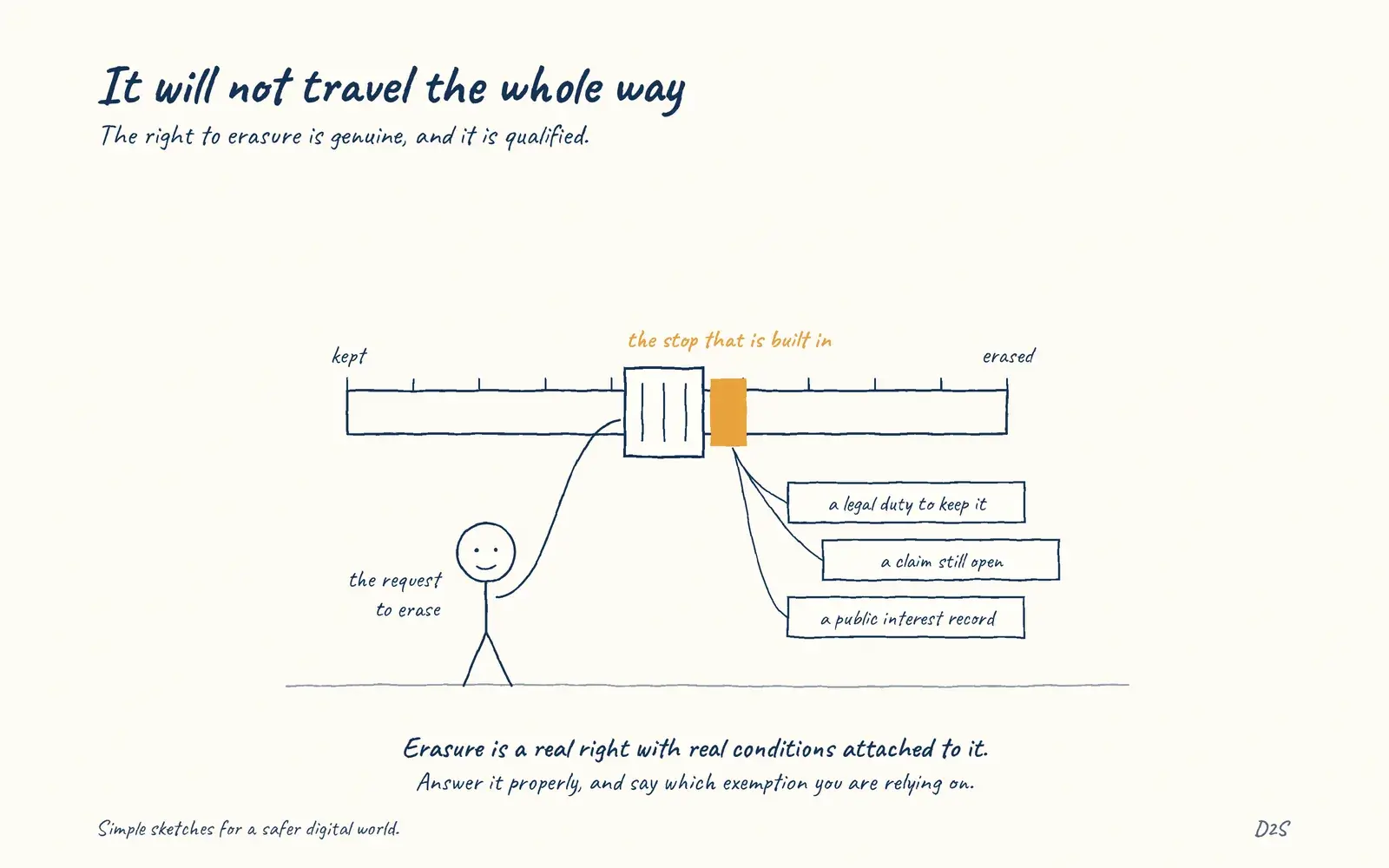 Erasure is not an absolute delete buttonIt will not travel the whole way
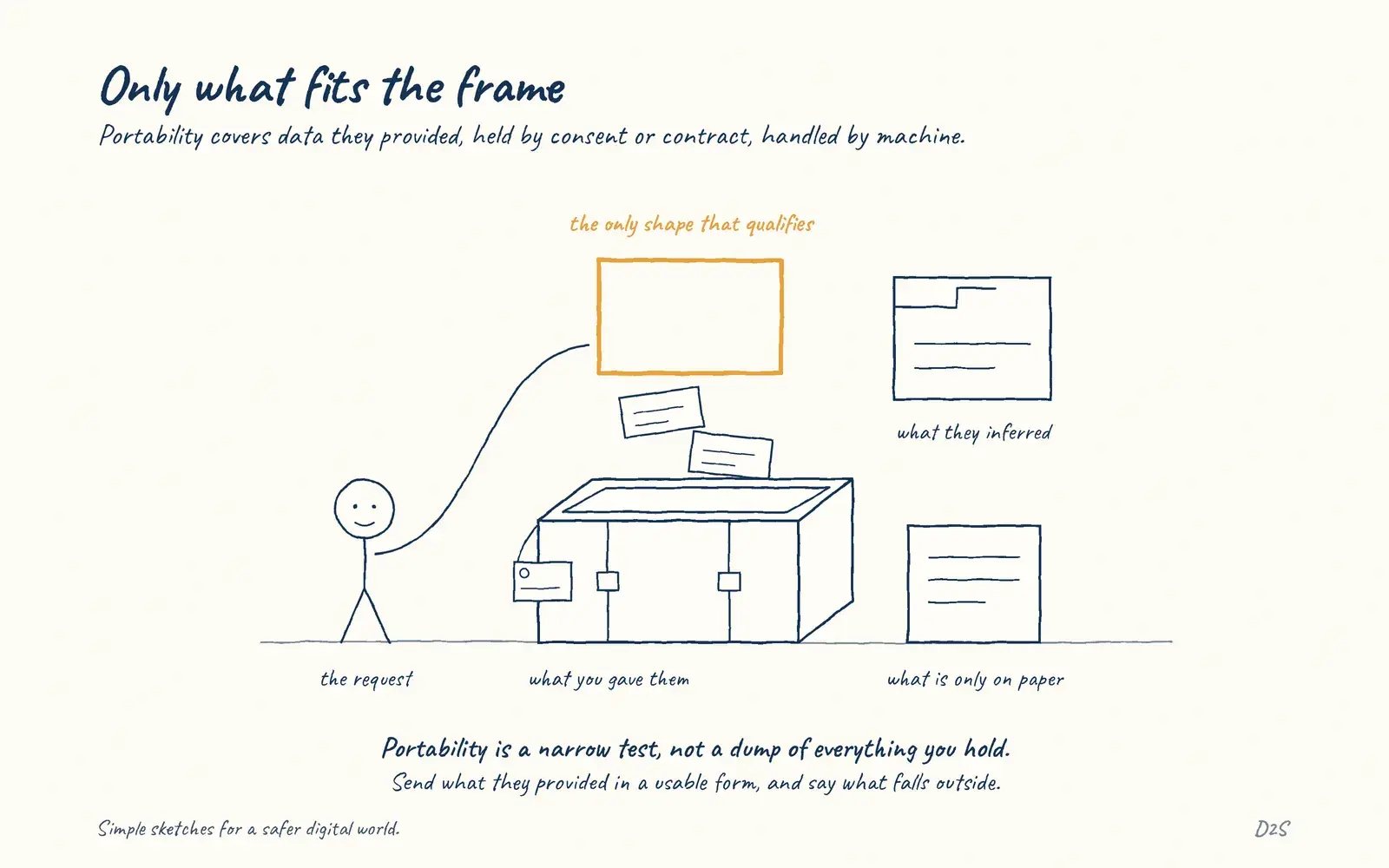 Data portability is narrower than a database exportOnly what fits the frame
 Rectification requires organisations to be able to correct inaccurate personal data wherever it is maintainedCorrect it once, then chase every copy
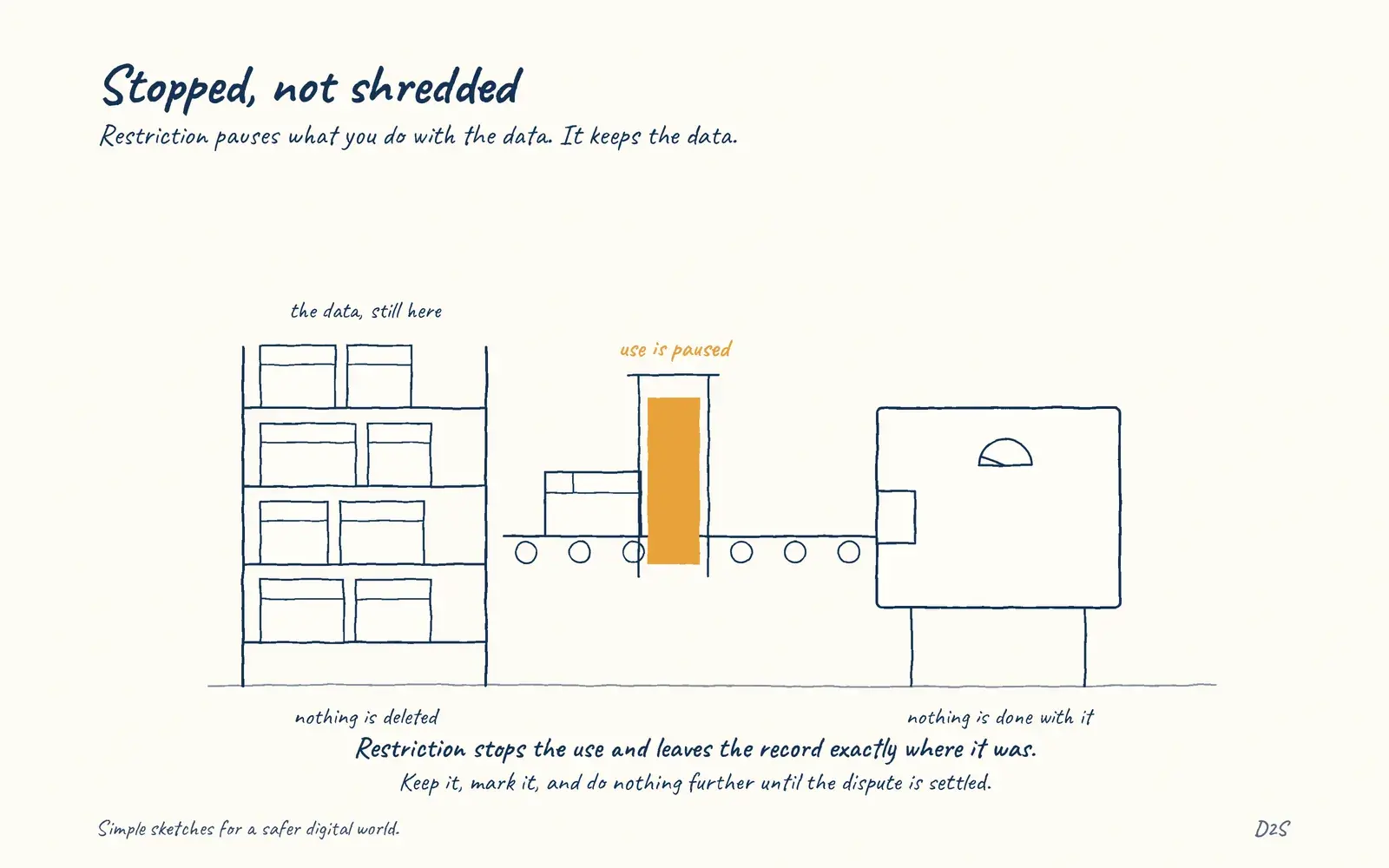 Restriction can pause use without erasing dataStopped, not shredded
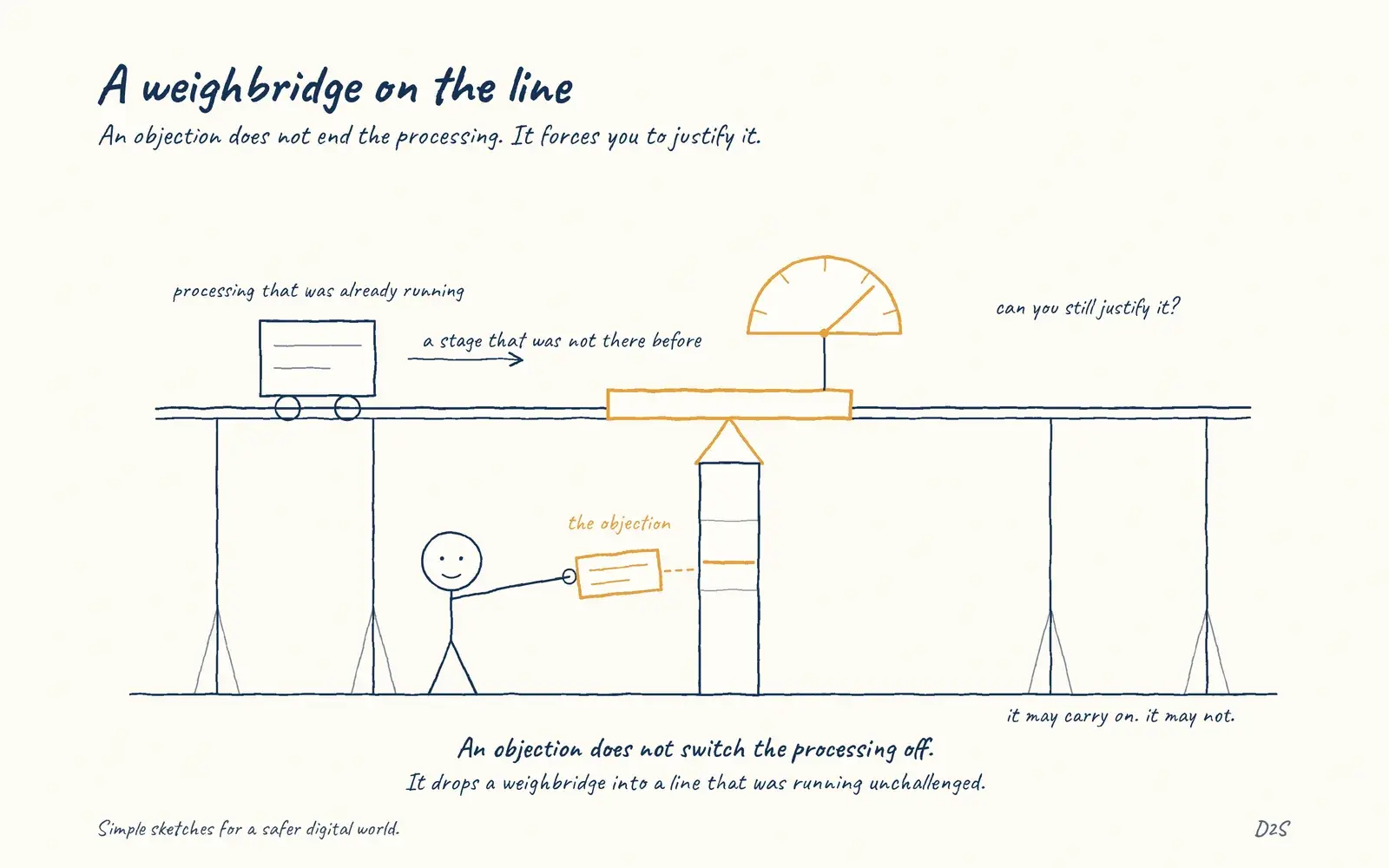 Objection changes the decision processA weighbridge on the line
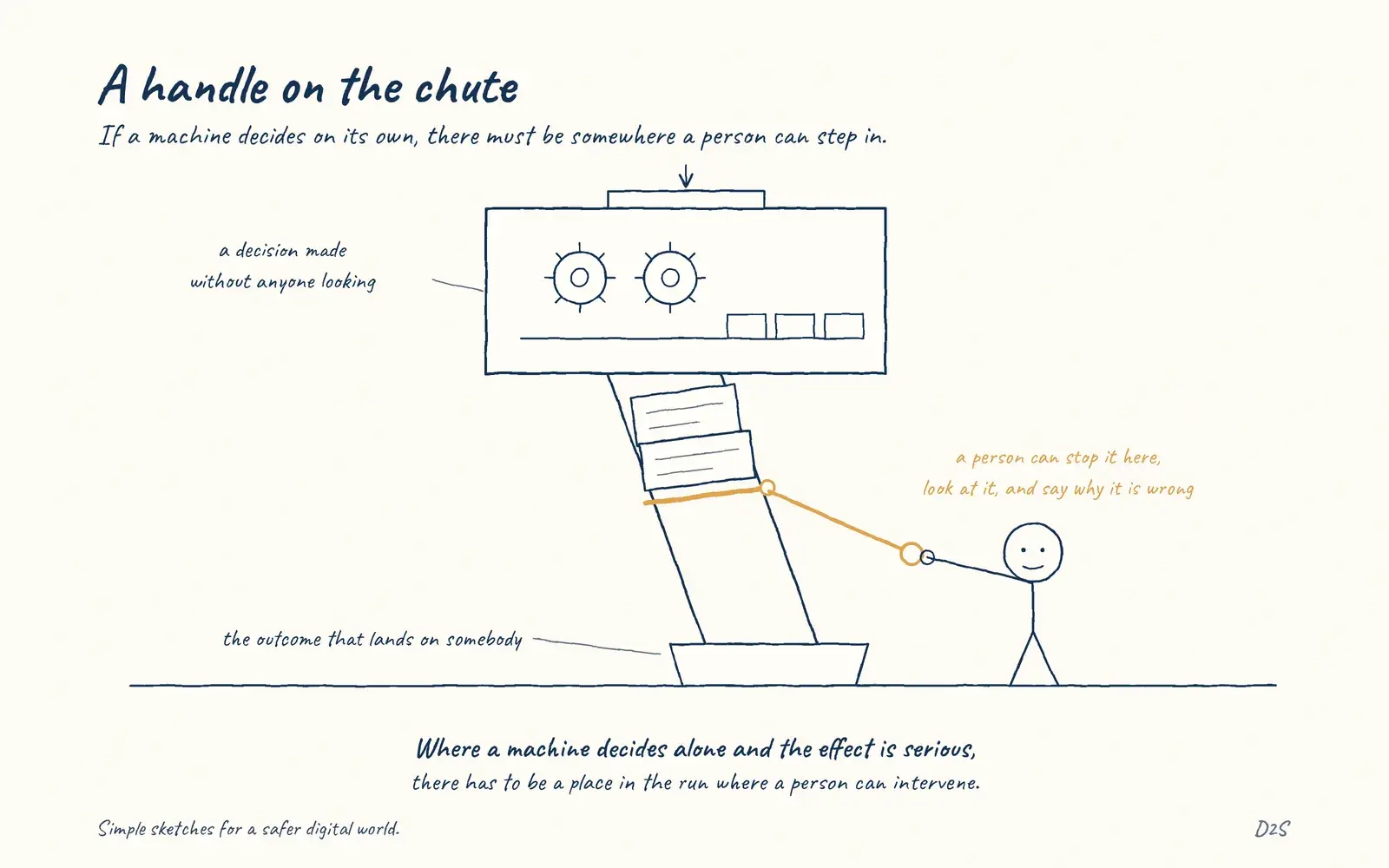 Automated decisions can require safeguardsA handle on the chute
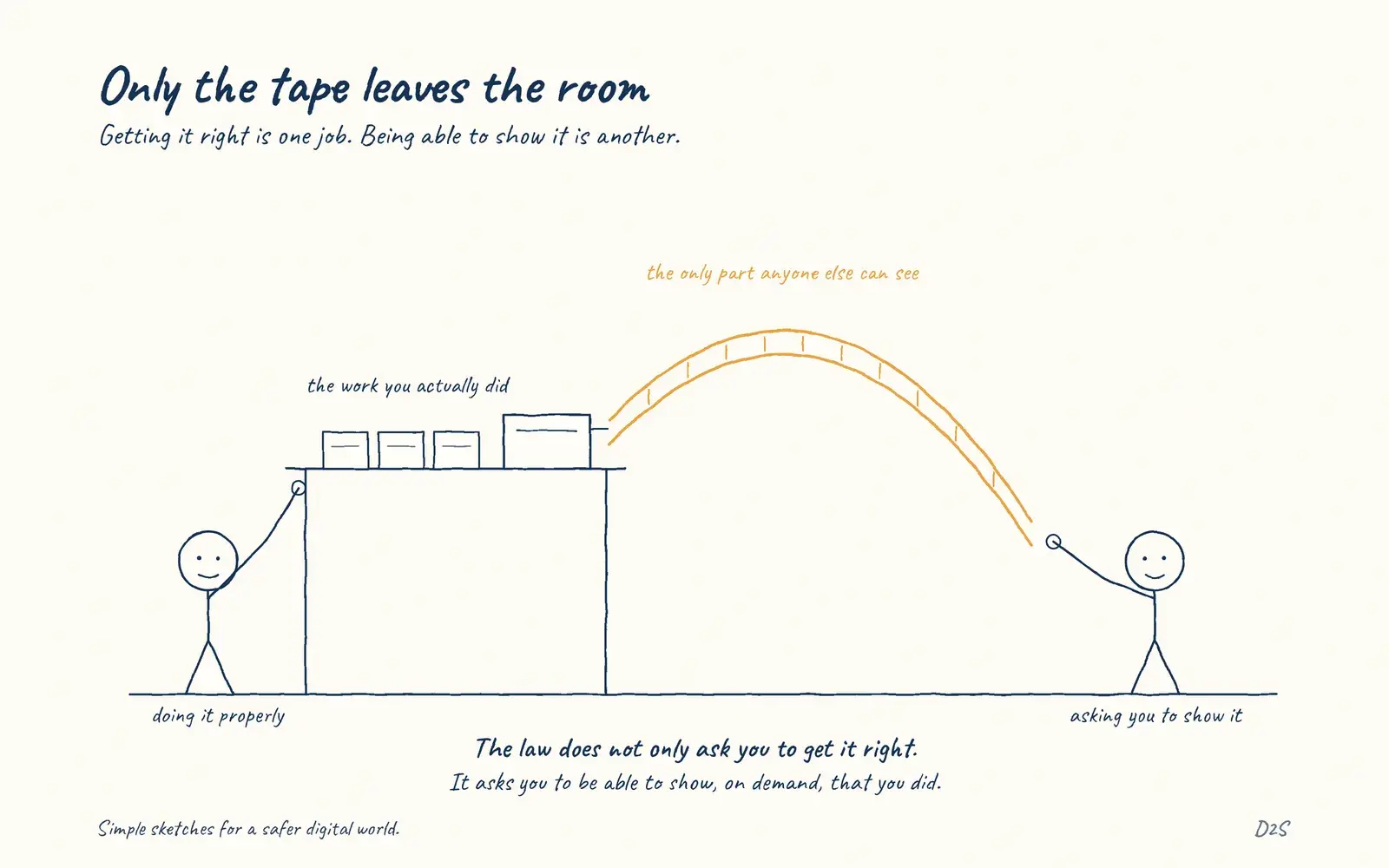 Accountability means demonstrating complianceOnly the tape leaves the room